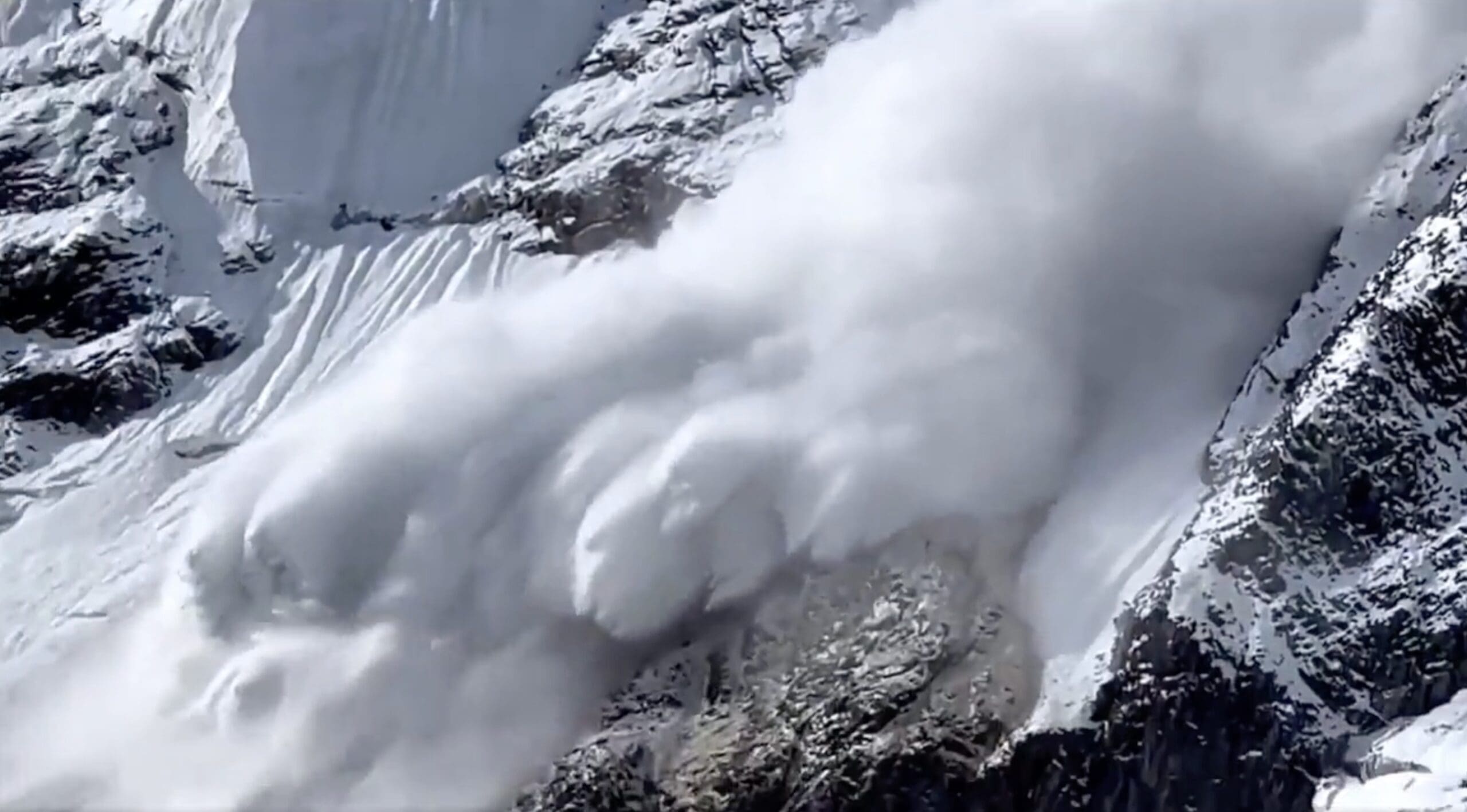
A terrifying video captured the moment a massive avalanche barreled down the slopes of Mount Everest on May 12, engulfing the northern climbers' base camp in Tibet under a colossal wall of airborne snow. Within seconds of the initial roar, dramatic footage shows a fast-moving, blinding powder cloud battering nylon tents and reducing visibility to zero, forcing climbers to scramble for shelter. The viral clip highlights an increasingly volatile reality on the world’s highest peak, where warming temperatures are destabilizing ancient glacial ice and altering the seasonal mechanics of high-altitude mountaineering. While initial reports from the Tibetan side confirm that emergency safety drills prevented fatalities and serious injuries during this specific incident, the event exposes the thin line between a dramatic social media post and a catastrophic mass-casualty disaster.
Social media users quickly obsessed over the tactical speed of a climber zipping up a tent door just before the whiteout hit. Yet, focusing on the visual spectacle ignores the systemic shifts occurring on the northern routes managed by Chinese authorities. The Tibetan side of Everest, historically favored by commercial operators for its perceived logistical order and lower objective hazard compared to Nepal’s notoriously unstable Khumbu Icefall, is no longer a sanctuary from sudden, climate-driven collapse.
The Physics of the Powder Cloud
To understand why the climbers at the Tibet Base Camp survived with mostly damaged gear and frayed nerves, one must look at the mechanics of the slide itself. The video captures a classic powder-snow avalanche, where a massive fracture higher on the north face or adjacent ridges pulverized the snowpack, mixing it with air to create a low-density, high-velocity aerosol wave.
When these slides travel across flat glacial plains, the dense, heavy core of rocks and compacted ice ice often drops out early due to topography. What actually slammed into the tents was the powder cloud. This airborne blast wave can still carry winds exceeding 100 miles per hour, capable of lifting unanchored equipment and suffocating individuals by filling their lungs with fine ice crystals.
The calm reaction seen in the viral footage was not accidental. It was the result of modern commercial expedition architecture. Unlike the independent pioneers of the 20th century, today's clients pay upwards of $60,000 to $100,000 for structured environments where emergency safety drills are practiced repeatedly. When the roar echoed across the upper valley, the protocol was clear: retreat inside structurally reinforced mess tents or heavily weighted personal tents, seal all entries to prevent the fine powder from burying survival gear, and shield breathing passages.
The False Sanctuary of the North Side
For a decade, high-end expedition agencies have quietly shifted elite clients toward the northern approach out of Tibet. The reasoning seemed sound. Nepal’s southern route forces climbers to navigate the Khumbu Icefall—a shifting labyrinth of towering ice seracs that can collapse at any moment, a reality that claimed 16 Sherpa lives in a single morning in 2014. The Tibetan route replaces this daily Russian roulette with a long, wind-scoured walk up the East Rongbuk Glacier to the North Col.
This geographical advantage is eroding. Higher average temperatures are accelerating the melting of permafrost that acts as the literal glue holding the mountain's steep rock faces together. Hanging glaciers, once frozen solid to the granite cliffs high above the advanced base camps, are becoming structurally unstable. The May 12 slide serves as a stark reminder that as upper-elevation snowpacks undergo rapid freeze-thaw cycles, traditional safe zones are being remapped in real time.
The commercialization of Everest has fundamentally changed how risk is communicated to the public. When an avalanche strikes a camp today, the immediate output is digital content, viewed by millions on small screens within hours of the near-miss. This creates a strange paradox. The hyper-availability of first-person disaster footage sanitizes the actual danger, turning a narrow escape into a viral commodity and reinforcing the illusion that high-altitude mountaineering is a manageable, packaged experience.
Mitigating the Invisible Hazard
Relying on rapid tent-zipping and luck is not a sustainable strategy for the international guiding industry. Operators are now forced to invest heavily in localized weather stations and remote radar monitoring to detect shifts in upper snowpacks before clients arrive at camp.
- Advanced Snowpack Telemetry: Deploying automated sensors along the North Col route to track temperature fluctuations within the deeper snow layers.
- Drone-Assisted Route Scouting: Utilizing specialized high-altitude drones to inspect hanging seracs and cornices for micro-fractures prior to the spring climbing window.
- Redesigned Camp Layouts: Shifting the traditional grid arrangement of tents away from natural terrain depressions that channel avalanche debris paths.
These technical interventions have a ceiling of effectiveness. No amount of data can stop a multi-ton slab of ice from shearing off a vertical face when the thermodynamic balance of the mountain tips. The true takeaway from the Tibet base camp incident is that the inherent hostility of environments above 17,000 feet cannot be fully engineered out of existence by premium guiding fees or strict safety protocols. Climbers who view the viral footage as a testament to human readiness are misreading the data. It was a warning shot from a mountain undergoing structural change.
An avalanche striking Mount Everest's base camp in Tibet highlights the extreme environmental hazards climbers face, showcasing the power of natural slides in high-altitude terrain. This video from WION News provides dramatic visuals and additional context surrounding the powerful slide that hit the campsite.