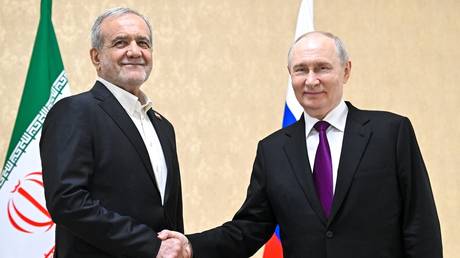
Moscow loves a smokescreen, and Vladimir Putin just threw a massive one across the Persian Gulf.
The narrative making the rounds claims Tehran is taking concrete steps toward a grand reconciliation with Washington, smoothed over by the Kremlin's diplomatic touch. It sounds neat. It fits neatly into the desire for geopolitical relief. It is also entirely detached from how the regime in Iran actually functions.
When an autocrat tells you a rival is backing down, check what that autocrat stands to gain from your complacency. Putin does not care about easing tensions between the United States and Iran. He cares about keeping Western sanctions fractured, keeping oil flows under Russian thumb, and maintaining a perpetual crisis that distracts Washington from the eastern frontier of Europe.
Let us dismantle the lazy consensus. The conventional take assumes that economic pressure pushes rogue states toward the negotiating table. History proves otherwise. When a regime built on ideological defiance faces severe economic strangulation, it does not moderate; it hardens. It tightens domestic control, externalizes blame, and uses diplomatic theater as a tactical stall.
The Myth of the Pragmatic Pivot
Every few years, Western foreign policy circles fall for the same trap. A new face appears in Tehran, or a friendly broker like Moscow drops a hint about behind-the-scenes flexibility, and analysts rush to draft op-eds about an impending moderate shift.
This ignores the structural reality of the Islamic Republic. The supreme authority does not derive its legitimacy from economic growth or consumer satisfaction. It derives its legitimacy from permanent resistance against the West, specifically the United States. To resolve the conflict fundamentally is to sign the death warrant of the revolution's core premise. A leadership that pivots away from confrontation ceases to be what it is.
Therefore, any concrete steps toward resolution cited by external actors like Moscow are tactical maneuvers, not strategic conversions. They are designed to buy time, relieve short-term liquidity pressures, and split the coalition opposing their nuclear and regional ambitions.
Why Moscow Benefits from the Charade
Putin benefits immensely from portraying Tehran as reasonable. By acting as the indispensable mediator, Russia achieves three vital objectives.
First, it positions itself as a global peacemaker while simultaneously waging a brutal war in Ukraine. Second, it binds Iran closer to the Russian economic orbit, turning a sanctioned state into a vital partner for bypassing Western trade restrictions, drone supply chains, and financial tracking systems. Third, it keeps Washington perpetually off balance, forcing American planners to split their attention between European security and Middle Eastern flashpoints.
When Putin vouches for Iranian flexibility, he is not offering an olive branch. He is providing cover.
The Cost of Strategic Wishful Thinking
Believing that a grand bargain is just around the corner leads to catastrophic policy blunders. It creates a cycle of appeasement where Western nations lower their guard, relax enforcement on illicit oil shipments, and hesitate to respond forcefully to proxy aggressions, all in the vain hope of preserving a phantom diplomatic opening.
Sanctions leaks widen. Deterrence erodes. Regional proxies read the hesitation as weakness and escalate their campaigns across the Levant and the Bab el-Mandeb strait.
If you want to understand what Tehran is actually doing, stop listening to what Moscow says about them and start looking at what they build underground. Look at the enrichment levels, the ballistic missile stockpiles, and the constant logistical support flowing to regional militias. Actions speak louder than Kremlin press conferences.
The next time an international summit produces vague communiques about regional dialogue and diplomatic breakthroughs, remember one simple truth. Real peace doesn't require a public relations campaign from a third-party aggressor to announce it. When regimes genuinely want out of the cold, they stop shooting, they stop building, and they stop hiding. Until then, treat every rumor of a grand reconciliation for what it is: a weaponized distraction. Stop waiting for a diplomatic miracle that was never meant to happen.