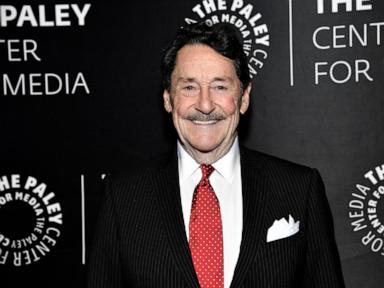
Peter Cullen did not merely play Optimus Prime; he engineered the moral architecture of an entire generation. When the legendary voice actor passed away at his Los Angeles home at the age of 85, he left behind an auditory footprint that spans four decades of popular culture. While standard obituaries reduce his career to a list of nostalgic credits—the heroic Autobot leader, the melancholy Eeyore, the menacing clicks of the Predator—they miss the structural shift he brought to voice acting. Cullen proved that animation did not require caricature to capture an audience. He brought genuine gravity to cartoons at a time when the medium was largely dismissed as Saturday morning toy commercials.
The Genesis of a Commander For an alternative perspective, consider: this related article.
The creation of Optimus Prime's iconic cadence is a masterclass in psychological observation. Back in 1984, when Cullen went to audition for the original Transformers animated series, he did not look to comic books or classical theatre for inspiration. He looked to his older brother, Larry Cullen, a decorated U.S. Marine Corps veteran.
Larry possessed a quiet, unassuming authority. When Peter asked him how a real hero should sound, Larry offered a piece of advice that would permanently alter pop culture history: "Be strong enough to be gentle." Related reporting on this matter has been published by E! News.
That single mandate became the blueprint for Optimus Prime. Hollywood animation in the 1980s was dominated by chest-beating, bombastic villains and screaming heroes. Cullen rejected that noise. He dropped his register into a resonant baritone, slowed his pacing, and infused every syllable with measured restraint. He understood that true power does not need to shout. By grounding an alien robot leader in the dignified humility of a real-world soldier, Cullen gave children something rare: an authority figure who felt safe, protective, and deeply empathetic.
Beyond the Autobot Matrix
To understand Cullen’s true range, one must look at the stark contrast between his defining role and his other masterwork: Eeyore in Disney’s Winnie the Pooh franchise.
Shifting from the resolute commander of the Autobots to the permanently pessimistic, rain cloud-following donkey requires a complete psychological and vocal teardown. Where Optimus demanded an upright posture and an unshakeable chest resonance, Eeyore required a slumped, warm, melancholic mumble that made sadness feel comforting rather than alienating. Cullen traversed that vocal chasm with casual brilliance.
His resume reads like an inventory of cultural touchstones without ever losing its distinct artistic integrity:
- KARR in Knight Rider: The sinister, unhinged foil to KITT.
- Monterey Jack in Chip 'n Dale Rescue Rangers: The cheese-obsessed, adventurous Aussie mouse.
- The Predator (1987): Crafting the terrifying, organic clicking and roaring vocalizations for Arnold Schwarzenegger's extraterrestrial adversary.
- Mario in Donkey Kong: Providing early vocal life to the iconic video game character during his Saturday morning cartoon iterations.
The Battle for Respect in Voice Acting
Cullen's career also serves as a lens through which to view the historical mistreatment of voice talent in the entertainment industry. For many years during the height of the 1980s animation boom, studios treated voice actors as interchangeable parts. Hasbro infamously did not share fan mail with Cullen during the initial run of Transformers. He remained entirely unaware of the magnitude of his cultural impact until the catastrophic audience backlash over the death of Optimus Prime in the 1986 animated feature film forced studio executives to realize how deeply children connected to his voice.
That disconnect highlights a persistent industry blind spot. Voice actors routinely breathe soul into billion-dollar intellectual properties while remaining invisible to mainstream award ceremonies and public accolades. When the National Academy of Television Arts & Sciences finally awarded Cullen a Lifetime Achievement Award at the Children's & Family Emmy Awards in 2023, it was a necessary correction, albeit decades overdue. Characteristically, Cullen accepted the honor with self-deprecating humor, wondering aloud if the Academy had simply dialed the wrong number.
An Irreplaceable Legacy
As the entertainment landscape shifts toward digital synthetic alternatives and automated vocal cloning, the artistry of Peter Cullen becomes a monument to an era that cannot be replicated. His voice was physical; it came from the chest, the diaphragm, and a lived understanding of human vulnerability.
When he returned to voice Optimus Prime in Michael Bay's 2007 live-action blockbuster, the move was not merely a nostalgic easter egg for aging millennials. It was an absolute necessity. No computer algorithm or sound-alike could duplicate the profound weight of his delivery. Without Peter Cullen, Optimus Prime would have been just digital steel and polygons. With him, the character became a timeless archetype of honor.
The family asked fans to honor his memory by leading with integrity and remembering his brother's creed. The microphone is off, but the resonance remains embedded in the cultural DNA of everyone who ever looked up at a screen and heard a leader say, "Transform and roll out."