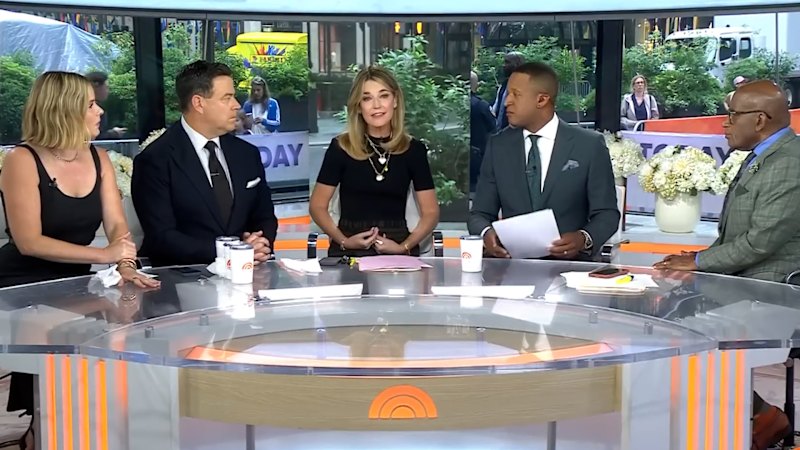
The studio lights are blindingly bright, designed to erase any shadow of exhaustion from the faces of the people who deliver the world's reality to your breakfast table. For years, Savannah Guthrie has sat beneath those lights. She has interviewed presidents, reported on economic collapses, and walked viewers through national tragedies with a steady, practiced composure. It is a job that demands a certain distance. You report the news; you do not become it.
Then the teleprompter scrolls to a name that changes everything. For an alternative look, check out: this related article.
Nancy.
A mother. A neighbor. A missing piece of a community's puzzle. Further coverage on this matter has been published by USA Today.
When a prominent news anchor steps out from behind the professional armor to make a personal plea, the entire atmosphere of a broadcast shifts. The tone drops. The pacing slows. The polished veneer of morning television cracks just enough to let the raw, cold truth of human desperation slip through. Savannah Guthrie wasn't just reading a script; she was begging for answers.
When the News Hits Home
Every day, thousands of stories cross the desks of major network producers. Most are filtered out. Some get a twenty-second mention. But when a case involves someone connected to the community, the cold mathematics of news value transform into an urgent moral obligation.
Consider the mechanics of a modern missing person investigation. In the first forty-eight hours, information flows like a torrent. Detectives log calls, search parties scour local woods, and social media feeds fill with shared flyers. Then, inevitably, the initial momentum slows. The phone stops ringing. The silence that follows is terrifying for a family.
That is the moment where national television becomes a lifeline. By using a massive broadcast platform to amplify a localized tragedy, an anchor can restart a stalled engine. A single tip. That is all it takes. One person who remembers a car parked where it shouldn't have been, or a strange interaction at a gas station.
The Human Weight of a Missing Person Case
Statistically, adult missing person cases are incredibly difficult to resolve once the initial window closes. Law enforcement agencies face tight budgets and overwhelming caseloads. Without a clear indication of foul play, these files can easily sit on a desk, gathering dust while life moves on outside the precinct walls.
Imagine the reality for Nancy’s family. The front door remains unlocked. The coffee pot sits empty. Every time the phone rings, a jolt of adrenaline hits the chest, followed immediately by the crushing weight of disappointment when it is just a telemarketer or a well-meaning neighbor. It is a unique kind of grief, frozen in place, unable to move forward because there is no closure.
When a public figure like Guthrie uses her reach to broadcast this pain, she is doing more than just reporting. She is forcing the public to look closer. She is asking viewers to check their security cameras, to look back through their calendar entries, and to think about the people they saw on the street last Tuesday.
The Power of the Pivot
The real challenge in modern media is breaking through the noise. People watch the news while scrolling on their phones, making breakfast, or rushing out the door. Content blurs together.
But a shift in a familiar voice can make an audience freeze.
When a trusted journalist speaks directly to the camera, abandoning the objective distance that usually defines their career, it acts as a psychological alarm bell. It signals to the viewer that this is not just another segment. This is an emergency.
The plea for tips in Nancy’s case serves as a stark reminder of the true purpose of a free press. Beyond the political debates and the celebrity gossip, the core utility of a media network is its ability to connect human beings to one another in times of crisis. It is a tool for mobilization.
The cameras will eventually turn off, and the studio lights will dim for the night. But for a family waiting by the phone, the search never stops. The hope is that somewhere out there, someone was watching the screen, recognized a face, and decided to finally make the call.