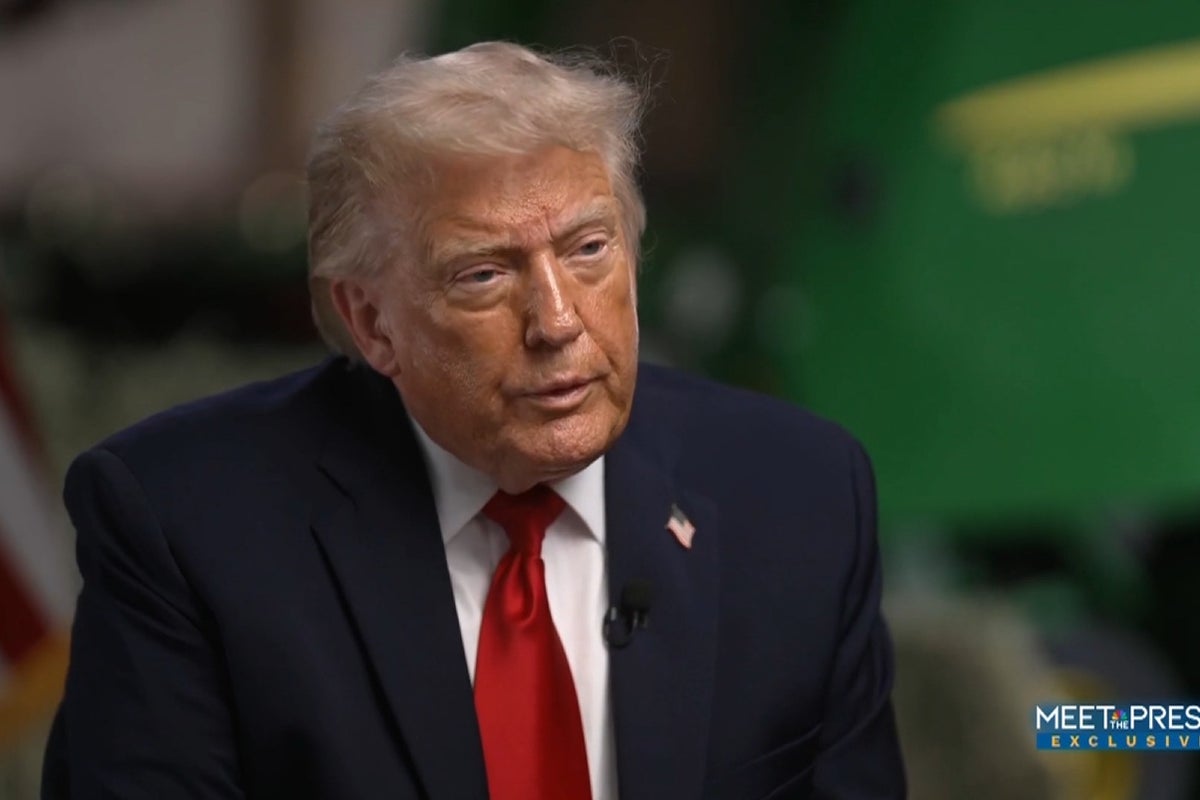
The mainstream political press is running a tired playbook, and everyone is falling for it.
When a high-profile politician like Donald Trump walks out of an interview or spars with a host behind the scenes, the network rushes to publish a post-mortem. The anchor steps in front of the camera with a look of grave concern. They detail exactly what happened after the microphones were turned off, painting a picture of a candidate unhinged and a network bravely defending the truth.
It is a comforting narrative for establishment media. It is also entirely wrong.
The lazy consensus across modern journalism is that these explosive, off-camera moments represent a breakdown in the political process. Pundits wring their hands over the "death of civil discourse" and claim the candidate is terrified of tough questions.
Let us look at the mechanics of modern attention. These explosive walkouts are not failures of political stagecraft. They are the stagecraft itself. The media is not a victim of the drama; they are the primary beneficiaries and co-conspirators in a highly lucrative system of outrage generation.
The Economy of the Fake Standoff
Legacy media outlets operate on a broken business model that rewards friction over substance. When a host reveals "what the candidate said after the cameras stopped rolling," they are not delivering groundbreaking investigative journalism. They are lengthening the monetization window of a single piece of content.
I have spent years watching newsrooms dissect political theater. Here is how the loop actually functions:
- The Setup: An interview is booked with a polarizing figure, guaranteed to generate high initial ratings.
- The Friction: The host pushes a line of questioning designed to elicit a defensive reaction rather than a policy breakdown.
- The Event: The politician pushes back, threatens to leave, or storms off.
- The Aftermath: The network spins the off-camera interactions into a secondary news cycle that lasts for 48 hours.
This is not a failure of communication. It is a highly optimized funnel for digital clicks and prime-time viewership.
Consider the financial reality of modern cable news. A standard policy discussion on trade tariffs or tax structures generates minimal digital engagement. A dramatic confrontation followed by an exclusive "behind-the-scenes reveal" guarantees millions of views across streaming platforms, clipping services, and social media. The candidate gets to signal to their base that they are fighting a hostile establishment, and the network gets to signal to its audience that they are speaking truth to power. Everyone wins except the voter.
The Flawed Premise of the "Tough Interview"
The public consistently asks the wrong question when evaluating these media clashes. The standard query is: Why won't the candidate just answer the question directly?
This question accepts a flawed premise. It assumes the interviewer's prompt was an objective search for truth. In reality, modern political interviewing has evolved into a discipline of narrative enforcement.
When a host asks a question wrapped in three layers of editorial presupposition, they are not inviting an answer; they are setting a trap. If the politician accepts the premise of the question, they lose. If they challenge the premise, they are labeled obstructive. If they leave, they create a viral moment.
Imagine a scenario where a corporate CEO is asked, "When did you decide that cheating your customers was the best path to profitability?" There is no structural way to answer that question cleanly. Political interviews are now routinely conducted using this exact framework. The walkout is a rational, calculated escape vector from a rigged game.
Deconstructing the Post-Interview Reveal
When an anchor leaks the details of a post-interview meltdown, they want you to believe they are offering transparency. They are actually engaging in a sophisticated form of brand positioning.
By framing the politician's post-interview comments as shocking or frantic, the network establishes its host as the cool, collected arbiter of reality. It creates a stark contrast: the professional journalist versus the chaotic insurgent.
But if you look at the actual substance of these reveals, the "shocking" details are almost always mundane. The candidate complained about the unfairness of the questions. The candidate muttered an expletive. The candidate's staff argued with the producers.
This is standard behavior in any high-stakes corporate green room. Aggressive negotiations, posturing, and venting are default human responses under pressure. Elevating these moments to front-page news is a cheap trick designed to manufacture significance where none exists.
The High Cost of the Outrage Loop
There is a distinct downside to challenging this media dynamic. If a political figure decides to stop playing the game—if they refuse to provide the explosive walkouts or the combative soundbites—the system ignores them.
Quiet, policy-driven discussions are buried at 2:00 AM or relegated to low-traffic web pages. The current media architecture actively punishes nuance. It creates a survival-of-the-fittest environment where only the loudest, most confrontational figures can command the national stage.
This creates a dangerous feedback loop. Sincere policymakers are forced to adopt the tactics of reality television stars just to get their ideas heard. They must learn how to storm off, how to counter-attack, and how to create the very drama that legacy journalists claim to despise.
Stop Asking for Accountability via Confrontation
The collective obsession with these interview showdowns needs to end. Viewers must stop measuring the quality of an interview by the level of visible anger it produces.
True accountability does not happen when a politician gets mad and leaves the room. Accountability happens through rigorous, unemotional analysis of legislative records, financial disclosures, and policy outcomes.
The next time a network hypes a dramatic behind-the-scenes confrontation, ignore the commentary. Stop looking at the anger of the candidate or the self-righteousness of the host. Look instead at the commercial breaks, the click-bait headlines, and the social media algorithms feeding on the chaos.
The media did not catch a tiger by the tail. They built the cage, opened the door, and invited you to buy a ticket to the show.


