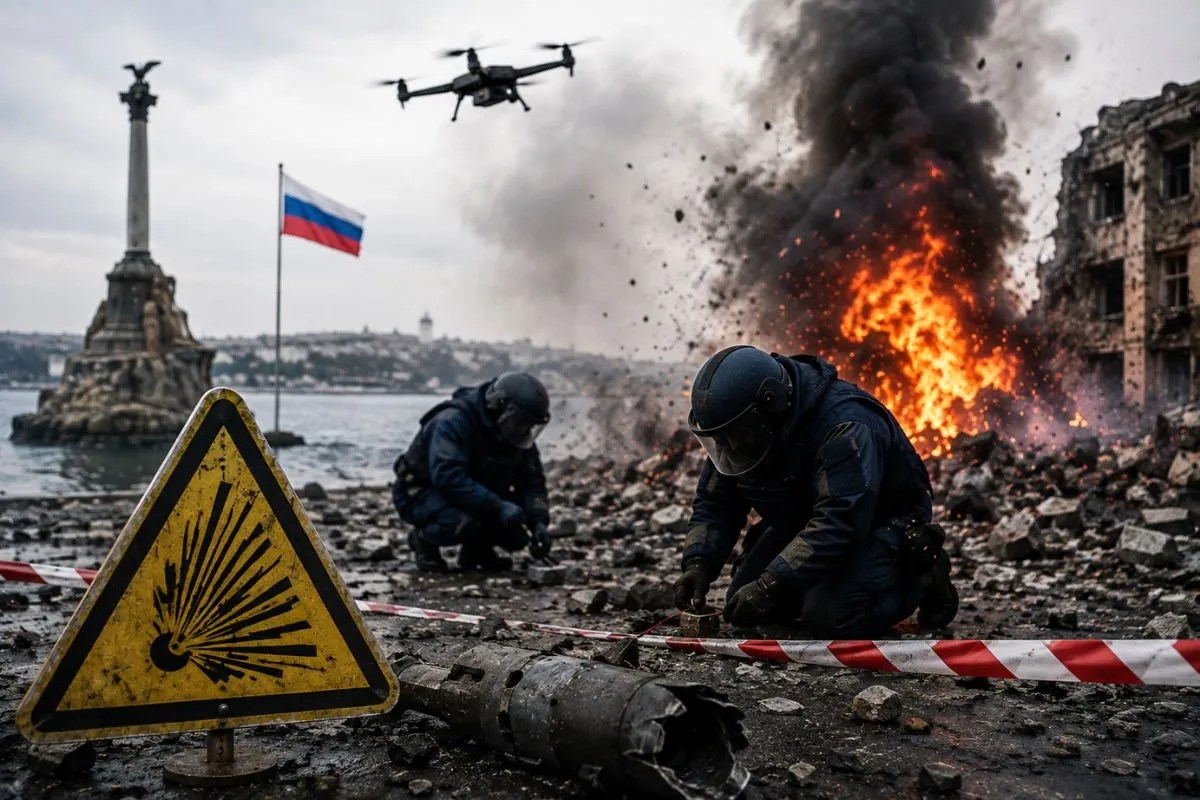
The war in Ukraine isn't just fought on muddy trenches in the Donbas. It runs deep into contested maritime hubs like Sevastopol, where precision strikes and high-risk operations turn naval ports into zones of constant hazard. When high-stakes explosions occur—especially those involving specialized military ordnance or technical personnel—the ripple effects change the calculus of the entire conflict.
You see, headlines often focus on the raw numbers. Five dead, including specialized bomb disposal personnel. But the real story is about how deeply vulnerable critical infrastructure has become, even for elite units trained to handle explosive hazards.
The Reality of Handling Unexploded Ordnance in a War Zone
Working as a munitions expert in an active combat theater requires precision, cold nerves, and zero margin for error. Yet, the proliferation of cheap, adaptable drone technology has upended standard military engineering protocols.
- Improvised explosive devices dropped or guided by unmanned aerial vehicles leave unstable remnants.
- Standard clearance timelines are compressed because commanders demand immediate site recovery.
- High-value military installations act as perpetual lightning rods for aerial incursions.
When a blast rips through a logistics hub or a command footprint, it usually means the air defense network failed to neutralize the threat before impact, or the ordnance itself possessed a secondary trigger mechanism designed to target first responders. That's the part mainstream coverage frequently glosses over. The secondary hazard is often deadlier than the initial strike.
Why Sevastopol Rains High Stakes for Both Sides
Sevastopol isn't just any port city. Located on the Crimean peninsula, it serves as the historic anchor for power projection in the Black Sea. Controlling or disrupting this region dictates grain export safety, naval logistics, and air superiority corridors.
For military planners in Kyiv, striking targets inside Crimea signals that no occupying asset remains safe. For Moscow, securing these areas means keeping elite technical units constantly deployed near hostile vectors. When specialists—the exact personnel who take years to train—are lost in operational accidents or sudden detonations, replacing them isn't a quick fix. You can't fast-track decades of bomb disposal expertise.
The Broader Shift in Drone Warfare Tactics
We've moved far past the era where drones were simple reconnaissance tools. Today's commercial and military-grade UAVs carry specialized shaped charges, thermal triggers, and anti-tamper mechanisms.
When a specialized squad approaches a downed aerial vehicle to neutralize its payload, they're playing a high-stakes game of chess against software programmed to detonate upon disturbance. This evolution explains why incidents resulting in multiple casualties among technical experts are on the rise. The tech gets smarter, cheaper, and harder to disarm safely.
If you're tracking how this conflict unfolds, stop looking solely at territorial gains on a map. Watch the attrition rates among technical specialists, electronic warfare units, and explosive ordnance disposal teams. Those hidden losses dictate who actually maintains operational control of contested territory over the long haul.