You can always count on Washington to send two entirely contradictory messages at once.
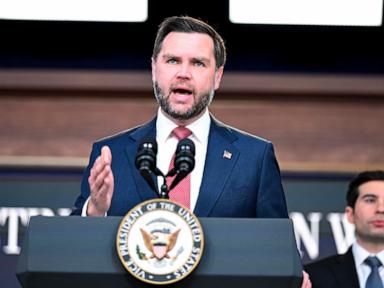
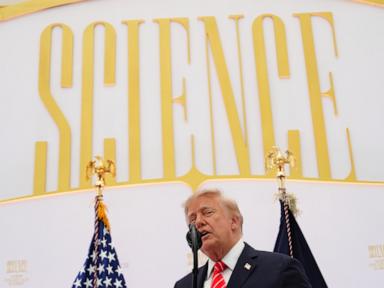
Hours after Vice President JD Vance slammed a major enforcement action against Microsoft over its high-skilled foreign worker practices, President Donald Trump stood at a podium and handed Microsoft CEO Satya Nadella one of the nation's highest technology honors. It is the ultimate Washington double feature. One hand offers a prestigious National Medal of Technology and Innovation, while the other drops an H-1B visa hammer that leaves corporate boards scrambling.
If you are trying to make sense of how the current administration plans to handle Big Tech, look past the red carpet photo ops. The friction between wooing tech billionaires and tightening the borders around corporate labor practices tells you everything about where the economic battlefield is heading.
The H-1B Hammer Comes Down Hard
The policy hit didn't come as a subtle warning. Vice President Vance made it clear during a sharp press briefing that Microsoft had crossed a line. The administration announced that Microsoft was being suspended from major portions of the skilled foreign worker green card sponsorship ecosystem.
The reasoning from the White House relied on a populist economic argument that resonates deeply with domestic labor advocates. Vance didn't mince words, stating bluntly that companies cannot lay off American workers only to turn around and fill those exact roles with foreign workers who lack employment mobility.
"You're a great American company, but you've got to hire great American workers," Vance told reporters.
The administration framed H-1B workers as vulnerable to exploitation, comparing their tied legal status to a form of corporate indentured servitude. When an employee's right to remain in the country depends entirely on a single corporate employer holding their visa, the power dynamic skews heavily away from fair market wages. By halting Microsoft's access to these programs, the White House signaled that populist labor protectionism remains a core pillar of its agenda, even when dealing with multi-trillion-dollar software giants.
Rewarding the Titans of Silicon Valley
Yet, while the enforcement division was drawing blood, the ceremonial wing was rolling out the velvet ropes. Satya Nadella traveled to Washington alongside other tech elite heavyweights—including Nvidia CEO Jensen Huang, Google co-founder Sergey Brin, and AMD CEO Lisa Su—to receive top federal science and technology honors.
Trump praised the group as national treasures, comparing their contributions to his own uncle, prominent MIT engineer John Trump. Ironically, a significant majority of the tech leaders being honored at the ceremony were themselves immigrants who came to the United States to study or build careers.
Nadella accepted the award gracefully, posting online about his gratitude for standing alongside American innovation giants and pushing the boundaries of future technology.
This creates a fascinating cognitive dissonance for corporate leadership. The White House loves the breakthroughs coming out of Redmond, Silicon Valley, and Austin, especially as artificial intelligence races toward dominance. They want America to win the global tech war. But they refuse to let corporate human resources departments bypass local talent pools in the pursuit of lower labor costs.
What This Means for the Rest of the Tech Industry
If you run a scaling startup or an enterprise IT department, this split-screen spectacle is a massive wake-up call. The era of treating specialized visa programs as a casual backchannel for routine hiring is over.
Federal agencies are looking closely at how companies balance domestic layoffs with foreign hiring. If a tech giant like Microsoft can face immediate suspension, smaller firms should expect even stricter scrutiny. Compliance audits will intensify, and the cost of defending immigration pipelines will skyrocket.
At the same time, the government is doubling down on domestic talent development and infrastructure. The message to founders and executives is simple: invest heavily in local training pipelines, or prepare to face regulatory walls that will grind your hiring plans to a halt.
You cannot separate the award ceremonies from the regulatory crackdowns. They are two sides of the same coin. Washington wants the innovation, but it wants the jobs to stay local.
Satya Nadella H-1B visa policy coverage
This video provides an in-depth breakdown of the simultaneous honors and visa suspensions that caught Silicon Valley off guard.