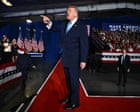
Every few weeks, the political press corps treats us to the same predictable theater. A prominent figure drops an absurd, cinematic hyperbole about a geopolitical adversary leveling an American city, and the commentariat acts like they have just uncovered a profound strategic doctrine. The media rushes to clutch its pearls, Republicans issue carefully stage-managed rebukes, and pundits on cable news dissect the rhetorical fallout as if a cartoon supervillain has just unveiled a doomsday device.
It is entirely fake outrage designed for an audience that prefers comic book simplicity over the messy, boring reality of modern statecraft. Recently making headlines in related news: What the Court Case Over Iranian Spies Targeting UK Journalists Actually Means.
Let us start by stripping away the performative shock. The lazy consensus in mainstream reporting treats these stray rhetorical grenades as literal operational blueprints or policy declarations. That is a fundamental misread of how modern deterrence actually functions. When political actors toss around apocalyptic soundbites about Tehran reducing Los Angeles or San Diego to rubble, they are not leaking classified war plans. They are engaging in the lowest common denominator of rhetorical brinkmanship, signaling strength to domestic constituencies while daring opponents to call the bluff.
Yet the press falls for it every single time, treating a clumsy soundbite as a revelation of grand strategy. I have spent enough years watching national security committees posture behind closed doors to know that the adults in the room do not plan wars around televised hyperbole. Real military planning is dry, quantitative, and deeply cynical. It involves logistics chains, economic sanctions enforcement, cyber vulnerabilities, and asymmetric proxy warfare in gray zones. It does not involve ballistic missiles materializing over the Pacific Northwest because someone wanted a punchy quote for the evening news. More details into this topic are explored by Al Jazeera.
The real danger here is not that a coastal metropolis is about to vanish in a cloud of smoke. The danger is that our entire political discourse treats foreign policy like a wrestling match, where theatrical insults substitute for strategic analysis. When we spend days hyperventilating over whether a politician's threat crosses a rhetorical line, we ignore the quiet, systemic rot happening in actual defense procurement, intelligence sharing, and diplomatic channels.
Consider how deterrence worked during the Cold War. It was terrifying, yes, but it was predicated on mutually assured destruction, rigid command structures, and predictable signaling. Today, politicians treat deterrence like a social media engagement strategy. They test lines to see what generates outrage, knowing that the algorithms reward escalation over nuance.
When a commentator reports on these outbursts with wide-eyed alarm, they miss the underlying mechanics entirely. They assume that if a threat is spoken aloud, it carries tactical weight. But state actors do not telegraph existential strikes through casual campaign trail bluster. Real adversaries—whether in Tehran, Beijing, or Moscow—operate through cyber espionage, intellectual property theft, economic coercion, and localized proxy conflicts that slowly bleed American influence without ever crossing the threshold of conventional war.
By focusing on the shiny object of outrageous rhetoric, we blind ourselves to these quiet, grinding erosions of power. We debate whether a statement was appropriate while ignoring the fact that our supply chains depend on nations actively hostile to our economic survival. We parse syntax while our cyber infrastructure remains vulnerable to state-sponsored ransomware operations that cause more daily economic damage than a dozen theatrical speeches.
The correct response to this kind of political posturing is not pearl-clutching condemnation. It is complete indifference.
When you react with horror to an impossible scenario, you validate the premise that the speaker is a serious strategist rather than a performer playing to the cheapest seats. You hand them the exact currency they crave: attention. The moment we start treating domestic political theater with the detached boredom it deserves, the incentives for this kind of empty posturing evaporate.
Until we stop rewarding rhetorical arsonists with front-page coverage, our foreign policy debates will remain stuck in the mud, run by people who treat nuclear-armed adversaries like characters in a summer blockbuster. Stop asking what the quote means for national security. Ask why we are still naive enough to care.