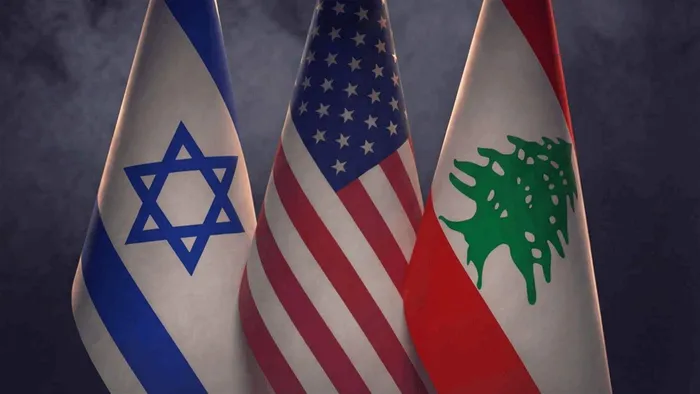
The United States is moving to convene a fresh round of diplomatic talks between Israel and Lebanon, aiming to stitch together a ceasefire that has remained elusive despite months of cross-border escalation. This isn’t just a routine diplomatic push. It is a high-stakes gamble to prevent a localized conflict from detonating into a regional conflagration that would force the Pentagon’s hand. While the official narrative frames these talks as a path to "stability," the reality on the ground suggests a much more cynical calculation. Washington is racing to freeze a front that neither side can truly afford to close, yet neither can stop fighting without losing face.
The core of the upcoming negotiations centers on the enforcement of UN Security Council Resolution 1701. This long-ignored document, birthed after the 2006 war, mandates that the area between the Blue Line and the Litani River be free of any armed personnel other than the Lebanese Army and UNIFIL peacekeepers. For nearly two decades, this has been a polite fiction. Hezbollah has built a sophisticated subterranean network and missile infrastructure right under the noses of international monitors. Israel, in turn, has conducted thousands of overflights and electronic warfare operations in Lebanese airspace. The new US-led initiative seeks to turn this fiction into a hard reality by pushing Hezbollah forces several kilometers north, theoretically creating a buffer zone that would allow displaced Israeli civilians to return to their homes in Upper Galilee.
The Litani River Mirage
Forcing a non-state actor with the firepower of a medium-sized nation to simply walk away from its primary defensive positions is a tall order. The US proposal hinges on the deployment of a significantly beefed-up Lebanese Armed Forces (LAF) contingent to the south. The plan involves international funding to recruit, train, and equip thousands of new Lebanese soldiers who would act as the "legitimate" face of security.
It sounds logical on paper. In practice, the LAF is an institution currently struggling to feed its soldiers amidst Lebanon’s catastrophic economic collapse. More importantly, the LAF has historically shown zero appetite for direct confrontation with Hezbollah. Expecting a cash-strapped national army to disarm or displace the country's most powerful political and paramilitary force is a strategy built on hope rather than history. If the LAF moves south, they do so with Hezbollah’s permission, not as their replacement. This creates a "security theater" where the actors change costumes but the script remains the same.
The Buffer Zone Dilemma
Israel’s demand is simple: a zone free of Radwan Force elite units and anti-tank missiles. Without this, the northern communities remain ghost towns. However, the geography of Southern Lebanon favors the defender. The rugged, hilly terrain means that even a pull-back of 10 kilometers does not eliminate the threat of long-range guided munitions.
Critics of the current diplomatic track argue that a temporary withdrawal is merely a tactical pause. Hezbollah can move its fighters back into the border villages in civilian clothing within hours. Unless the diplomatic framework includes a verification mechanism with actual teeth—something UNIFIL has never possessed—any "peace" achieved in these talks will have the shelf life of a morning newspaper.
The Gas Factor and Economic Leverage
Follow the money. In 2022, the US brokered a landmark maritime border deal between these two technically warring states, allowing for offshore gas exploration. That deal proved that when the stakes are high enough and the potential for profit is clear, pragmatism can trump ideology.
The current talks are trying to replicate that success on land. Lebanon is a failed state in every sense of the word. Its banking sector is a shell, its currency is worthless, and its infrastructure is crumbling. The carrot being dangled by Washington includes massive energy investment and debt relief packages that would only be unlocked if a border settlement is reached. For the ruling class in Beirut, this is a potential lifeline. For Hezbollah, it’s a more complex calculation. They must weigh their "resistance" credentials against the risk of being blamed for the total starvation of the Lebanese population.
The Tehran Shadow
No discussion of the Blue Line can ignore the influence of Iran. The US is essentially trying to negotiate with a shadow. While Lebanese officials sit at the table, the strategic decisions are being vetted in Tehran.
Iran views Hezbollah as its most successful export and its primary deterrent against a direct strike on its own nuclear facilities. From a geopolitical standpoint, keeping the border "warm" serves Iranian interests by stretching Israeli resources and maintaining leverage over Western powers. For a peace deal to stick, Washington would need to offer concessions that go far beyond the borders of Lebanon, likely involving the wider regional architecture and the frozen nuclear file. This isn't just a border dispute; it’s a small piece of a much larger puzzle that the US is trying to solve with one hand tied behind its back.
Tactical Reality vs. Diplomatic Optimism
Military analysts point out that the window for a diplomatic solution is closing because of the internal political pressure within Israel. The "return to the north" has become a potent political rallying cry. If the US-hosted talks fail to produce a credible guarantee of safety within a short timeframe, the pressure on the IDF to launch a ground operation to "clean" the border area will become irresistible.
The US knows this. The invitation to these talks is as much an attempt to restrain Israel as it is to pressure Lebanon. By keeping the parties in the room, the State Department can argue against "unilateral actions" that would disrupt the peace process. It is a strategy of delay, hoping that a change in the Gaza dynamic or a shift in regional winds will make a ceasefire more palatable to everyone involved.
The Credibility Gap
The fundamental problem with this new diplomatic push is the lack of a credible guarantor. The US is seen as a biased mediator by the Lebanese street, and the UN is viewed as toothless by the Israeli public.
If the talks result in another round of vague promises and "enhanced monitoring," we are simply resetting the clock for a larger explosion. A real solution would require the physical dismantling of Hezbollah’s border infrastructure—a feat that has never been achieved through a boardroom meeting. The most likely outcome is a "cold peace" characterized by a formal agreement that neither side intends to fully honor, but both sides use to justify a temporary cessation of hostilities.
Why This Time Might Be Different
There is one factor that wasn't present in 2006: the exhaustion of the Lebanese population. Lebanon cannot survive a full-scale war. Unlike previous conflicts where the country could rely on Gulf Arab states to fund the reconstruction, that well has run dry. Saudi Arabia and its neighbors have made it clear they will not pour billions into a country controlled by an Iranian proxy.
This economic isolation puts Hezbollah in a corner. If they provoke a war that levels Beirut and the south, they will be reigning over a graveyard with no one to pay for the tombstones. This fear of internal backlash is the only real leverage the US has in these negotiations. It isn't the strength of the diplomatic language that matters; it’s the desperation of the Lebanese state.
The Role of Technological Surveillance
One proposal gaining traction in the lead-up to the talks involves a massive increase in autonomous surveillance along the border. Rather than relying on human peacekeepers who are easily intimidated, the plan suggests a network of AI-integrated sensors and cameras that would feed data directly to a joint monitoring center.
This would, in theory, make it impossible for Hezbollah to move heavy weaponry toward the border without being detected. However, this raises immediate concerns about Lebanese sovereignty and who exactly controls the "off" switch for such a system. Israel will demand direct access to the feed, while Lebanon—and by extension, Hezbollah—will view it as an unacceptable breach of national security.
The Cost of Failure
If these talks collapse, the alternative is not the status quo. It is an escalation that would likely dwarf the 2006 war in both intensity and geographic scope. We are looking at a scenario where precision-guided missiles hit the heart of Tel Aviv and Israeli airstrikes dismantle the entire civilian infrastructure of Lebanon.
The US is trying to build a bridge out of sand. The materials are weak, the tide is coming in, and the architects are arguing over the blueprints. Success depends on the parties involved deciding that the pain of a compromise is slightly less than the agony of a total war. In the Middle East, that is a vanishingly rare conclusion to reach.
The push for talks is a recognition that the military options are all bad. Israel cannot "win" a war in Lebanon in a way that provides long-term security, and Hezbollah cannot "defeat" Israel without inviting the total destruction of its home base. Washington is betting that both sides are looking for a face-saving exit. If that bet is wrong, the coming months will see the Blue Line turn from a border into a front line that reshapes the map of the Levant.
A ceasefire is only as strong as the will to enforce it. Without a fundamental shift in the power dynamics of Beirut or a massive strategic retreat by Tehran, these talks are merely a reorganization of the furniture while the house is on fire. The diplomacy isn't the solution; it’s a symptom of a regional order that has no other tools left to prevent its own collapse. Keep your eyes on the Litani. If the fighters don't move, the ink on any paper signed in Washington won't even have time to dry before the first rockets fly.