Everyone in the financial media loves a good war movie. Headlines scream about an economic D-Day, massive sanctions packages, and Washington finally dropping the hammer on Beijing for keeping Tehran afloat. The consensus narrative is simple, lazy, and completely wrong. Analysts love to pretend that US policymakers are just holding back out of diplomatic politeness or political timidity. They call it pulling punches.
They are missing the mechanical reality of global trade. Washington is not pulling punches because of restraint. Washington is not swinging because the punch breaks the pitcher's own arm.
I have spent decades watching sanctions policy get drafted by career bureaucrats who have never managed a supply chain or balanced a cross-border ledger. They look at SWIFT messages and tanker tracking data like video game inputs. Push the red button, freeze the assets, shut down the crude imports, and watch the target regime crumble. Except that is not how modern globalization functions anymore.
The Anatomy Of A Paper Tiger Policy
Let us look at the core mechanics of why these so-called maximum pressure campaigns against Chinese entities buying Iranian oil always stall out.
The lazy consensus says this: Treasury writes a blacklist, enforcement agencies issue a warning, and independent refiners in Shandong quietly comply out of fear of losing access to dollar clearing.
Here is what actually happens on the ground.
When you target the independent teapot refiners in China—the small-to-mid-sized private processors soaking up discounted Iranian condensate—you are not hurting the central Politburo in Beijing. You are threatening the cash flow of localized industrial ecosystems that keep local employment stable in key provinces. More importantly, you are driving those transactions deeper into non-dollar clearing channels.
Every time the Office of Foreign Assets Control threatens a secondary sanction against a Chinese bank or a shadowy shipping intermediary, they inadvertently accelerate the very de-dollarization they claim to prevent. Beijing does not look at these threats and decide to abandon its cheap energy supply. Beijing looks at them and doubles down on Renminbi-settled commodity swaps, private maritime insurance pools, and digital currency pilots.
I have seen companies blow millions trying to achieve compliance symmetry in jurisdictions where the local legal framework views American secondary sanctions as an illegal extraterritorial overreach. When your primary trading partner offers a 20 percent discount on heavy crude settled in local currency, compliance manuals written in Washington wind up serving as expensive kindling.
The Sovereign Debt Trap Nobody Mentions
People asking whether the White House will trigger a full financial blockade miss the macroeconomic trap beneath the surface.
Look at the US balance sheet. Look at the velocity of Treasuries.
If Washington actually enforces the kind of total economic embargo on Chinese financial institutions handling Iranian commerce that the Sunday talk shows demand, the immediate retaliatory vectors are not military. They are structural. China remains one of the largest foreign holders of US sovereign debt. More critically, it controls the refining choke points for the critical minerals that keep Western defense contractors and electric vehicle supply chains functioning.
When you threaten total economic warfare against a peer competitor over a regional proxy conflict, you assume your adversary has more to lose from isolation than you do from financial fragmentation. That assumption died somewhere around 2022.
The dirty secret of modern geopolitics is that sanctions are often performative domestic theater. They allow politicians to signal strength to domestic constituencies without triggering the catastrophic inflationary shock that a real economic fracture would cause. A true total blockade of Chinese entities tied to Iranian energy flows would spike global crude prices past historic highs overnight, wreaking havoc on Western consumer economies right before an election cycle.
Washington is not holding back out of weakness. Washington is holding back because the architects of these policies ran the simulations and realized the blowback destroys their own economic engine first.
The Uncomfortable Truth About Energy Flows
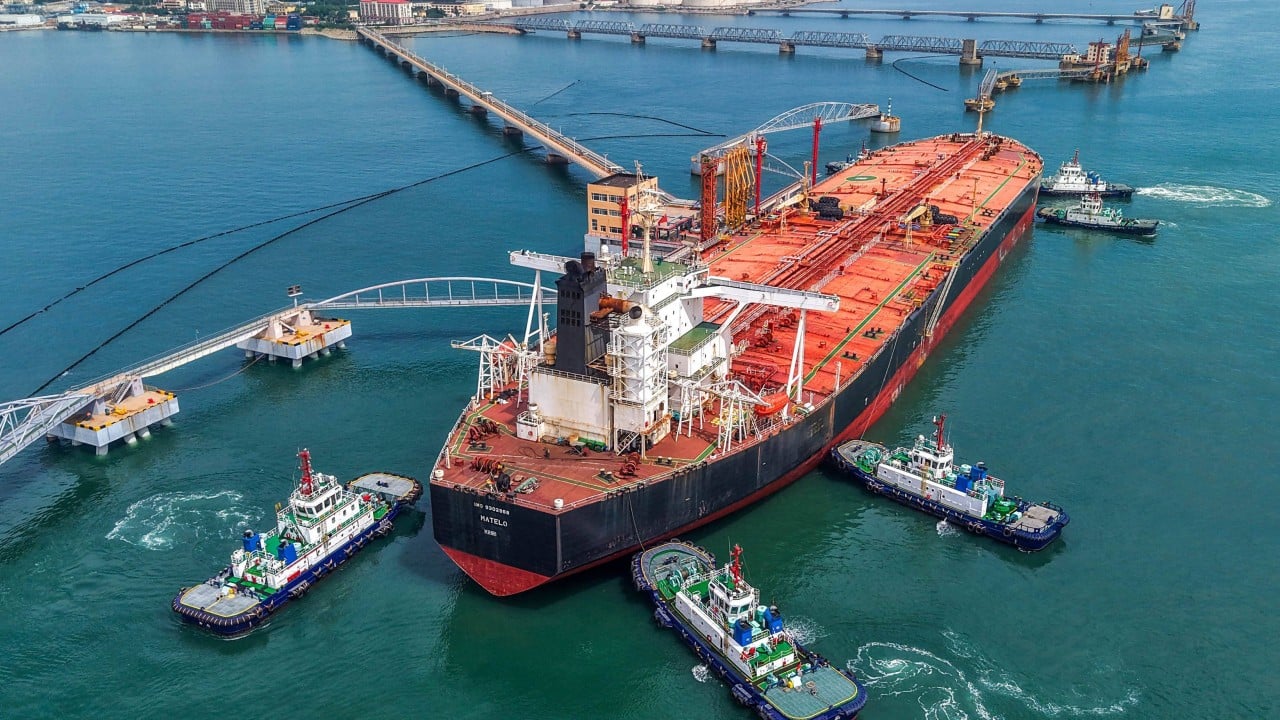
Let us define terms clearly. Iran sells oil through what the industry calls the dark fleet—aging, unregistered tankers running with transponders off, transferring cargo ship-to-ship in international waters near Malaysia or the Persian Gulf.
Mainstream commentators write about this as if it is a leaky bucket that just needs better plugging.
It is not a leak. It is a completely parallel plumbing system.
Once a market reaches a certain scale of alternative infrastructure, trying to squeeze it with traditional sanctions is like trying to stop a river with a chain-link fence. The participants have spent years building redundant financial messaging systems, non-Western maritime classification societies, and localized reinsurance networks. They do not need New York or London.
My contrarian approach is brutal: stop pretending sanctions are a scalpel when they are actually a blunt instrument that accelerates the fragmentation of the global financial architecture. Every time policymakers threaten an economic D-Day, they merely teach the rest of the world how to survive without Western financial hegemony.
If you want to understand why Tehran keeps exporting and Beijing keeps buying, stop reading press releases from think tanks funded by defense contractors. Look at the ledger. Look at the discounts. Look at the local currencies clearing outside the reach of the Federal Reserve.
The punch isn't pulled. The arm is pinned.