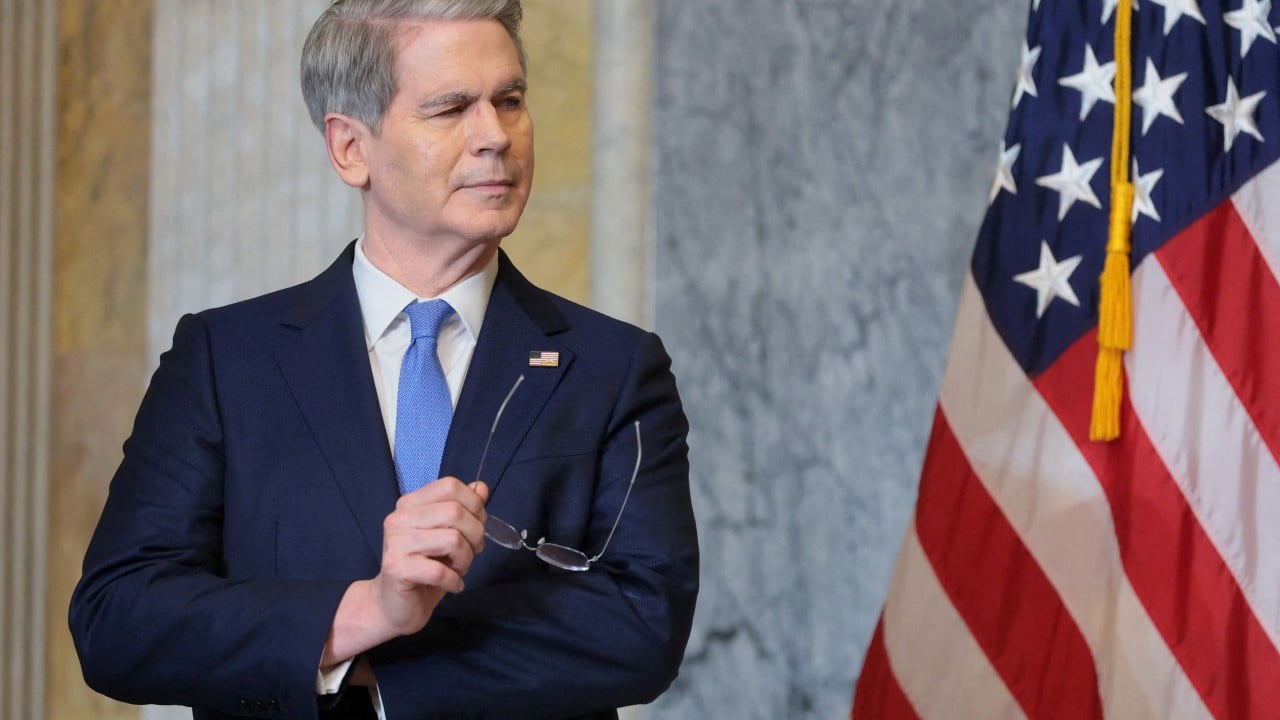
The lazy consensus in international finance is simple: when Washington announces a sweeping secondary sanctions package targeting foreign entities trading with Iran, the financial machinery of Beijing will buckle under the might of the U.S. dollar. Treasury Secretary Scott Bessent rolled out "Operation Economic Outcast," targeting nearly sixty entities and warning that no nation is exempt from the financial dragnet. Mainstream analysts immediately treated this as an existential countdown for Chinese independent refineries and banking conduits.
They are missing the entire reality of modern economic statecraft. Washington is not preparing a crippling knockout blow against Beijing. It is engaging in a high-stakes psychological bluff because a total financial break with Chinese energy importers would instantly short-circuit the global economy, including Wall Street.
The Myth of Absolute Financial Isolation
Let us look at the structural mechanics. China absorbs the lion's share of Iranian crude, much of it routed through independent refiners known as "teapots" and settled via non-dollar clearing channels or complex intermediaries. Mainstream commentary assumes that if the White House flips the switch and cuts off major Chinese institutions from the Clearing House Interbank Payments System or SWIFT equivalents, Beijing has nowhere to run.
I have watched compliance departments lose their minds over secondary sanctions threats for a decade. The truth on the ground is far messier. When the U.S. sanctions small shipping intermediaries or peripheral shell companies in Hong Kong, it makes noise without altering the macro-flow of commodities. It is a targeted penalty designed to generate press releases while deliberately sparing the systemic pillars of Chinese finance.
Why? Because the moment the Treasury designates major Chinese state banks for processing energy settlements, Beijing’s counter-measures stop being theoretical. China holds massive leverage, including dominant control over critical mineral supply chains that feed American high-tech and defense manufacturing. More importantly, Beijing has already established legal firewalls—such as anti-sanctions blocking statutes—ordering its domestic institutions to ignore extraterritorial U.S. edicts.
Follow The Real Incentives
If you look past the rhetoric of an "economic D-Day," the actual enforcement strategy reveals profound hesitation. The latest sanction lists are heavily front-loaded with minor maritime vessels and marginal trading outfits. They avoid systemic Chinese financial heavyweights for a very specific reason: Washington knows that pushing Beijing into a corner destroys the fragile trade truce ahead of high-level presidential summits.
The lazy narrative treats sanctions as an absolute moral and legal switch. In practice, they are a blunt political instrument constrained by mutual economic hostage-taking. When you examine the volume of bilateral trade and shadow-market resilience, the U.S. financial weapon loses its lethality the moment it encounters a sovereign state large enough to absorb and deflect the blow.
Stop reading press releases as policy roadmaps. Look at who gets left off the sanctions list, and you will see who actually holds the cards.