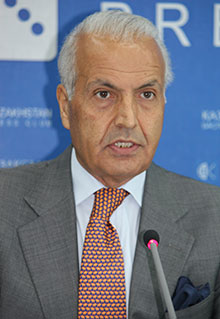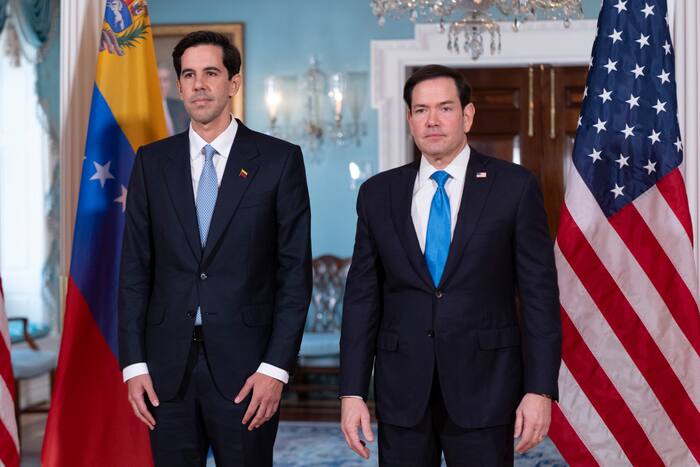
Secretary of State Marco Rubio sat down with his Venezuelan counterpart this week in a high-stakes diplomatic maneuver designed to force measurable progress on Venezuela’s stalled election preparations. The meeting marks a sharp escalation in Washington's direct pressure campaign, shifting away from broad, multi-year negotiation frameworks toward immediate, verifiable benchmarks on voter registration, international observation, and candidate eligibility. For the Biden-turned-Trump-era foreign policy apparatus now led by Rubio, the core objective is simple. Caracas must prove it will allow a competitive vote, or face the swift reinstatement of crippling oil and financial sanctions.
Diplomatic readouts rarely tell the whole story. On the surface, a bilateral meeting between top diplomats signals a willingness to talk, a thaw in what has been one of the Western Hemisphere’s most frozen relationships. Beneath the polite handshakes and carefully worded statements lies a brutal geopolitical reality. Both sides are running out of time, and both sides know the current equilibrium cannot hold through the end of the year.
The Architecture of High-Stakes Diplomacy
To understand why Rubio is engaging directly with a government Washington has spent years trying to isolate, you have to look at the failure of maximum pressure. For nearly a decade, American policy toward Venezuela swung between total economic strangulation and cautious, piecemeal sanctions relief. Neither approach dislodged the ruling socialist party, nor did it produce the institutional reforms necessary for a credible national ballot.
Rubio brings a fundamentally different posture to Foggy Bottom. Having spent his Senate career advocating for hardline policies against Havana, Managua, and Caracas, his decision to meet face-to-face with Venezuelan leadership carries immense political weight. He cannot be accused by domestic critics of being soft on authoritarianism. That political capital gives him room to negotiate—and to threaten—with a credibility his predecessors lacked.
The immediate focus of the talks centers on the mechanics of the electoral system. In Venezuela, elections are rarely lost on voting day; they are won or lost months earlier in the quiet bureaucratic offices of the National Electoral Council (CNE).
When the CNE delays updating the voter registry, millions of young Venezuelans inside the country and millions more living abroad are effectively disenfranchised. When the courts uphold arbitrary bans against opposition figures, the ballot is curated before a single vote is cast. Rubio’s team arrived at the table with a granular checklist targeting these exact administrative bottlenecks. They are no longer asking for vague promises of democratic goodwill. They are demanding specific technical fixes with hard calendar deadlines.
Why Oil and Migration Dictate the Timeline
Washington’s sudden urgency has very little to do with abstract democratic ideals and everything to do with two tangible pressures: global energy markets and the southern border of the United States.
Venezuela sits atop the largest proven crude oil reserves on the planet. While decades of mismanagement and underinvestment have gutted its production capacity, even incremental increases in Venezuelan output help stabilize global supply chains during periods of Middle Eastern volatility and ongoing European energy adjustments. The Office of Foreign Assets Control (OFAC) holds the keys to this sector. By issuing or revoking specific licenses for American and European energy firms operating in the Orinoco Belt, the Treasury Department controls the primary lifeline of the Venezuelan state.
Caracas desperately needs that hard currency. Without oil revenues flowing into the central bank, the government cannot fund the public sector subsidies and military patronage networks that keep it in power. This economic vulnerability is Washington’s sharpest point of pressure.
At the same time, the migration crisis remains a potent political issue in the United States. Over seven million Venezuelans have fled their homeland since 2015, creating the largest displacement crisis in the Western Hemisphere. Every month that Venezuela’s economy stagnates and its political crisis drags on, tens of thousands more migrants make the perilous journey north through the Darien Gap.
Rubio’s diplomatic push is an attempt to solve both problems at once. A credible electoral pathway offers Venezuelans a reason to stay home and invest in their own future, easing migratory pressure on the region. Simultaneously, a verified political opening allows Washington to justify keeping energy licenses active, keeping crude flowing to Gulf Coast refineries without triggering a political backlash in Congress.
Inside the Venezuelan Electoral Bottleneck
The technical hurdles facing a genuinely free vote in Venezuela are staggering. Even if the political will existed overnight—and there is scant evidence that it does—the logistical infrastructure of the state is deeply compromised.
Consider the voter registry. Under Venezuelan law, the electoral roll is supposed to be updated continuously. In practice, registration centers are frequently understaffed, located in areas difficult for opposition supporters to reach, or plagued by unexplained technical outages. For the roughly four to five million voting-age Venezuelans living in exile across Colombia, Peru, Chile, Spain, and the United States, registering to vote is nearly impossible. Consular services are either closed due to severed diplomatic ties or require documentation that migrants simply cannot obtain.
Then there is the issue of political disqualifications. For years, the Comptroller General’s office has used administrative rulings to bar popular opposition leaders from holding public office. These bans are issued without due process, often citing vague financial irregularities that never result in formal criminal charges.
During the meeting, American diplomats pressed for a clear, transparent mechanism to lift these bans. Without the participation of the opposition’s chosen candidates, any election held in Venezuela will be dismissed by Washington and Brussels as a sham. Yet from the perspective of the ruling elite in Caracas, allowing a unified opposition to field its strongest candidate poses an existential threat.
The Observation Dispute
International monitoring represents another major fault line in the talks. Caracas prefers friendly observers from allied nations or regional blocs that rarely criticize electoral irregularities. Washington is insisting on full, unfettered access for technical missions from the European Union and the Carter Center.
True electoral observation is not simply showing up on Sunday morning to watch people drop paper ballots into boxes. Credible missions deploy months in advance. They audit the voter rolls, track state media coverage to measure fairness, monitor the use of public funds in campaigns, and test the electronic voting machines for vulnerabilities.
In previous cycles, Venezuelan authorities have agreed to international observation in principle, only to restrict the observers' movement or expel them when their preliminary reports proved unfavorable. Rubio’s team is pushing for binding diplomatic guarantees that observers will have complete freedom of movement and the right to publish their findings independently.
The Sanctions Trap and Its Unintended Consequences
To evaluate whether Rubio’s strategy will work, you have to look honestly at the track record of economic coercion. Sanctions are a blunt instrument. While they are designed to target the financial assets of regime officials and state-owned enterprises, their real-world impact almost always spills over onto the civilian population.
When Washington tightened financial sanctions in 2019, the Venezuelan economy contracted at a rate rarely seen outside of active war zones. Hyperinflation wiped out savings, hospitals ran out of basic antibiotics, and the electrical grid collapsed repeatedly. Yet the political leadership in Caracas survived. They adapted by building shadow financial networks, trading gold and oil through intermediaries in Asia and the Middle East, and tightening their grip on domestic food distribution.
Sanctions can bring a government to the negotiating table, but they cannot force a ruling class to sign its own political death warrant.
This is the fundamental dilemma facing the State Department. If Rubio snaps back the full weight of oil and financial sanctions too quickly, he risks destroying the very economic incentives that brought Venezuelan officials into the room. Caracas could simply walk away from the table, blame the resulting economic pain on American aggression, and hold an uncompetitive election anyway.
Conversely, if Washington continues to extend sanctions waivers without seeing concrete movement on voter registration and candidate rights, it signals weakness. The ruling party will happily pocket the oil revenue while running out the clock on the electoral calendar.
The Split Inside Caracas
A common mistake made by outside observers is treating the Venezuelan government as a single, monolithic entity. In reality, the ruling coalition is an intricate balancing act of competing factions, each with different economic interests and varying levels of exposure to international prosecution.
On one side are the ideological hardliners and elements of the security apparatus. Many of these figures face individual sanctions, asset freezes, or federal indictments in the United States. For them, losing power does not mean transitioning into a comfortable retirement or taking up seats as a parliamentary opposition. It means the very real possibility of extradition, asset forfeiture, or domestic retribution. Their incentive is to block any political opening that threatens their absolute control over the courts and the military.
On the other side are the pragmatists and technocrats managing the economy. These officials understand that Venezuela cannot rebuild its crumbling infrastructure or sustain basic governance without access to international credit markets and Western energy companies. They view normalized relations with Washington as essential for long-term survival, even if it requires accepting a more competitive political environment.
Rubio’s diplomatic engagement is calibrated to exploit this internal divide. By offering a clear path to normalized trade and energy investment, Washington is trying to empower the pragmatists in Caracas while raising the personal and financial costs for the hardliners who obstruct the electoral process.
Regional Ripple Effects Across Latin America
The outcome of these bilateral talks extends far beyond the borders of Venezuela and the United States. Governments across South America are watching the Rubio meeting closely, as their own domestic politics are deeply entangled with Venezuela’s stability.
In neighboring Colombia, President Gustavo Petro has staked significant political capital on normalizing ties with Caracas, hoping Venezuelan cooperation will help curb cross-border guerrilla violence and manage migration flows. In Brazil, President Luiz Inácio Lula da Silva has worked to bring Venezuela back into regional diplomatic forums, arguing that isolation only deepens authoritarianism.
Both Bogotá and Brasília have grown increasingly frustrated by Caracas’s foot-dragging on election commitments. A breakdown in the U.S.-Venezuela talks would put South American leaders in an awkward position. They do not want to endorse an unfair election, nor do they want to support renewed American sanctions that could trigger another massive wave of refugees spilling across their borders.
If Rubio can extract genuine concessions on the electoral timeline, it gives regional neighbors the political cover they need to press Caracas publicly. If the talks collapse, Latin America risks fracturing once again along ideological lines, paralyzing regional diplomacy at a moment when coordinated action on organized crime and migration is desperately needed.
What Verification Actually Looks Like
Diplomacy with authoritarian governments frequently gets bogged down in process rather than results. Announcements of new committees, joint working groups, and framework agreements create the illusion of momentum while the ground reality remains unchanged.
To avoid falling into this trap, analysts tracking the aftermath of Rubio’s meeting should ignore the diplomatic rhetoric and watch four specific, binary indicators over the next sixty days:
- The Opening of Special Registration Drives: Does the CNE deploy mobile registration units across major urban centers and opposition strongholds, and are diaspora voters allowed to update their status at consulates abroad?
- The Publication of a Binding Electoral Calendar: Does the government release an official, immutable schedule for the vote that provides enough lead time for campaigning and technical audits?
- The Reversal of Administrative Bans: Are high-profile opposition figures formally cleared by the Supreme Tribunal of Justice to register their candidacies without legal harassment?
- The Signing of Technical Observation Memoranda: Do the European Union and the United Nations receive signed, unconditional invitations to deploy full-scale observation missions?
If these four things happen, the meeting between Rubio and his Venezuelan counterpart will be remembered as a rare breakthrough in hemispheric diplomacy. If the coming weeks bring only new legal hurdles, sudden arrests of campaign organizers, and vague excuses about technical delays, the diplomatic window will slam shut.
Washington has placed its cards on the table, trading high-level recognition and potential economic relief for a verifiable democratic process. Now, the burden of proof sits squarely in Caracas, where the ruling elite must decide whether they fear economic collapse more than they fear the ballot box.