The blackboard in a Cambridge lecture hall does not know who stands before it. It only knows the friction of chalk, the pressure of a hand, and the equations that momentarily stitch chaos into order.
For Jason Arday, that blackboard was both a canvas and a crucible.
You may not have known his name until the headlines turned grim. You may not have tracked the improbable trajectory that took a boy told he would never read or write, a young man navigating the dense, compounding fog of severe learning difficulties, all the way to a professorship at one of the oldest institutions of learning on Earth. It is a story that sounds like fiction engineered to inspire. A modern fairy tale.
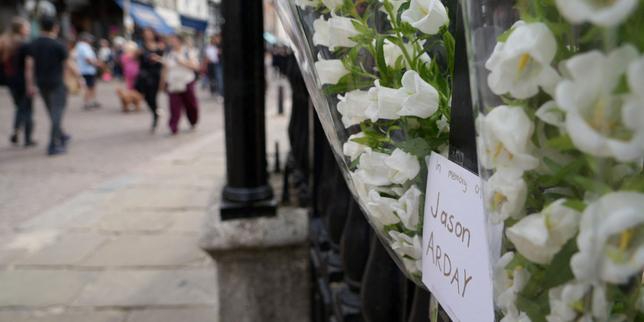
Except fairy tales do not end on a Friday in February, with a lifeless body discovered, an abrupt silence, and a sudden, frantic chorus of voices demanding to know what went wrong behind closed doors.
Silence.
That is what lingers now. But before the silence came the noise. And long before the noise came the invisible, crushing weight of walking into rooms where every single person assumes you took a wrong turn at the gate.
Consider what it takes to break through a wall that has stood for eight centuries. Cambridge is not merely a university. It is a monument of stone, tradition, and whispered hierarchies. When Jason Arday arrived as a professor of sociology of education, his presence was heralded as a historic breakthrough. He was one of the youngest Black professors in the history of the institution.
The media loves a milestone. The public loves a hero who defies the odds. We consume these narratives like sugar, letting them dissolve on our tongues to convince ourselves that meritocracy works, that the system corrects its own flaws, that perseverance is an infallible shield.
We forget to look at the cost of being the exception.
(Note: In examining the events surrounding his passing, we must rely on the verified reports that police found his death non-suspicious, yet the subsequent, urgent public demands for an independent inquiry into institutional pressure and alleged harassment have laid bare the profound grief and skepticism of a community refusing to let his final months go unexamined.)
To carry the hopes of an entire marginalized demographic on your shoulders is not an honor. It is a sentence. Every lecture is scrutinized. Every casual interaction in a faculty lounge is weighed on an invisible scale. You are never simply a scholar sharing your research on race, education, and social justice. You are a symbol. And symbols cannot bleed. Symbols cannot grow tired. Symbols are not allowed to break down, stumble, or cry out for help.
When the news broke that he was gone, the immediate reaction was shock. Then came the questions. Whispers turned into open letters. Calls for a thorough investigation into the environment he navigated grew louder, fueled by the agonizing realization that high achievement does not inoculate a human being against systemic cruelty.
Harassment in elite academic spaces rarely looks like the crude caricatures of television dramas. It does not always announce itself with slurs or overt threats. Often, it is far more insidious. It is the polite freeze. It is the invisible box drawn around your contributions. It is the steady, corrosive drip of microaggressions that accumulate over years until you wake up one day and realize you are drowning in a room full of people who are smiling.
Imagine running a marathon where every mile marker is moved further away the moment your foot touches it. Imagine every triumph being met not with celebration, but with an unspoken demand to prove, yet again, that you belong in the stadium.
Jason Arday knew that exhaustion intimately. He had spent his childhood unable to speak until the age of eleven. He had lived through a world that looked at his autism and developmental delays and wrote him off before his life had even begun. Through sheer, unrelenting willpower—and the fierce advocacy of a mother who refused to accept society's low ceiling for her son—he taught himself to read and write in his late teens. He earned a diploma at a local college. Then a undergraduate degree. Then a master's, followed by a PhD while working night shifts to pay the rent.
He did not just climb the ladder. He built the rungs with his bare hands, bleeding along the way.
And when he reached the summit, what did he find?
More walls.
The tragic irony of studying the sociology of education is that you become acutely aware of the machinery designed to exclude people like you, even when you are invited inside to operate it. You see the gears grinding. You recognize the polite exclusions. You understand the structural indifference that masks itself as tradition.
Friday arrived with a quiet devastation. The police statements were clinical, as they always are. Non-suspicious. No foul play. Case files that prefer neat periods over messy, uncomfortable commas.
But a human life is not a police report.
Friends, colleagues, and activists are right to demand answers, not because they are looking for a scapegoat, but because they are looking for the truth of how a brilliant mind, a resilient spirit, and a vital voice could be driven to such profound isolation. They are asking about the culture of the corridors where he walked. They are asking who listened when he spoke of the friction he faced. They are asking why the institutions that rush to claim credit for a pioneer's success are so often deaf to his struggles.
The investigation, if it comes, will look at emails, timelines, and institutional protocols. It will search for policies violated or duties neglected.
Yet the deeper investigation must happen within us.
We live in a culture that adores the narrative of the triumphant survivor while remaining entirely blind to the grinder that necessitated their survival in the first place. We celebrate the person who overcomes the obstacle without ever questioning why the obstacle was placed there, or who keeps rebuilding it after it falls.
Jason Arday's legacy is vast. His writings on education, race, and mental health remain essential reading for anyone trying to understand the modern world. His journey from non-verbal youth to Cambridge professor will inspire generations of students who look at the grand gates of academia and wonder if there is a place for them inside.
But inspiration is a cheap substitute for safety.
Brilliance should not require martyrdom. Breaking barriers should not require breaking the human being who pushes against them.
The lecture halls of Cambridge remain. The blackboard is wiped clean, waiting for the next hand to pick up the chalk. The students will return, opening their notebooks, eager to learn about the structures of society from the people who study them.
Somewhere in that quiet hall, the ghost of an impossible journey lingers. It asks us a question we cannot afford to ignore, a question written in the silence left behind by a man who gave everything he had just to be heard:
How many more do we wait to lose before we fix the room?