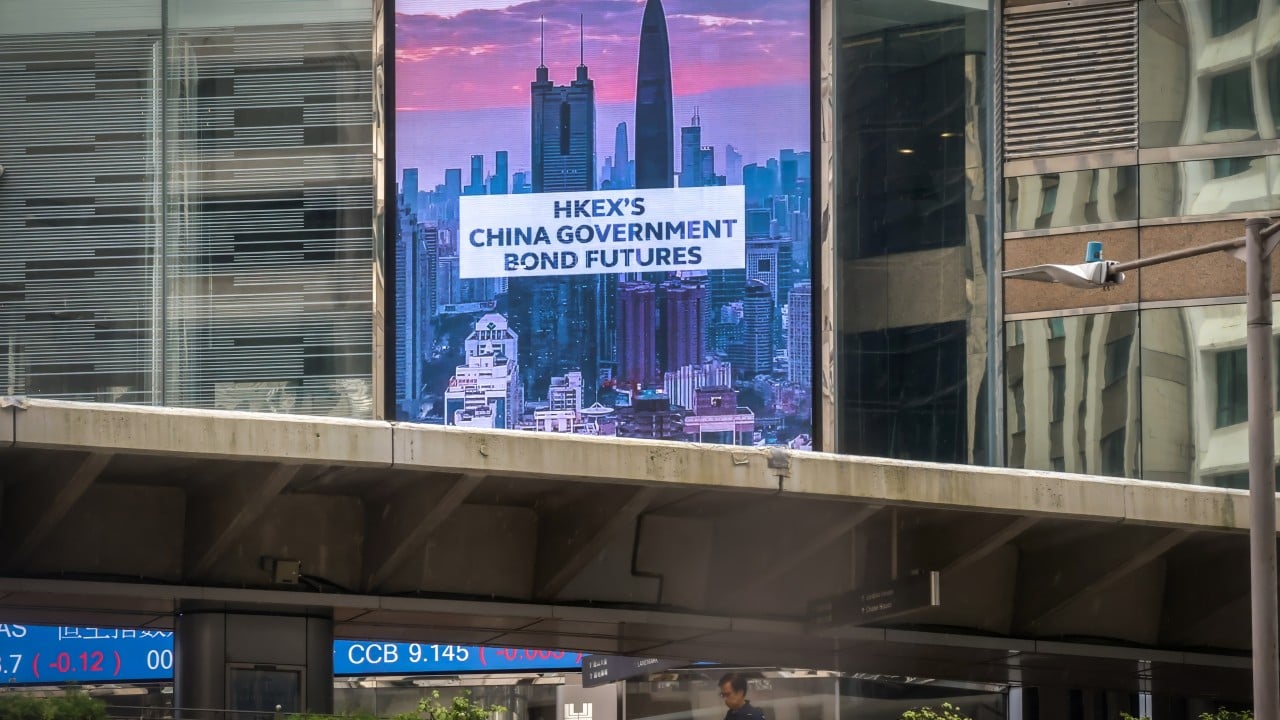
The trading floor on Queen's Road Central smells of stale coffee, expensive wool, and the electric hum of a thousand screens blinking in the Hong Kong humidity.
At desk 42, Li waits.
He is forty-two years old, with eyes that have watched three distinct financial panics roll across the South China Sea like seasonal typhoons. Around him, monitors flash red and green. But today, the numbers flickering across his secondary display carry a different sort of gravity. They represent something that was, for decades, merely a whisper in the back rooms of Beijing and the glass towers of Central: the concrete architecture of financial gravity shifting its weight.
When we talk about global currency markets, we usually talk about them as abstractions. We talk about liquidity pools, monetary policy, and macroeconomic trends as if money flows like water through stainless steel pipes. It does not. Money flows like blood through a living body, driven by pulse, panic, and proximity. And for a very long time, the body of global trade was wired to pump almost exclusively in greenbacks.
To understand why a new contract traded on a local futures exchange matters, you have to stand where Li stands. You have to feel the friction of managing billions of dollars worth of risk across borders where the rules can change with a single regulatory decree.
The Anatomy of an Anchor
Imagine trying to build a skyscraper on a shifting sandbar. That was the reality for international corporations trying to price long-term projects using the Chinese yuan.
For years, the currency of the world's second-largest economy was kept on a tightly controlled leash. Beijing wanted global trade, but it feared destabilizing capital flight. The result was a paradox: a currency used to buy everything from iPhones to industrial steel, yet locked behind a wall of administrative controls that made institutional investors nervous. How do you hedge your exposure when you cannot freely buy or sell the very instrument keeping you awake at night?
Hong Kong became the pressure valve.
As a hypothetical baseline, consider a mid-sized manufacturing conglomerate based in Shenzhen that sources raw materials globally while selling finished goods in Europe. Every single day, their finance team faces a terrifying math problem. They accept payments in yuan, but their supply chain obligations demand stability in other currencies. If the exchange rate moves just two percent against them during a three-month shipping window, their entire annual profit margin vanishes.
They needed certainty. They needed a hedge.
For the uninitiated, a treasury futures contract is not glamorous. It looks like a dense block of numbers on a spreadsheet. But think of it as a weather insurance policy for time. It allows a business to lock in the price of money tomorrow, using contracts tied to sovereign debt today. When the regulators finally cleared the path for treasury futures to launch directly through the channels connecting mainland stability with Hong Kong's international plumbing, they didn't just introduce a new financial product. They installed a permanent anchor in a notoriously turbulent sea.
The Human Cost of Volatility
I remember talking to a treasury director last autumn who looked like he hadn't slept since the previous fiscal quarter. His company was knee-deep in a multi-billion-dollar infrastructure project across Southeast Asia. Every single invoice was a negotiation involving three different legal jurisdictions and two distinct currency regimes.
"The hardest part isn't the math," he told me, rubbing his temples as the office lights hummed overhead. "The hardest part is the guessing. You're flying a 747 through heavy fog, and your instruments keep blinking."
That is the emotional core of this entire story. Behind every statistic about offshore liquidity pools and daily trading volumes are human beings making high-stakes bets with other people's retirements, livelihoods, and life savings. When markets lack sophisticated hedging tools, every trade is a naked gamble.
When the new treasury futures landed, they didn't make headlines on the evening news. There were no marching bands or ribbon cuttings on the trading floor. There was just a sudden, quiet exhale from risk managers across the Asia-Pacific region.
Suddenly, the mechanics of holding and protecting yuan assets had a safety net.
Redrawing the Map of Trust
Financial centers are born from geography, but they survive on trust.
New York has its deep legal traditions and unmatched capital depth. London has its history, its time zone, and its web of institutional relationships. Hong Kong has something entirely unique: it is the place where two entirely different economic universes speak to one another across a secure glass partition. It is mainland China's capitalist twin, possessing the legal framework and international connectivity that global investors require, combined with the direct, arterial pipeline to Beijing's policy engines.
When skeptics argue that global finance is fragmenting, they miss the subtlety of what is actually happening. The world isn't breaking apart; it is building parallel bridges.
The introduction of these futures contracts is a vote of confidence in that dual identity. It tells international pension funds, sovereign wealth managers, and corporate treasurers that they can step into the yuan ecosystem without leaving behind the risk-management tools they rely on in Chicago, London, or Frankfurt.
It anchors the offshore market right where it belongs: in the bustling, sleepless harbor of Hong Kong.
The Unseen Horizon
Let us step back for a moment and look at the broader pattern.
Currencies do not become global reserves overnight because of government decree. They become global because people trust them to hold their value over time, and because they are easy to deploy, protect, and trade. The dollar didn't unseat the British pound in a single afternoon; it took decades of institutional maturation, deep debt markets, and reliable hedging mechanisms.
The yuan is walking that same ancient, difficult path.
Every time a corporate treasurer in Frankfurt or Tokyo successfully hedges a yuan-denominated bond using a Hong Kong-cleared contract, the invisible scaffolding of a new financial order grows a little stronger. Every time a risk manager sleeps through the night because their downside is protected by a local futures market, the system proves its resilience.
The screens in Central keep flashing. The numbers scroll past in an endless, hypnotic cascade of green and red.
Li checks his watch, takes a sip of his now-cold coffee, and enters a trade. Outside his window, the harbor ferries cut white trails across the dark water, moving steadily between the shores, carrying people and cargo through the mist toward whatever comes next.