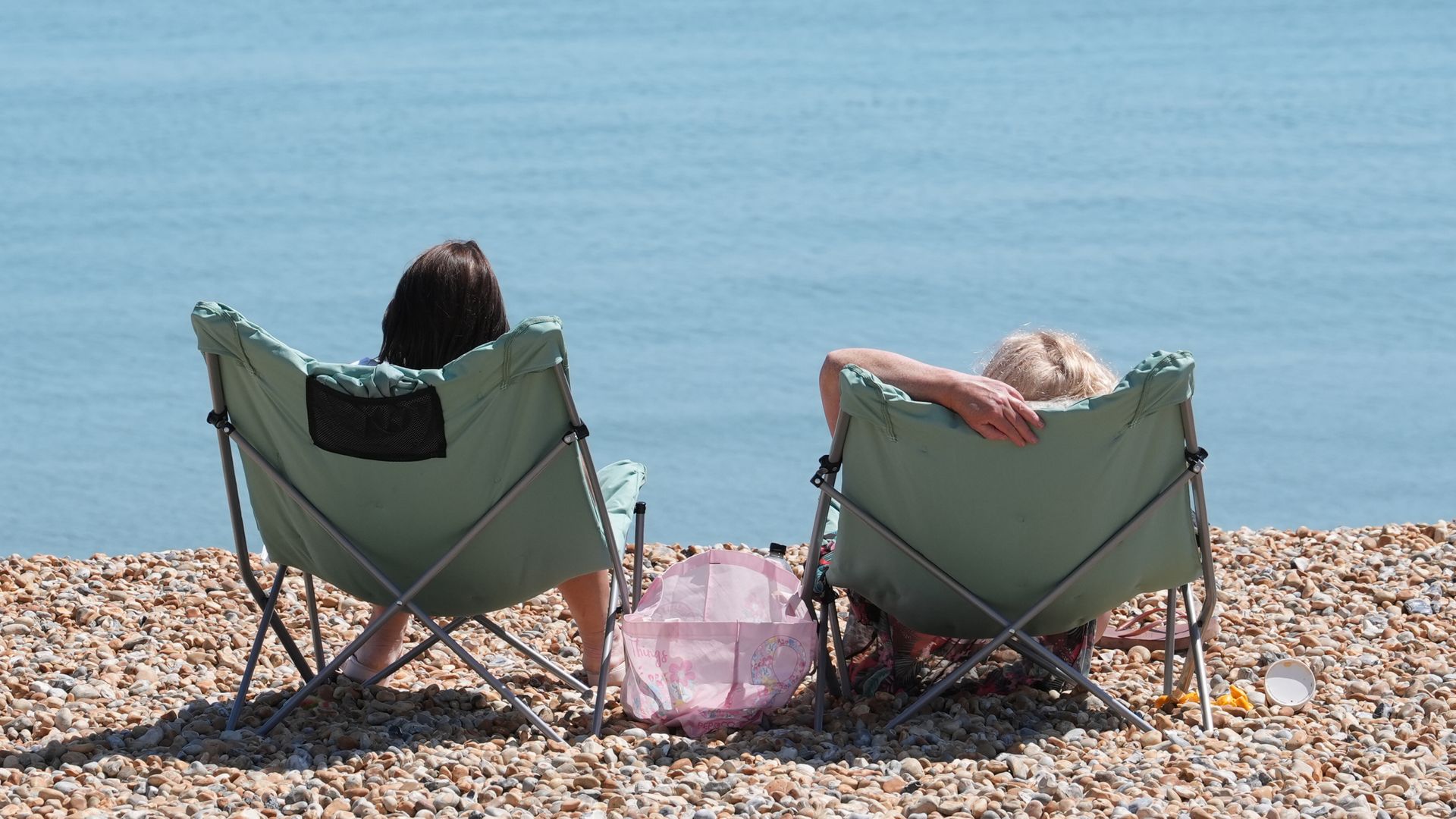
The mercury in the old thermometer on my kitchen windowsill is already creeping upward, and it is only May. It is a slow, silent climb. Outside, the London pavement is dry, radiating a faint, chalky heat that feels entirely wrong for this time of year. Most people welcome the sun. We are conditioned to celebrate it, to plan barbecues and flock to the nearest patch of dry grass. But lately, when the sky clears into that flawless, hard blue, a subtle tightening starts in my chest.
I remember July 2022 vividly. The air did not just feel hot; it felt heavy, almost malicious, like breathing inside a freshly opened oven. The UK hit 40°C for the first time in recorded history. It was a threshold we were never supposed to cross, a number that belonged to deserts, not to a country built on brick terraces and single-glazed windows. That summer changed how I look at the forecast. It stopped being about whether I needed an umbrella and started being about survival. For a deeper dive into similar topics, we recommend: this related article.
Now, the Met Office has issued its long-range outlook for the upcoming summer. Strip away the bureaucratic jargon and the cautious percentages, and the message is stark. We are facing a significantly increased likelihood of yet another summer of extreme heatwaves. The data points to a season that could easily rival, or perhaps surpass, the scorched earth of recent years.
But data is cold. It does not sweat. It does not lie awake at 3:00 AM in a top-floor flat, listening to the hum of a cheap fan that is merely moving boiling air around a bedroom. To truly understand what the Met Office is warning us about, we have to look past the bar charts and look at what happens to a society when the thermostat breaks. To get more context on this issue, extensive analysis can be read at The New York Times.
The Mirage of the Perfect Summer
Let us use a hypothetical scenario to understand how this plays out in real time. Meet Sarah. She is thirty-four, lives in a mid-terrace house in Birmingham, and works from home. When the first heat warning drops on the news, she does what most of us do. She buys extra ice lollies, closes the curtains, and assumes it will pass in a few days.
On day one, the heat is a novelty. On day two, the brick walls of her house begin to absorb the thermal energy. Bricks are wonderful for keeping heat inside during a freezing January, but they act as storage heaters in July. By day three, the house cannot cool down at all, even at night. The indoor temperature hovers around 28°C at dawn. Sarah is exhausted. Her focus at work slips. She snaps at her partner.
This is the invisible toll of a heatwave. It accumulates. It creeps into the bloodstream and alters human behavior.
The Met Office uses complex computer models to predict these seasons, analyzing global weather drivers like the El Niño Southern Oscillation and North Atlantic sea surface temperatures. These oceans are currently holding an unprecedented amount of warmth. Think of the Atlantic as a massive, watery battery that has been overcharged. As summer settles over Europe, that stored energy will inevitably bleed into our atmosphere, blocking the cool, wet weather systems that usually provide relief.
The meteorologists speak in probabilities. They talk about a "forty percent chance of a significantly warmer than average season." In statistical terms, that is a massive shift from the baseline. In human terms, it means the dice are heavily loaded toward disruption.
When the Infrastructure Melts
We are fond of mocking ourselves for how easily our country grinds to a halt. A dusting of snow cancels trains; a leaf on the line causes chaos. It is easy to laugh, until you realize that our entire civilization was engineered for a climate that no longer exists.
Consider the steel rails that connect our cities. They are bolted down and tensioned to withstand a specific range of temperatures. When the air temperature hits 36°C, the steel under the direct glare of the sun can easily reach 50°C. The metal expands. It has nowhere to go.
Buckling.
Suddenly, a commuter trying to get home to their children is stranded on a platform, watching the departure board turn a synchronous, depressing red. It is not a minor inconvenience; it is a systemic failure. The same applies to our hospitals. The NHS operates on a knife-edge during the winter, a fact we all accept. But summer is becoming equally perilous.
During an intense heatwave, emergency rooms do not fill up with people suffering from sunburn. They fill up with people whose hearts and kidneys are failing under the strain of regulating their core temperature. The elderly, the very young, and those with pre-existing conditions are the first to bend under the pressure. When the Met Office raises the alarm months in advance, they are not trying to ruin our holiday plans. They are giving hospital administrators, energy grid operators, and local councils a window to prepare for a surge in mortality.
The Confusion of the New Normal
It is completely valid to feel conflicted about this. I do. Part of me still craves the warmth, the long evenings, the freedom of a British summer. It feels cynical to look at a sunny forecast with a sense of dread. We want to believe that 2022 was a freak occurrence, a once-in-a-century anomaly that we can relegate to the history books.
The science tells us otherwise. What we used to consider an extreme, record-breaking summer is rapidly becoming the baseline. The shifting baseline syndrome means we forget how things used to be. We accept the brown, parched grass in our parks as normal. We accept the restrictions on water usage as an annual tradition.
But there is nothing normal about the speed of this transition.
To visualize the mechanism behind this, think of a atmospheric river. Normally, the jet stream—a high-altitude ribbon of fast-moving air—wiggles across the Atlantic, bringing us a steady rotation of rain and sunshine. But as the Arctic warms faster than the equator, the temperature difference between the two flattens. The jet stream loses its momentum. It becomes lazy and loopy.
When it gets stuck in a high-pressure loop over the UK, it creates a heat dome. It traps the warm air, compresses it, and bakes the ground day after day, prevents clouds from forming, and allows the sun to relentlessly punish the earth. That is what happened before, and that is the setup the Met Office is watching materialize once again.
Preparing the Home Front
If the warning holds true, we cannot afford to be passive observers. We have to change how we interact with our immediate environments. The instinct to fling open every window the moment the sun comes out is actually counterproductive when the air outside is hotter than the air inside. We have to learn the Mediterranean art of the shutter—shutting out the light during the peak hours, trapping the cooler air inside, and only opening up when the sun drops below the horizon.
We also need to look out for each other. The true tragedy of extreme heat is that it isolates. The vulnerable retreat indoors, behind closed doors and drawn curtains, invisible to their neighbors. A simple knock on a door to check on an elderly neighbor with a bottle of cold water is not just a polite gesture anymore. It is a critical intervention.
The upcoming months will test our resilience, our infrastructure, and our capacity to adapt to a reality that is shifting faster than our laws and habits can keep up with. The Met Office has laid out the numbers, clear and unvarnished. The probability is high. The air is warming.
I look back out my kitchen window. The shadow of the neighboring house is shortening as noon approaches. The air is perfectly still. No breeze. No rustle in the leaves of the plane tree down the street. Just the quiet, persistent pressure of a sun that feels a little closer, and a little heavier, than it did when I was a child. The summer is coming, and it is bringing its own set of rules.