Air Force One doesn't just land. It arrives with the mechanical arrogance of a small city, a gleaming blue-and-white silhouette cutting through the persistent, charcoal haze of a Beijing afternoon. As the wheels touch the tarmac, the vibrations aren't just felt by the pilot or the dignitaries waiting in stiff, choreographed lines. They are felt in the soybean fields of Iowa, the semiconductor labs of Taipei, and the quiet, anxious corridors of power in Tehran.
This isn't a routine diplomatic stop. It is a collision of two different versions of the future.
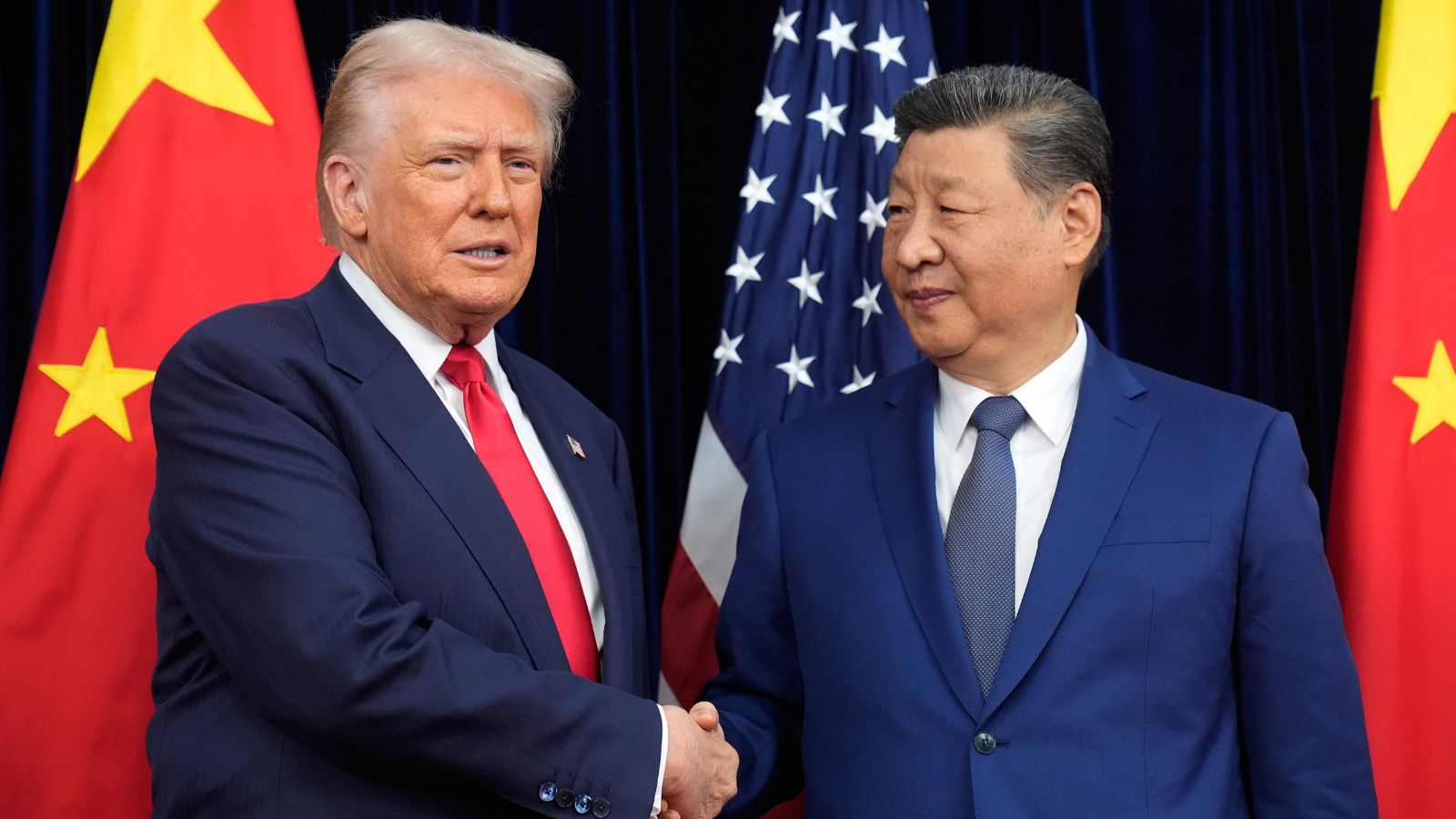
Donald Trump steps onto the gangway, a man who views the world as a series of zero-sum transactions. Waiting somewhere in the sprawling complex of the Great Hall of the People is Xi Jinping, a leader who thinks in centuries rather than fiscal quarters. Between them lies a table cluttered with the jagged glass of broken trade agreements, the simmering volatility of the Taiwan Strait, and the ghost of an Iranian nuclear deal that refuses to stay buried.
The Ledger of Grievances
Money is the loudest voice in the room. For decades, the relationship between the United States and China functioned like a dysfunctional but necessary marriage. America bought the world; China built it. But the balance sheet has soured.
Consider the "Rust Belt" worker in Ohio. To them, the massive trade deficit isn't a line on a Department of Commerce spreadsheet. It is the hollowed-out factory at the end of their street. It is the quiet of a town that used to roar. When Trump speaks of tariffs and "America First," he is tapping into a very real, very human sense of loss. He isn't just talking about dollars; he is talking about dignity.
On the other side of the Pacific, the narrative shifts. To the Chinese leadership, the American demands for structural change look less like fair play and more like an attempt to keep a rising power under a glass ceiling. They remember the "Century of Humiliation." They see every tariff as a slight against their sovereign right to prosperity.
Imagine a negotiation where both parties feel like the victim. That is the reality of the trade war. It is a psychological stalemate where every concession feels like a surrender.
The Island in the Eye of the Storm
If trade is the friction, Taiwan is the spark. To an outsider, the island might seem like a distant geopolitical puzzle piece. To the people living there, it is home. To Xi Jinping, it is the "sacred" missing piece of a unified China. To Washington, it is the democratic lynchpin of the Pacific.
The tension here isn't abstract. It is measured in the flight paths of fighter jets and the depth of the water where submarines glide in a deadly game of hide-and-seek. The stakes are crystalline. A single miscalculation—a pilot who veers too close, a captain who misreads a radar blip—could turn a cold war into a kinetic one in minutes.
The US President arrives in Beijing carrying the burden of these security guarantees. He must project strength without provocation, a tightrope walk performed over a canyon of historical animosity. China watches the American hardware sold to Taipei with the narrowed eyes of a landlord watching a tenant arm themselves.
The Iranian Shadow
Then there is the third player at this two-man table: Iran. While the meeting takes place in the heart of Asia, the ghosts of the Middle East haunt the conversation.
China is hungry. Its massive industrial machine requires a constant, pulsing flow of oil, and Iran is a primary tap. When the US imposes sanctions on Tehran, it isn't just squeezing the Ayatollahs; it is putting a chokehold on China’s energy security.
Trump views Iran through the lens of containment and maximum pressure. Xi views Iran as a strategic partner and a vital node in the "Belt and Road" initiative. When they discuss "global stability," they are using the same words to describe two completely different maps. One man wants to isolate a rogue actor; the other wants to secure a fuel line.
The Invisible Stakes
We often talk about these summits as if they are games of chess. But chess pieces don’t bleed. Chess pieces don’t lose their pensions when a market crashes because a dinner meeting went poorly.
The real stakes are the small things. The price of a gallon of milk. The ability of a tech startup in Shenzhen to buy the chips it needs to survive. The anxiety of a family in Kaohsiung watching the evening news. These are the human lives caught in the gears of Great Power competition.
Diplomacy is often described as the art of letting someone else have your way. But in the current climate, neither leader seems interested in the art of the compromise. They are looking for a win that they can sell to their respective domestic audiences. Trump needs a "deal" to brandish on the campaign trail. Xi needs to show his party and his people that China will no longer be pushed around.
The room where they meet will be quiet, shielded from the noise of the Beijing traffic. There will be tea, heavy carpets, and the soft scratching of pens. But outside those walls, the world is holding its breath.
We live in an era where the distance between a handshake and a catastrophe is measured in the ego of the men involved. As the two most powerful people on earth sit across from one another, they aren't just debating policy. They are deciding the temperature of the next decade.
The plane will eventually take off again, climbing through the smog and heading back toward the West. The headlines will count the billions of dollars in "memorandums of understanding" that usually amount to very little. But the true outcome won't be found in the press releases. It will be found in the silence that follows—either the silence of a temporary peace, or the heavy, ominous quiet that precedes a storm.
The world isn't a board game. It is a fragile, interconnected web of needs, fears, and memories. And right now, two men are pulling on the strings.