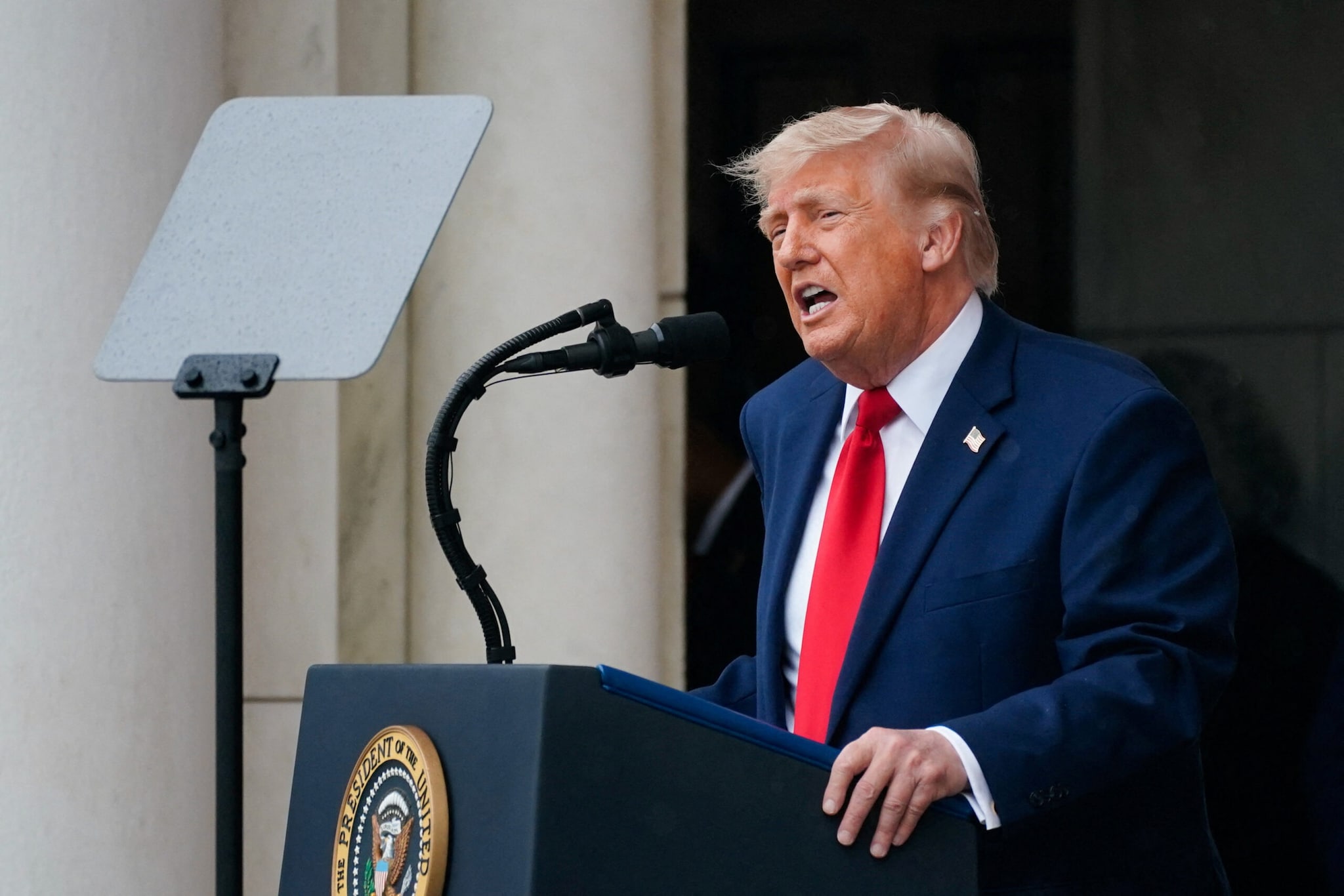
The phone on the heavy mahogany desk vibrates. It is a secure line, the kind that connects continents with a low, digital hum before the human voice cuts through the static. On one end sits Mar-a-Lago, awash in the humid Florida twilight. On the other, New Delhi, where the early morning sun is just beginning to bake the red sandstone of New Delhi’s administrative heart.
Donald Trump breaks the silence. His voice carries the familiar, performative cadence of American power. Narendra Modi listens, his responses measured, shaped by decades of calculated public survival.
This was not a standard diplomatic brief. It was a congratulatory call marking a moment of historical permanence: Modi’s ascent as India’s longest-serving elected Prime Minister, surpassing the foundational tenure of Jawaharlal Nehru.
To the casual observer scrolling through a news feed, it reads like a standard political footnote. Two global figures exchanging pleasantries. A routine nod to democratic longevity. But strip away the sterile press releases, and you find something much older and far more volatile. This conversation is a window into a massive shift in how global power is consolidated, perceived, and maintained.
Power is rarely about the single, explosive moment. It is about endurance.
To understand the gravity of a third consecutive term in a nation of 1.4 billion people, you have to look past the capital cities. Travel twelve hundred miles east of New Delhi to a small tea stall in Jharkhand. A man named Rajesh sits on a plastic stool, watching the dust kick up from a passing government convoy. For Rajesh, the abstract concept of a "longest-serving Prime Minister" isn't about historical tallies or constitutional frameworks. It is about predictability. He has spent ten years watching the same face on billboards, the same policy names stamped on his digital ration cards, and the same specific promises echoing from loud-speakers every five years.
There is a psychological comfort in repetition. But it comes with a quiet, creeping exhaustion.
When Nehru governed India in the wake of the 1947 partition, the challenge was existential. He was trying to hold together a fragile tapestry of languages, religions, and princely states that many Western analysts predicted would fracture within a decade. Nehru’s tenure was defined by the agony of creation. He had to build institutions from scratch, establishing a secular, socialist blueprint for a young republic.
Modi’s long horizon is entirely different. He did not inherit a blank slate; he inherited a sprawling, chaotic democracy ripe for optimization and ideological redefinition. Where Nehru built institutions to withstand external shocks, Modi has consolidated power by rewiring those institutions from within, aligning them with a singular cultural and economic vision.
During the phone call, Trump acknowledged this specific type of political mastery. It takes a certain kind of operator to navigate the turbulent waters of modern populism without drowning. In the American political theater, power is a pendulum, swinging violently from left to right every four to eight years, leaving behind a trail of executive orders designed to erase the previous administration's legacy.
India’s pendulum has stalled.
This stability is precisely what fascinates and terrifies the rest of the world. Western capital loves continuity. When a tech conglomerate looks to move its manufacturing hubs out of Shenzhen, it searches for a destination where the rules of the game will not change after the next election cycle. A decade of uninterrupted rule under a single administration suggests a predictable regulatory environment, an iron-clad commitment to infrastructure spending, and a centralized decision-making apparatus that can bypass bureaucratic gridlock with a stroke of a pen.
Consider what happens next when predictability hardens into permanence.
The line between a stable democracy and an electoral autocracy begins to blur. When one man, and one party, dominates the political landscape for long enough, the opposition doesn't just lose elections; they lose the capacity to imagine winning. The media ecosystem adapts to the prevailing winds. Civil servants begin to anticipate the desires of the executive rather than serving the public interest. The state and the leader become, in the minds of millions, completely synonymous.
This is the invisible leverage Modi held during that phone call. He wasn't just speaking as the leader of a developing market; he was speaking as the undisputed architect of modern India, a man who has outlasted his domestic rivals and outmaneuvered his foreign critics.
Trump’s outreach reveals a shared understanding of this new geopolitical currency. The old institutional alliances—the G7, the United Nations, the traditional treaties born from the ashes of World War II—are losing their grip. In their place is a more transactional, personalized form of diplomacy. It is a world where personal chemistry between strongmen dictates trade tariffs, security pacts, and regional spheres of influence.
If you look closely at the map of the Indo-Pacific, the stakes become blindingly clear. The United States needs India as a democratic counterweight to an increasingly assertive China. But the definition of "democratic" is undergoing a radical rewrite. Washington is forced to play a delicate game: praising New Delhi's democratic credentials on the global stage while turning a blind eye to the systematic marginalization of minorities and the tightening grip on domestic dissent.
It is a calculation rooted entirely in cold, hard realism. Principles are luxury goods in a multipolar conflict.
Back at the tea stall in Jharkhand, the sun begins to set, casting long, distorted shadows across the dirt road. Rajesh pays for his tea using a government-backed digital payment app on his smartphone—a seamless piece of technology pushed heavily by the current administration. He appreciates the convenience. It saves him hours of waiting in line at a corrupt local bank. Yet, he also knows that the same phone tracks his movements, monitors his transactions, and feeds into a vast data ecosystem managed by a state that remembers everything.
He is both empowered and trapped.
This is the duality of the long-term regime. It delivers tangible modernization while extracting a steep price in personal liberty. The highways get wider, the airports get shinier, the digital economy booms, but the spaces for disagreement, for protest, for alternative visions of the future, shrink by a fraction of an inch every single day.
When historical milestones are reached, the rhetoric is always triumphalist. The state media will broadcast montages of the leader’s journey from humble beginnings to the absolute pinnacle of global power. The foreign policy experts will analyze the geopolitical ripples of a sustained partnership between Washington and New Delhi. The markets will rally, reassured by the promise of uninterrupted policy directives.
But history is rarely written by the people who win the long game. It is felt by those who have to live beneath the shadow of their longevity.
The conversation between the former American president and the Indian prime minister eventually ended. The line went dead. The staffers cleared the notes from the desks, and the press secretaries began drafting the sanitised paragraphs that would populate the evening news cycle.
In New Delhi, the morning heat finally broke through the haze, illuminating the massive stone columns of the parliament building—a structure designed by imperial architects to last for centuries, now occupied by a political force that intends to do the exact same thing.