The coffee cup is still warm on the wooden table. Outside, the morning air carries that particular shade of gray that belongs exclusively to late autumn in the south of Ukraine. It is a quiet hour. The kind of hour where people usually debate whether to buy bread or patch a leaking gutter before the frost sets in.
Then comes the sound.
It is not an explosion. Not yet. It begins as a heavy, tearing groan high above the clouds, a sound like heavy furniture being dragged across a ceiling of iron. Anyone who has lived here long enough knows that groan. It is the signature of a glide bomb. A winged, heavy-metal cylinder dropped from miles high, guided by satellite signals, carrying hundreds of kilograms of high explosive. It has no pilot to look down and see the kitchen windows, the potted geraniums, the laundry hanging on a line. It has only coordinates.
And within seconds, those coordinates intersect with a human life.
The Arithmetic of Destruction
We talk about war in numbers. We tally strikes, map vectors, and count craters. Yet statistics are a brilliant, dangerous anesthetic. They numb us to the texture of reality.
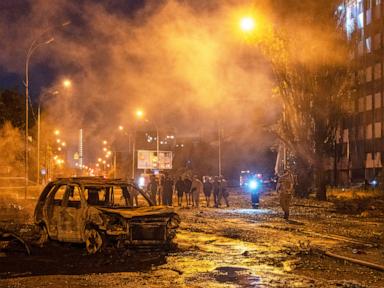
Consider what happens when a single bomb lands on a residential street. A house does not merely break. It unspools. Brick separates from mortar with a sharp, shattering crack. Glass vaporizes into a silver mist that hangs suspended in the shockwave. The air pressure spikes so violently that lungs seize and eardrums rupture before the sound wave even reaches the ear.
In this southern city, the strike arrived without warning air-raid sirens that could match its speed. Glide bombs are launched from tactical aircraft operating dozens of kilometers behind the front lines. They glide silently on aerodynamic wings, invisible to standard acoustic sensors until they are already descending.
One life was extinguished instantly. Others were altered forever in the space of a heartbeat.
To understand why this matters beyond the grim tally of a morning news report, we have to look at the weapon itself. Glide bombs represent a terrifying evolutionary step in modern ordnance. They are cheap to manufacture compared to precision missiles, yet they deliver devastating payloads from standoff distances that keep enemy jets safe from air defense systems. They turn every front-line and near-front-line city into an open-air laboratory for industrial demolition.
Living in the Shadow of the Horizon
I remember the feeling of watching the horizon, waiting for that unnatural line of smoke. You learn to read the sky differently. A normal cloud formation becomes suspicious. A sudden shift in the wind carries the phantom scent of cordite, even when the air is clean.
The psychological toll is heavier than the concrete rubble. Families pack go-bags not because they want to leave their homes, but because staying has become an exercise in radical uncertainty. Do you sleep in the hallway because it has two interior walls? Do you stay in the basement where a collapse might trap you beneath tons of masonry? There is no correct answer. There is only guesswork.
When the bomb hit the southern city, it did not strike a military garrison or an armored column. It struck a neighborhood. It hit the ordinary infrastructure of survival—streets where people walked dogs, where children traded schoolyard gossip, where old women tended to meager gardens.
This is the invisible stakes of the conflict. It is not just territory changing hands on a tactical map. It is the systematic erosion of the sanctuary of home. Every time a glide bomb finds a civilian block, the boundary between the front line and the rear echelon vanishes entirely. There is no behind the lines anymore. There is only the range of the wing.
The Silence That Follows
The smoke clears eventually. Emergency crews arrive, their boots crunching on safety glass, shoveling debris with practiced, grim efficiency. Sirens wail, echoing off hollowed-out facades.
Yet the true silence is the one left behind in the rooms where someone used to live. A half-eaten breakfast on a counter. A pair of slippers by a bed that will never be slept in again. These are the details that the strategic briefings omit.
The war grinds forward, fueled by physics, metallurgy, and political intransigence. But on the ground, it is measured in heartbeats cut short and the quiet, crushing realization that safety is an illusion engineered by distance.
As the sun sets over the southern river, painting the fractured skyline in bruised shades of violet and orange, the city holds its breath once more, waiting to see what the next cloud will bring.