The sound of a collapsing world is not a single, clean crack. It is a deafening, chaotic roar of grinding concrete, shattering glass, and the terrifying scream of shifting earth. Then, absolute silence.
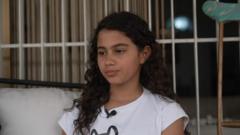
For eleven-year-old Ana Maria, that silence became her entire universe in a matter of seconds.
When the earthquake struck the coastal towns of Venezuela, turning vibrant neighborhoods into jagged hills of rubble, the news reports immediately filled with statistics. Rich Richter scale magnitudes. Casualty counts. Estimates of infrastructure damage measured in millions of dollars. These are the metrics we use to comprehend disaster from a safe distance. They give us a sense of order.
But numbers cannot capture the reality of being buried alive. They do not describe the smell of pulverized drywall clogging your nostrils, or the exact temperature of the darkness when the afternoon sun is permanently blocked out by two tons of fallen ceiling.
Ana Maria was not a statistic. She was just a child who had been watching television in her family’s apartment when the floor gave way.
When the shaking stopped, she was trapped in a hollow pocket beneath what remained of the kitchen counter. The space was barely larger than a coffin. Her legs were pinned, not crushed, but immobilized by a heavy beam. Above her, a precarious lean-to of shattered masonry held back the weight of the entire building.
To understand survival in a situation like this, you have to strip away everything you know about daily existence. Time stretches. Minutes feel like hours when the only sound is the rhythmic thumping of your own pulse in your ears. Panic is the first enemy. It accelerates the heart, quickens the breath, and drains the body of precious moisture.
Ana Maria cried out until her throat was raw and scraped. No one answered. The world outside was dealing with its own agony, and her small voice could not pierce the dense layers of concrete.
She was entirely alone.
By the second day, the hunger was a dull ache, but the thirst was a raging fire. The human body is remarkably resilient, yet it is governed by strict biological rules. Without water, organs begin to falter within days. In the stifling heat of a Venezuelan ruin, dehydration is a swift executioner.
She began to search the tiny perimeter her hands could reach. Her fingers scraped against rough edges, broken tiles, and shattered plastic.
Then, her hand brushed against something smooth and pliable. Plastic bottles? No. They were packets.
In the wreckage of the kitchen pantry, a small basket had been crushed, spilling its contents right into her narrow prison. It was a handful of single-serve condiments left over from fast-food meals and a half-wrapped block of hard, salty white cheese that had fallen from the refrigerator.
It was not a meal. It was an absurdity.
Consider what happens when a child is faced with a handful of ketchup packets and a block of processed cheese in total darkness. There is no nutritional strategy here. There is no calculation of caloric intake or macro-nutrients. There is only the primal instinct to put something, anything, into a dry mouth to stimulate saliva.
She tore the first ketchup packet with her teeth. The sweet, tangy, synthetic tomato paste coated her tongue. It was shockingly bright against the bitter taste of dust. It provided a momentary burst of sugar, a tiny spike of energy to a flagging system. Next came a small bite of the cheese, salt-cured and firm, forcing her mouth to work, keeping her mind anchored to the physical act of chewing.
This became her ritual. One packet. One small bite of cheese. Hours of waiting.
Outside her tomb, the rescue operation was a chaotic scramble against the clock. Neighbors used their bare hands to claw through the debris. Heavy machinery couldn't be used for fear of causing a secondary collapse. Every hour that passed diminished the statistical probability of finding survivors. The local authorities were already transitioning their mindset from a rescue mission to a recovery operation.
But a mother's instinct does not care about statistical probabilities. Ana Maria’s family refused to leave the perimeter of the collapsed structure. They shouted her name into every crevice, every air pipe, every gap in the stone.
On the fourth day, a volunteer search team equipped with acoustic listening devices arrived at the site. These devices are incredibly sensitive, designed to pick up the faintest scratches or heartbeats through layers of solid matter.
The rescuers called for absolute silence on the pile. The crowd of onlookers froze. The machinery down the street was shut off.
Through the headphones, a technician heard it.
Tap. Tap. Tap.
It was the rhythmic striking of a piece of broken tile against a metal pipe. Ana Maria had heard the muffled vibrations of footsteps above her and used the last remnants of her strength to signal back.
Finding a survivor is only half the battle. Extricating them from a structural house of cards is a delicate, terrifying engineering problem. One wrong move, one stone removed incorrectly, and the entire pile settles, crushing the life out of the person beneath.
For two more days, rescuers worked in shifts, tunneling horizontally through the debris. They passed down a thin plastic tube to supply fresh air, but the space was too narrow to send down water or food.
"I have food," Ana Maria whispered through a tiny gap when a rescuer's voice finally reached her clearly. "I have ketchup."
The rugged rescue worker, a man who had pulled dozens of bodies from the ruins over his career, later admitted he had to turn his face away so his teammates wouldn't see him break down.
When they finally cleared the last barrier on the sixth day, sliding her out on a narrow spinal board, the blinding Venezuelan sun hit her face. The crowd erupted into tears and cheers.
She was emaciated, covered in a thick layer of grey dust, and her fingers were stained red from the tomato paste. Doctors at the field hospital were stunned by her condition. While severely dehydrated and showing signs of acute malnutrition, her vital organs were functioning.
The humble ketchup packet, often dismissed as junk food trivia, had saved her life. It contained high-fructose corn syrup, salt, and water—essentially a rudimentary survival ration that kept her blood sugar from crashing into a fatal coma. The cheese provided just enough fat and protein to prevent her muscles from completely catabolizing themselves.
We often look for grand miracles in stories of survival. We want to believe in extraordinary interventions or superhuman strength. But real survival is usually much quieter, much stranger, and far more fragile. It is an eleven-year-old girl in the pitch black, methodically rationing plastic packets of condiments, refusing to let the darkness win.
As she was loaded into the ambulance, her mother held her hand, weeping openly. Ana Maria looked up, her eyes adjusting to the light of a world she thought she had lost forever.
She asked if they could go home now, and if there was anything else to eat.