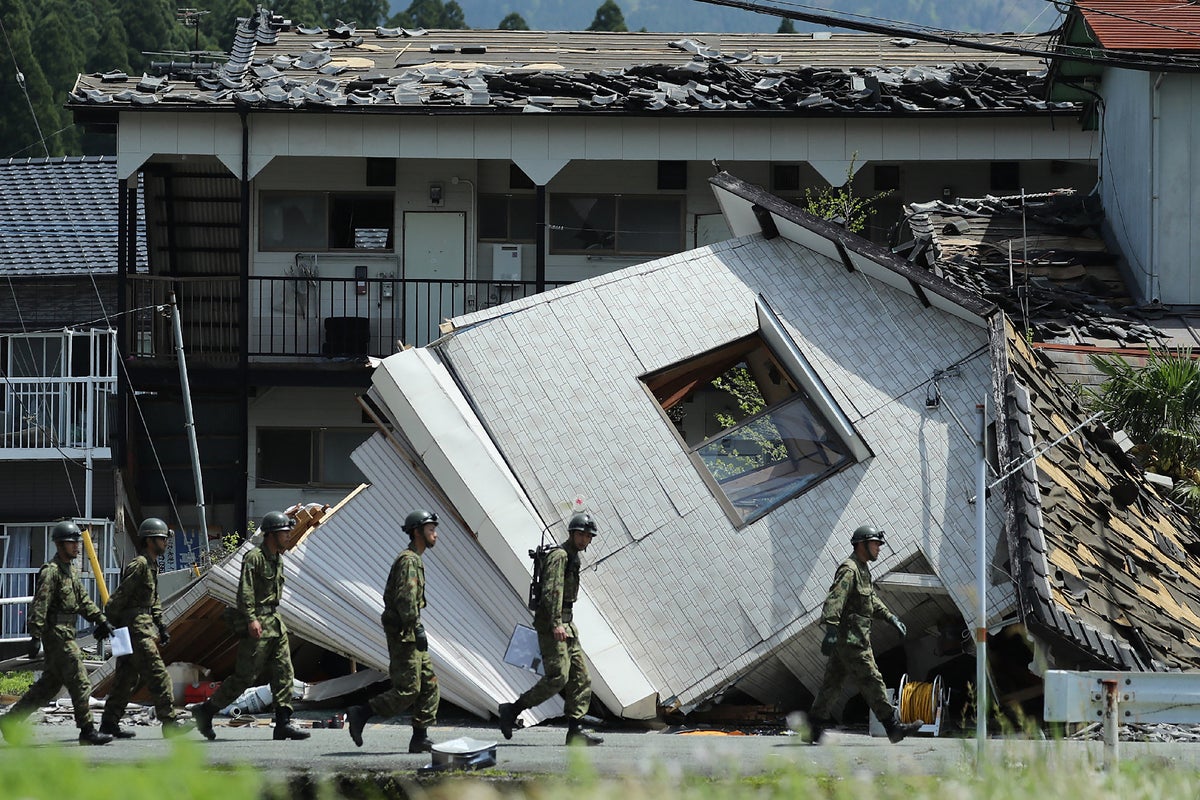
Ground zero shook violently at 4:27 PM on a Tuesday, plunging Japan's southern Kyushu island into immediate chaos. A powerful earthquake—measured at magnitude 7.1 by the Japan Meteorological Agency and 6.8 by the US Geological Survey—struck Kumamoto Prefecture.
The disaster quickly escalated far beyond standard seismic rattling. At the massive Aeon Mall Kumamoto in Kashima, an explosion ripped through the complex shortly after the initial tremors. The blast tore away the building's exterior, collapsed the second floor, and exposed twisted steel beams while trapping shoppers and staff inside.
You need to understand the scale of this event. This isn't just another routine tremor in a country accustomed to tectonic shifts. Multiple fatalities and dozens of injuries piled up across the region as secondary disasters compounded the initial shock.
Why the Kumamoto Mall Blast Turned Fatal
Initial evacuation procedures at the Aeon Mall seemed to work on paper. Hundreds of people cleared the roughly 200 shops safely when the shaking started. But tragedy struck when some individuals reportedly re-entered the unstable structure or remained trapped before the secondary blast occurred.
Government sources and local fire departments pointed toward a suspected gas leak triggered by the violent ground motion. When the accumulated gas ignited, the resulting explosion caused catastrophic structural failure. Two women in their 20s were later confirmed dead at the scene, and rescue crews found others unresponsive as they combed through tons of concrete and debris.
Search and rescue operations faced immense dangers. Prime Minister Sanae Takaichi mobilized emergency teams and thousands of Self-Defense Forces personnel to work through the night. Power outages blanketed thousands of homes, major highways cracked open, and rail lines suffered severe disruptions.
The Wider Impact Across Kyushu
The shopping centre explosion was only part of the catastrophe. At the Nippon Paper Industries Yatsushiro Plant, a massive industrial chimney collapsed during the height of the quake. That structural failure trapped over a dozen workers, leading to additional fatalities and critical injuries.
Hospitals in the prefecture were quickly overwhelmed. Medical staff reported a constant influx of patients suffering from bone fractures, burns, and trauma caused by falling objects. Power failures inside medical facilities forced staff to manage emergency surgeries under severe operational constraints.
Major industrial operators in the area, including semiconductor giant TSMC, Sony, and Fujifilm, immediately evacuated their production plants to check for structural integrity and chemical leaks. Fortunately, nuclear safety authorities confirmed that reactors operating in the wider region maintained normal functions without radioactive abnormalities.
Lessons From Past Disasters in Kumamoto
This region carries deep scars. Exactly a decade prior, Kumamoto suffered a catastrophic sequence of earthquakes that killed over 270 people. Building codes in Japan remain among the strictest globally, designed explicitly to prevent total pancaking during high Shindo-scale events.
Yet, infrastructure resilience hits limits when multi-hazard events occur. An earthquake combined with a gas-leak explosion creates a volatile scenario that standard seismic engineering alone cannot fully prevent. Gas shut-off valves, immediate utility isolation, and post-quake re-entry protocols are under intense scrutiny by safety inspectors today.
Aftershocks continue to rattle the southern island. Authorities have warned residents to stay clear of damaged structures, monitor local broadcast updates, and prepare for potential secondary landslides as emergency responders maintain round-the-clock recovery efforts.