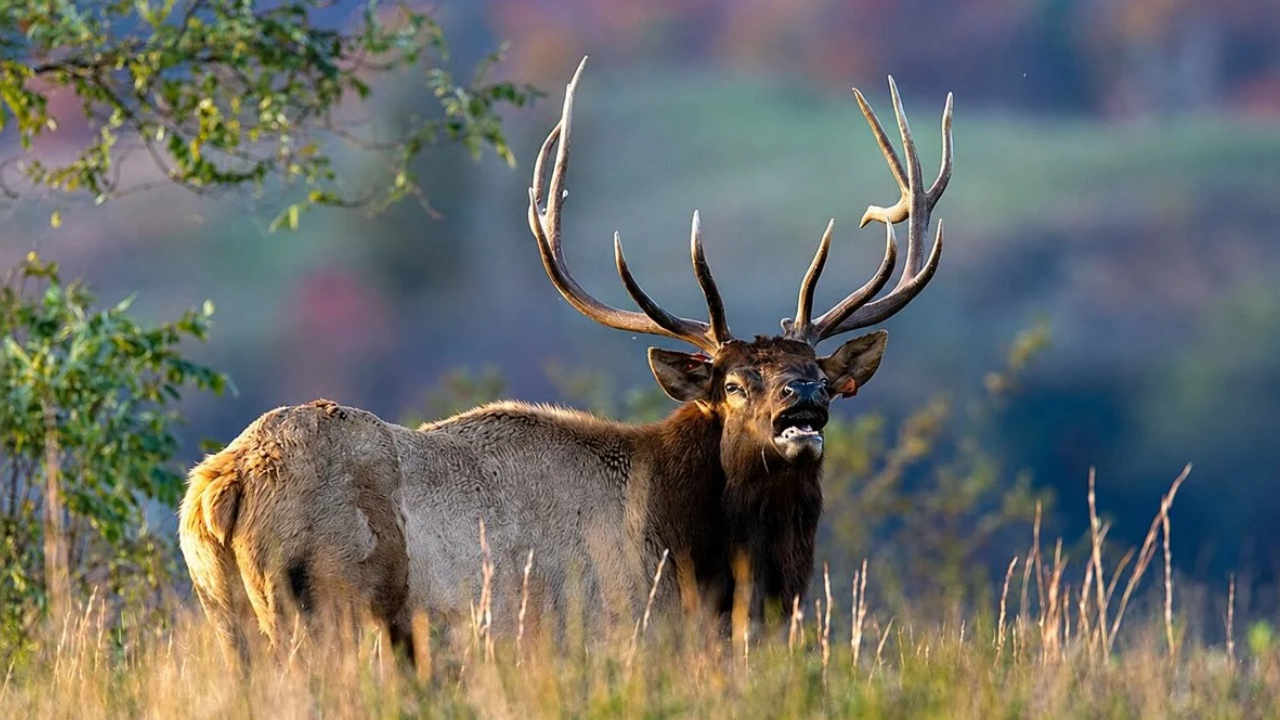
Elk vanished from the hills of West Virginia over a century ago. Overhunting and habitat loss wiped them out entirely by the late 1800s. Today, the story looks entirely different. Biologists tracking the state's reintroduced herd have noticed a significant shift. The animals are finally roaming far beyond their core territory in the southern coalfields.
If you have ever tried tracking reintroduced wildlife, you know how stubborn they can be about staying put—or refusing to cooperate. But the Mountain State's elk population is writing its own rules.
The Core Range Test
The modern comeback started back in December 2016. That winter, the West Virginia Division of Natural Resources released the first 24 elk at the Tomblin Wildlife Management Area in Logan County. Over the next few years, officials brought in more animals from Kentucky and Arizona, pushing the total herd past 130 individuals alongside at least 60 native calf births.
For a long time, these animals treated the Tomblin area as an absolute home base. GPS telemetry collars tell the real story now. Randy Kelley, the state's elk project leader, noted that growing numbers are triggering natural wanderlust. Young cows and bulls are testing nearby terrain. One young cow recently traveled north into Lincoln County near Harts Creek, hanging out on private farmland and ridge lines before heading back to Tomblin.
This movement does not mean a massive stampede is taking over the entire state. It does mean the restoration process is entering a mature phase. The designated Elk Management Area spans roughly 2,845 square miles across Logan, Mingo, McDowell, Wyoming, and parts of Boone, Lincoln, and Wayne counties. As numbers creep up, individual animals are vetting those outer boundaries themselves.
Tapping Into the Elk Tourism Boom
This expanding range brings massive attention to southern West Virginia. What started purely as a conservation gamble has turned into a major wildlife tourism draw.
If you want to see these creatures face-to-face, you no longer have to guess where to look. The state runs structured Elk Management Tours every weekend through September and October. These four-hour excursions depart from Chief Logan Lodge at sunrise and mid-afternoon.
Expect to hike two to three miles through rugged terrain led by experienced park naturalists like Lauren Cole. Sightings aren't guaranteed—these are wild animals, after all, not zoo attractions—but your odds improve significantly with a guide who knows seasonal habits.
Visitors also benefit from the Tomblin Wildlife Management Area's dedicated Elk Education Center and elevated viewing platform. Built with accessible viewing areas, it gives the public a reliable vantage point to scan the ridges.
What Travelers and Locals Need to Know
Planning a trip requires booking early because tour slots sell out fast every single year. If you manage to grab a ticket, pairing it with a stay at Chief Logan Lodge unlocks special lodging discount codes like ELK26 during the autumn season.
Living alongside large wildlife creates valid questions for local residents. Farmers and gardeners occasionally worry about property friction, much like the early days of recovering deer populations. State wildlife managers actively monitor these boundary lines to address conflicts before they scale up.
The return of the elk proves that careful habitat management works. When animals start exploring outside their comfort zones, it signals a healthy, expanding population reclaiming its historic home. Pack your boots, respect the wildlife buffer zones, and head into the southern hills to witness a conservation milestone firsthand.