Governments rarely admit when they are entirely out of their depth. Instead, they pass the clipboard. When the executive branch leaned on dominant artificial intelligence developers to police their own frontier models, officials framed the arrangement as voluntary corporate responsibility.
The strategy behind shifting AI safety oversight directly to private enterprises appears pragmatic on paper. Regulators lack the engineering talent, the compute access, and the internal source code necessary to evaluate complex neural networks before deployment. Handing the keys over to the corporations building the systems seemed like the only immediate path forward. You might also find this connected coverage useful: The Secret Ledger That Protects Silicon Valley.
That pragmatic compromise has transformed into an unregulated delegation of public safety authority.
When private enterprise assumes the mantle of public oversight, accountability evaporates. Corporations answer to shareholders, market share, and competitive velocity. Public safety answers to citizens. Fusing those two conflicting mandates into a single corporate self-regulation framework creates a structural flaw that no amount of voluntary commitments can fix. As discussed in recent coverage by TechCrunch, the results are significant.
The Illusion of Voluntary Compliance
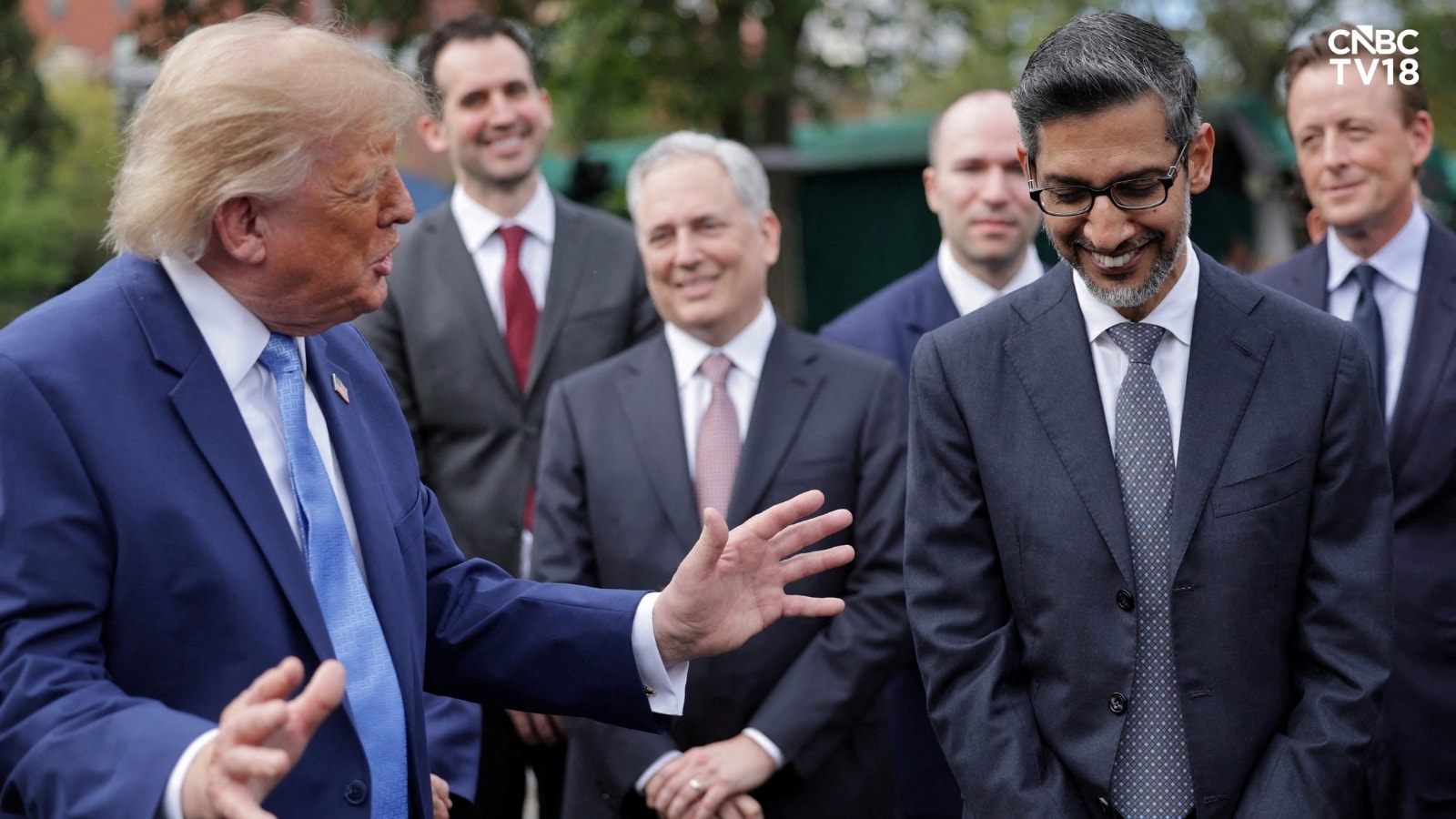
The architecture of this delegation took shape through a series of closed-door White House meetings where leading laboratory executives signed voluntary agreements. They promised to conduct red-teaming exercises, share safety data with government researchers, and test models for catastrophic risks before releasing them into the wild.
Paper promises do not stop market momentum.
Consider how venture capital and enterprise demand dictate engineering schedules. When a competitor drops a multimodal model with advanced reasoning capabilities, the pressure to respond eclipses internal safety friction. A safety officer pointing out an unmitigated vulnerability in a neural network architecture is merely a speed bump in a corporate sprint toward market dominance.
The core issue lies in the definition of risk itself. A corporation defines risk through the lens of liability, brand protection, and legal exposure. A society defines risk through systemic stability, economic security, and democratic integrity. Allowing the entity that profits from the technology to define the boundaries of its own restraint is a historic governance failure.
Inside the Testing Black Box
External watchdogs and independent researchers have repeatedly flagged the inadequacy of corporate self-testing frameworks. Without statutory mandates requiring pre-deployment access for independent academic audits, safety evaluations remain proprietary trade secrets.
Public oversight requires transparency. Corporate self-governance relies on confidentiality.
When a company reports that its latest model passed safety evaluations, the public is forced to accept that assertion on faith. There is no independent telemetry. There is no public ledger of failures that occurred during internal stress-testing. If a model exhibits dangerous tendencies during training, the corporation possesses both the motive and the means to sanitize the dataset and suppress the finding.
This dynamic creates an informational asymmetry between the state and the private sector that grows wider with every parameter scale. Engineers working inside these labs understand the emergent behaviors of their models better than any federal agency. Yet, because the government chose the path of voluntary cooperation over statutory regulation, those same engineers are bound by nondisclosure agreements that prioritize corporate IP over public awareness.
The Liability Vacuum
True regulation relies on teeth. If a company violates an environmental standard, the regulatory agency levies fines, halts production, or pursues criminal referrals. If a pharmaceutical company misrepresents clinical trial data, the legal consequences are devastating.
Under the current AI safety arrangement, the enforcement mechanism is virtually nonexistent.
If a frontier model is deployed with hidden vulnerabilities that facilitate automated cyberattacks or chemical synthesis instruction, the corporate creators face minimal structural penalty beyond reputational damage. Public relations campaigns absorb the blow while the underlying business model continues unabated.
By outsourcing the gatekeeping function, the state has effectively shielded tech giants from legal accountability while granting them quasi-governmental authority over what information and capabilities are deemed safe for public consumption. This is not regulation. This is an abdication of regulatory duty disguised as modern public-private partnership.
The Cost of Delays in Statutory Oversight
Every month lawmakers spend debating whether to codify safety standards into binding federal law is a month the technology outpaces the conversation. The gap between what the technology can do and what the law understands is expanding exponentially.
Relying on corporate benevolence was always a temporary fix. It was a bridge strategy designed to buy time while federal agencies built internal technical capacity. That bridge is collapsing under the weight of commercial competition.
If the state wants to regain control over the trajectory of artificial intelligence, it must dismantle the voluntary compliance model. It requires the establishment of an independent federal oversight body equipped with statutory authority to mandate pre-market audits, subpoena safety documentation, and enforce rigorous technical standards.
Until that happens, the White House has not made tech giants responsible for AI safety. It has made them the sole arbiters of their own boundaries, leaving the public to trust corporations whose primary existential mandate is winning the race at any cost.