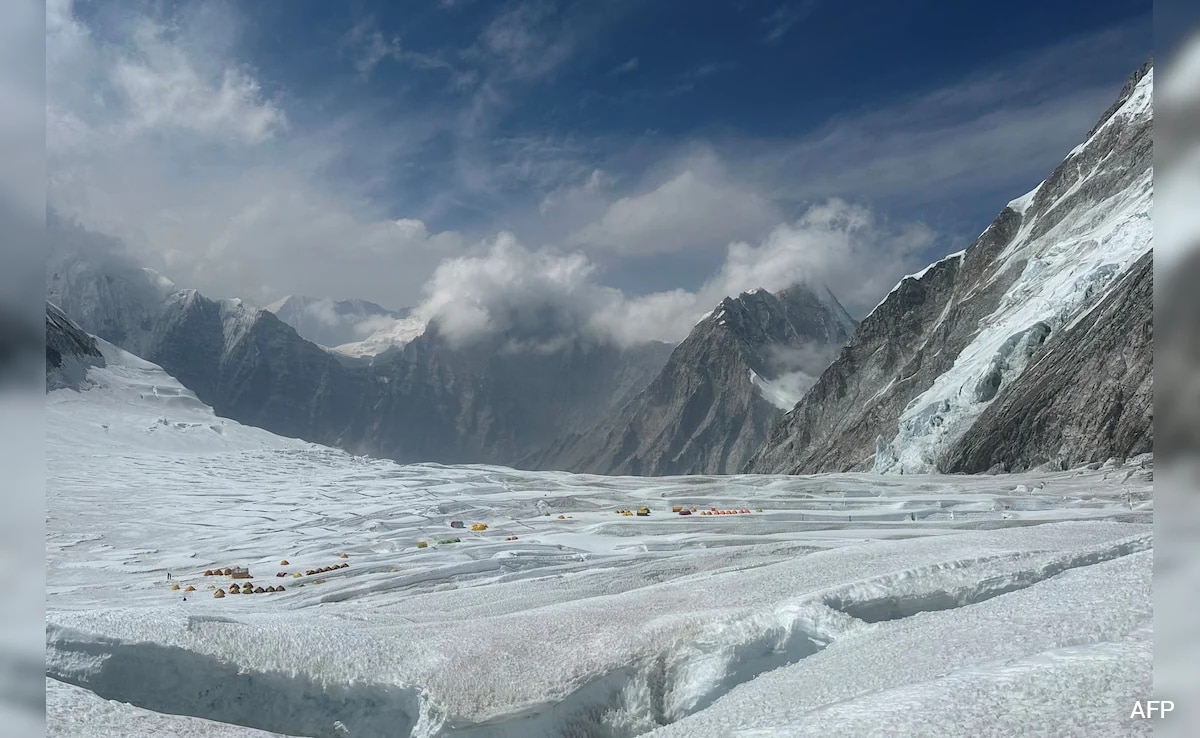
The Khumbu Icefall does not sleep. It groans. It pops with the sound of a gunshot echoing off the Lhotse face. For the Sherpas—the "Icefall Doctors" who weave a path through this shifting graveyard of frozen waves—the sound is a reminder that the mountain is a living thing, and right now, it is angry.
As the 2026 spring climbing season officially opens, the gateway to the summit has been slammed shut. A massive, unstable block of ice has collapsed across the standard route, a frozen fortress standing between hundreds of hopeful climbers and the highest point on Earth. This isn't just a logistical delay. It is a sudden, cold confrontation with the reality of high-altitude ambition.
The Reckoning at Base Camp
Tenji (a hypothetical but representative lead climber) sits in a yellow nylon tent, the steam from his tea disappearing into the thin, frigid air. He has spent three years saving money, six months training until his lungs burned, and two weeks trekking to this rocky outpost. Now, he waits.
The news filtered down early this morning. A serac—a tower of glacial ice the size of an apartment building—shattered. It didn't just sprinkle snow; it rearranged the geography. The ladders meticulously placed over crevasses are gone, twisted like paperclips. The fixed ropes are buried under tons of debris.
When people talk about Everest, they often focus on the summit. They talk about the "Death Zone" and the oxygen bottles. But the real drama usually happens much lower, in the Khumbu. It is a river of ice that flows down the mountain at a rate of several feet per day. You don't climb it so much as you survive it.
Why the Ice Won't Hold
The physics of a glacier are brutal and indifferent. Imagine a slow-motion car crash that lasts for centuries. Gravity pulls the mass of the Everest glacier down toward the valley, but the uneven rock beneath it forces the ice to crack, buckle, and stack.
The block currently obstructing the route is a symptom of a much larger, more concerning trend. Warmer temperatures in the Himalayas are making the ice more "plastic." It moves faster. It breaks more often. The window of stability that climbers rely on is shrinking.
When a block of this magnitude falls, it creates a domino effect. The Icefall Doctors cannot simply walk around it. They have to scout a completely new line, searching for "anchors" in ice that might not exist anymore. It is a high-stakes game of chess where the board can flip over at any second.
Consider the pressure on the expedition leaders. There are hundreds of clients at Base Camp. Each one paid anywhere from $45,000 to $100,000 for this chance. Every day spent waiting is a day of lost strength. Muscles atrophy in the thin air. Morale decays. The "summit window"—that brief period in May when the jet stream lifts off the peak—is a fixed target. If the route isn't cleared soon, the entire season could collapse under its own weight.
The Invisible Stakes
We tend to view Everest through the lens of individual achievement, but this ice block reveals the fragile ecosystem of the mountain. It isn't just about the person standing on top with a flag.
It is about the Sherpas who must now risk their lives multiple times to re-establish the route. Every trip through the Icefall is a roll of the dice. Statistically, the more time you spend under those hanging towers of ice, the more likely the mountain is to claim you. When the route is blocked, the Sherpas are the ones who go into the maw to fix it while the Western climbers wait for the "all clear" signal.
There is a psychological weight to this blockage that isn't captured in the news tickers. For a climber like Tenji, the ice block is a physical manifestation of doubt. You look up at the mountain and realize that your fitness, your gear, and your money mean nothing if the mountain decides the door is closed.
The Logistics of the Impossible
Fixing a route blocked by a massive ice chunk isn't about heavy machinery. There are no bulldozers at 18,000 feet. It is done with hand tools, ropes, and raw courage.
- Scouting: The Doctors must climb above the debris to see if the surrounding slopes are likely to shed more ice. If the area is still "active," they have to wait, listening to the mountain breathe.
- Pathfinding: They look for the "line of least resistance." Sometimes this means going further right toward the Nuptse wall, which carries its own risk of avalanches.
- Bridging: The collapse often opens new crevasses. This requires hauling aluminum ladders—bolted together in segments—across gaps that drop into a blue, bottomless silence.
The work is grueling. Every breath is a struggle. Every swing of an ice axe sends vibrations through a surface that might be hollow.
The Mirror of the Mountain
The blockage on Everest is more than a news story about a travel delay. It is a reminder of the friction between human desire and the natural world. We live in an era where we expect everything to be "seamless" and accessible. We book flights, reserve tables, and buy experiences with a click.
Everest refuses to cooperate with that mindset.
The mountain does not care about your training schedule or your Instagram followers. It does not care about the millions of dollars sitting in Base Camp. This massive ice chunk is a pause button pressed by the Earth itself.
For the climbers sitting in their tents tonight, the silence is the hardest part. The wind howls across the ridges, and occasionally, they hear the distant roar of another collapse. They are forced to confront the vulnerability that is usually masked by high-tech parkas and satellite phones.
They are small. The ice is vast.
The Icefall Doctors will eventually find a way through. They always do, driven by necessity and a deep, cultural resilience. But the route will be different. The mountain has shifted. The path that existed yesterday is gone forever, replaced by a new, more dangerous geometry.
As the sun sets over the Khumbu, turning the peaks a jagged, bloody red, the climbers look up at the white wall. They are waiting for permission to pass. They are waiting for the mountain to stop moving, even though they know it never truly does.
The ice block remains. A cold, silent sentinel. A reminder that at the edge of human endurance, we are never truly in control. We are just guests, holding our breath, hoping the roof doesn't come down before we find our way home.