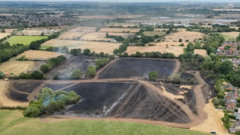
When the flames finally die, the silence that follows is heavy. Blackened trunks stand like iron spikes against a scorched horizon, and the soil smells of burnt carbon and wet ash. For decades, conventional wisdom treated post-fire recovery as a simple waiting game. Nature heals itself, the old refrain went. Just step back, plant a few pine saplings in neat rows, and let time do the heavy lifting.
That assumption is dead wrong.
Modern wildfire recovery requires an aggressive, multi-front intervention because high-severity mega-fires fundamentally rewrite ecological rules. When temperatures exceed normal historical thresholds, soil chemistry alters permanently, seeds buried deep in the seedbank turn to dust, and invasive weeds race in to choke out native regeneration before it even begins. Understanding how scorched earth actually recovers demands looking past romanticized notions of wilderness and confronting the hard mechanics of soil physics, hydrology, and biological succession.
The Hidden War Beneath the Ash
The immediate threat after a major fire is not the loss of adult trees. It is water.
Intense heat melts organic compounds in the topsoil, driving them downward where they cool and solidify into a waxy, water-repellent layer known as a hydrophobic seal. When the first autumn rain hits this hardened crust, the moisture cannot sink. Instead, it sheets across the surface, ripping away topsoil, carving gullies, and triggering catastrophic mudslides that reshape river valleys miles downstream.
Stopping this immediate erosion cascade dictates whether a landscape recovers or turns into an irreversible moonscape. Forestry crews and conservation scientists deploy heavy straw wattles, log erosion barriers, and rapid aerial seeding of sterile cover crops. These emergency steps buy precious weeks, keeping the dirt where it belongs while native seeds attempt to break dormancy beneath the surface.
[ Intense Heat ] ---> [ Organic Compounds Vaporize ] ---> [ Soil Cools & Hardens ] ---> [ Hydrophobic Seal Formed ] ---> [ Zero Water Absorption / Massive Runoff ]
Yet, stopping erosion is only the opening salvo. The biological clock is ticking, and the competition for reclaimed space is fierce.
The Seedbank Lottery and Serotiny
Not all seeds need help to survive. Millions of years of evolutionary pressure equipped specific plant communities with remarkable survival mechanisms. Take serotiny, the clever evolutionary adaptation found in certain pine species. Their cones remain tightly sealed by a dense resin, locked shut for decades until the intense heat of a crown fire melts the adhesive bond.
Within days of the blaze, thousands of seeds drop onto a bed of mineral-rich ash, perfectly timed to catch the sunlight that now floods the unshaded forest floor.
Other species rely on subterranean survival. Deep roots, bulbs, and rhizomes sheltered beneath feet of damp earth shoot up vibrant green sprouts within weeks of the smoke clearing. This burst of green is often mistaken for total recovery, but it masks a dangerous vulnerability.
The Invasive Weed Trap
Disturbed earth is an open invitation for opportunistic invaders. Aggressive non-native grasses and weeds spread seeds via wind and animal vectors at speeds native species simply cannot match.
- Cheatgrass in North American shrublands acts as an ecological arsonist. It grows rapidly, dies off early in the summer, and leaves behind a dry, highly flammable carpet that accelerates the return of future fires.
- Spotted knapweed and thistle crowd out slow-growing native perennials, starving local pollinators of specialized food sources and locking the ecosystem into a degraded state.
If land managers fail to aggressively target these invasive invaders during the first two seasons post-fire, the landscape shifts into a permanent weed-dominated novel ecosystem.
Rewriting Forest Management Paradigms
For a century, fire suppression policies starved forests of low-intensity ground fires that cleared out dead brush naturally. When ignition finally occurred, the accumulated fuel load turned manageable brush into apocalyptic infernos that scorched the earth down to sterile bedrock.
Restoring these regions now demands a radical departure from hands-off conservation. Forestry experts increasingly rely on prescribed burns and strategic thinning long before flames approach communities. By reducing fuel density, modern land managers ensure that when fires do happen, they burn cool enough to spare the soil biology and leave the seedbank intact.
At the same time, restoration forestry has abandoned the practice of planting monoculture timber plantations after a fire. Rows of identical Douglas firs create dense canopies that block sunlight, starving the understory and creating uniform fuel loads that invite the next disaster. Modern replanting strategies emphasize species diversity, mixing hardwoods, shrubs, and varied age classes to build biological resilience.
Nature does not heal because we wish it to. It heals when we stop treating land as a static postcard and start managing it as a dynamic, brutal, and constantly shifting biological engine.