Red.
On a financial terminal in Shanghai or Shenzhen, red does not mean danger. It means money. It means your stock is climbing, your bets are paying off, and the market is rewarding your foresight with cold, hard capital. Green is the color of the bleeding. Green is the color of panic.
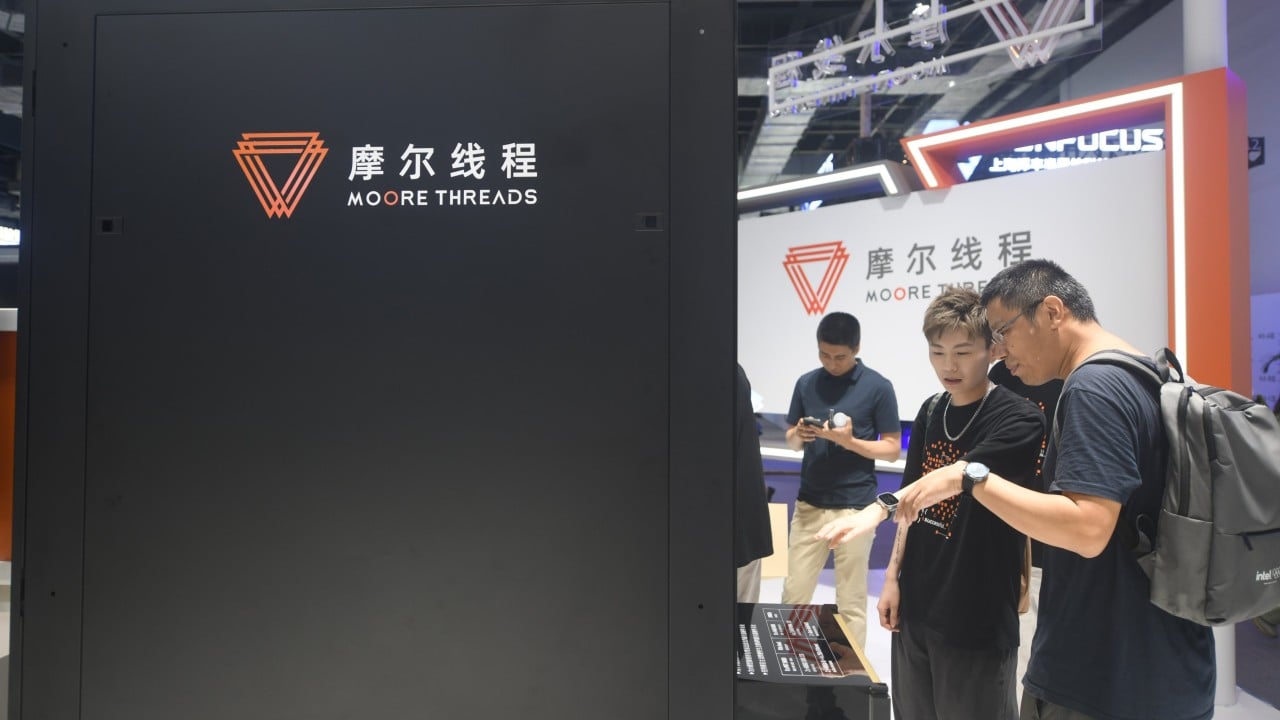
Consider a hypothetical retail investor—let us call him Wei—sitting in a cramped apartment in Pudong, the blue glow of two monitors illuminating the steam rising from his morning cup of tieguanyin tea. For months, Wei has watched the semiconductor boom unfold like a slow-motion thunderclap. He put his savings into two names that seemed untouchable: Biwin Storage Technology, a crucial memory supplier whose components find their way into global tech giants like Google, and Moore Threads, the ambitious graphics processing unit designer hailed across domestic tech circles as China's answer to Nvidia.
When the quarterly earnings reports finally dropped, Wei smiled. The numbers were staggering. Revenue was not merely growing; it was erupting. Orders were stacked to the ceiling. Factories were humming through the night. By every traditional metric of business success, both companies had just delivered a masterclass in execution.
Then the opening bell rang. And Wei's screen turned a violent, unrelenting shade of green.
The Cruel Arithmetic of High Expectations
To understand why Biwin and Moore Threads saw their stock prices plunge in the immediate aftermath of a massive revenue surge, you have to abandon the comforting logic of everyday life. In the real world, if you open a bakery and double your sales in six months, you are a hero. You hire more bakers, buy bigger ovens, and celebrate with your family.
Public markets do not live in the real world. They live six to eighteen months in the future, in a hyper-caffeinated hall of mirrors where good news is only good if it exceeds the wildest fantasies of people who have already placed their bets.
I remember the first time I got burned by this exact phenomenon during the cloud computing surge of the late 2010s. I had spent weeks dissecting a mid-cap server component maker, convinced by its exploding top-line growth that I had found a sure thing. When earnings day arrived, the company beat revenue estimates by twenty percent. I leaned back in my chair, waiting for the applause. Instead, the stock dropped fifteen percent before lunch. My stomach dropped right along with it. I felt cheated, almost betrayed by the math itself.
What I failed to grasp back then—and what caught thousands of investors off guard with Biwin and Moore Threads—is the difference between price and value, and the ruthless mechanics of the "buy the rumor, sell the news" cycle.
Long before Biwin's memory chips began shipping in massive volumes to support AI-ready smartphones and data centers, and long before Moore Threads posted triple-digit revenue expansions on the back of domestic AI compute demand, institutional money had already moved in. Traders had bid those shares up to stratospheric valuations, pricing in not just a good quarter, not just a great quarter, but sheer perfection. When the actual numbers arrived, no matter how impressive they looked on paper, they acted as a starting pistol for early investors to lock in their profits and walk away.
The Heavy Cost of Building the Future
There is a second, far less glamorous culprit hiding beneath the headline revenue figures, and it lives on the bottom line.
Revenue is vanity. Cash flow is sanity. And in the semiconductor business, building the future is ruinously expensive.
Think of a startup GPU designer like Moore Threads, or a specialized memory packaging firm like Biwin, as an athlete trying to sprint a marathon while carrying a barbell across their shoulders. Designing advanced graphics architectures or scaling up high-bandwidth and enterprise-grade flash storage requires staggering amounts of capital expenditure. Every yuan brought in through soaring sales is immediately swallowed whole by research and development budgets, wafer allocation costs, packaging equipment, and the relentless war for engineering talent.
For Moore Threads, competing in the GPU arena means fighting a two-front war. On one side, they must pour billions into software ecosystems—the invisible plumbing that makes developers actually want to write code for your silicon rather than defaulting to Nvidia's CUDA platform. Hardware without software is just expensive sand. On the other side, they face tightening geopolitical export controls and supply chain bottlenecks that drive up manufacturing costs at every turn.
So when Wall Street and Shenzhen analysts peeled back the glittering wrapper of that revenue surge, what did they find? They found widening net losses. They found compressed gross margins. They found companies burning cash at a furious pace just to keep their place in the race.
In a bull market fueled by pure hype, investors happily ignore profitability; they buy the dream. In a maturing market haunted by macroeconomic anxiety, investors suddenly put on their reading glasses and demand to see when the dream starts paying rent.
The Memory Cycle Trap
Biwin's predicament offers an even sharper lesson in the brutal cyclicality of hardware.
As a key storage and memory module supplier—one whose supply chain footprint connects to tier-one global brands including Google—Biwin sits at the mercy of one of the most volatile commodities in modern technology: NAND flash and DRAM chips. Unlike software, which can be copied infinitely at near-zero marginal cost, memory chips are physical goods subject to violent swings in supply and demand.
Over the past year, the artificial intelligence boom triggered a gold rush in data centers and edge devices. Everyone needed more memory. Prices for memory wafers surged, and companies like Biwin rode that wave upward, watching their quarterly revenues balloon as clients scrambled to secure inventory.
Yet seasoned semiconductor veterans know a terrifying secret about memory booms: every shortage plants the seeds of the next glut.
When prices rise, chipmakers crank up production. Meanwhile, buyers—terrified of running out of parts—double-order and triple-order, artificially inflating demand. Eventually, warehouses fill up. Orders suddenly freeze. Prices collapse, leaving module makers sitting on mountains of inventory they bought at peak prices, forced to sell them at a loss.
When investors looked at Biwin's surging revenue, many did not see a permanent new plateau. They saw the peak of a mountain, with a steep, icy cliff waiting just on the other side. Doubts began to creep into trading desks across Asia: Was this demand genuine end-user consumption, or was it panic-stockpiling by smartphone and PC makers bracing for tariffs and supply disruptions? Once that question enters the room, no earnings beat is strong enough to keep the stock price afloat.
The Geopolitical Tightrope
We cannot talk about Chinese semiconductor darlings without acknowledging the elephant standing in the middle of the cleanroom.
Both Biwin and Moore Threads operate at the exact fault line of the twenty-first century's defining technological rivalry. For Moore Threads, the placement on U.S. entity lists transformed the company overnight from a promising commercial startup into a strategic national asset—and a prime target of supply chain friction. Being cut off from advanced foreign foundries and cutting-edge lithography tools forces a company to rely on domestic alternatives that are still fighting to close a multi-year generational gap.
Investors love a patriotic champion, right up until the moment they have to calculate the yield rates on domestic fabrication lines.
Biwin faces a different, subtler version of the same squeeze. Serving global titans like Google while operating as a prominent Chinese storage manufacturer requires walking a diplomatic and logistical tightrope every single day. Global tech giants are actively diversifying their supply chains away from single-country dependencies, shifting assembly and component sourcing toward Vietnam, India, and Taiwan. Even if Biwin's current numbers look magnificent, institutional investors are constantly discounting the future value of those contracts against the risk of a single stroke of a regulatory pen in Washington or Brussels.
Reading Between the Lines of a Market Sell-Off
If you are watching from the sidelines—or if you are sitting in front of your own screen nursing a sudden, bewildering loss on a company that just reported record sales—it is easy to conclude that the stock market is broken.
It isn't. It is simply ruthless.
The simultaneous plunge of Biwin and Moore Threads is a textbook reminder that a great business moment and a great stock entry point are rarely the same thing. History is littered with the wreckage of investors who confused the two. During the dot-com boom of 1999, Cisco Systems saw its revenues skyrocket as it built the physical backbone of the internet. The company's business thesis was completely right; the internet really did change everything. Yet investors who bought Cisco at the peak of its revenue euphoria watched the stock lose eighty percent of its value, taking more than two decades just to break even.
When a sector becomes the center of the cultural and financial universe, optimism ceases to be an advantage. It becomes a liability. Every piece of good news is already baked into the price before the ink is dry on the press release.
Consider what happens next when the dust settles on a sell-off like this:
- The tourists leave. Momentum traders who bought the ticker symbol without ever reading a balance sheet panic-sell at the bottom, flushing excess froth out of the valuation.
- Fundamentals take the wheel. Over the next two to three quarters, the market stops rewarding sheer revenue volume and starts rewarding margin expansion, inventory discipline, and cash preservation.
- Real winners separate from the pack. Companies that can translate top-line growth into sustainable self-funding R&D survive the winter; those reliant on endless capital injections face a painful reckoning.
The Quiet Lesson in the Green
Back in Pudong, the afternoon sun begins to dip behind the glass towers of Lujiazui, casting long shadows across Wei's desk. The market has closed. The frantic blinking of numbers has finally stilled, leaving behind a sea of emerald green digits—a six percent drop here, a ten percent slide there, billions of yuan in paper wealth evaporated between breakfast and dinner.
Wei's tea has gone cold. On his second monitor, the press releases from Biwin and Moore Threads are still open, full of bold, triumphant percentages celebrating record shipments, technological breakthroughs, and unprecedented revenue expansion.
Nothing inside the factories changed between yesterday and today. The engineers are still debugging code. The packaging lines are still humming. The chips are still shipping out the door into the servers and phones that run our modern lives. The only thing that shattered was the illusion that good news always travels in a straight line upward.
In the end, the market does not care how hard you worked, how fast you grew, or how impressive your quarterly trophy looks on a shelf—it only ever asks what you can do tomorrow that nobody has already paid for today.


