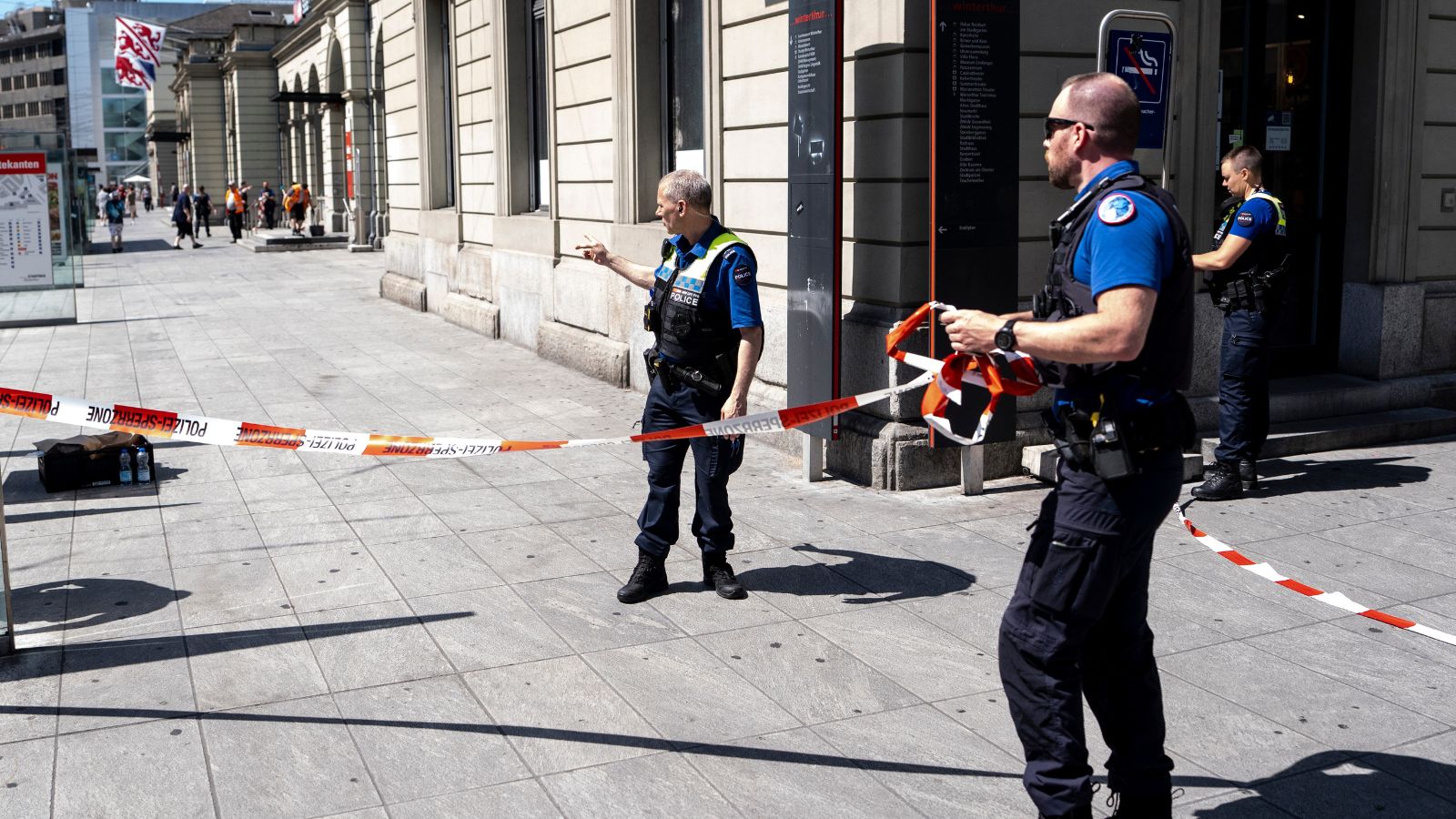
A quiet Thursday morning commute shattered in five minutes. At 8:28 a.m. at the Winterthur railway station, a man armed with a knife began screaming and plunged the blade into unsuspecting commuters. Three men fell wounded. Schoolchildren fled in pure panic. By 8:33 a.m., police had the suspect in handcuffs.
It sounds like a tragic but isolated outburst. But Swiss authorities didn't treat it that way. They immediately took the rare step of branding the Winterthur train station stabbing an official act of terror.
If you think this is just another random act of public violence, you're missing the bigger picture. This incident pulls back the curtain on a terrifying intersection of Islamic extremism, failed institutional monitoring, and psychiatric evaluation gaps that should worry anyone tracking European security.
Inside the Five Minutes of Chaos
Winterthur is a peaceful city of 123,000 residents nestled in northeastern Switzerland, just outside Zurich. It's the kind of place where people feel safe waiting for a morning train. That safety evaporated when 31-year-old Nesip Dedeler, a Swiss-Turkish dual national living locally, launched his assault.
Eyewitnesses reported hearing the attacker scream radical slogans five or six times in an incredibly agitated manner during the onslaught. He targeted three Swiss men aged 28, 43, and 52.
The emergency response was swift. Police arrived and subdued the attacker within five minutes of the first alert. But the physical and psychological damage was done.
The 28-year-old victim suffered a leg injury, and the 43-year-old sustained a neck wound. Luckily, medical teams treated and discharged both from the hospital relatively quickly. The 52-year-old man wasn't as fortunate. He required emergency surgery for a severe thigh wound and remains hospitalized.
Regional security official Mario Fehr didn't mince words, calling the attack an evil act of terror. But the real outrage isn't just the attack itself. It's the fact that the attacker was already a known entity.
The Red Flags We Chose to Ignore
This wasn't a sudden, unpredictable radicalization. Dedeler had been on the radar of Swiss intelligence and law enforcement for over a decade.
Back in 2015, authorities investigated him for distributing Islamic State (ISIS) propaganda tied to a local mosque in Winterthur. He faced criminal charges for his blatant support of the terrorist network. He was born in Switzerland and gained naturalized citizenship in 2009, but spent most of the last two years in Turkey before returning to Switzerland just weeks before the attack.
Then came the mental health system failure.
Just days before the stabbing, on May 25, Dedeler called the police emergency line making highly confused comments. Authorities transferred him to a psychiatric facility for evaluation. He stayed there for less than 48 hours. On Wednesday, May 27, doctors cleared him and let him walk out the door, concluding he posed no danger to himself or the general public.
The very next morning, he walked into the Winterthur railway station with a knife.
This brings us to a glaring structural flaw in how we handle radicalized individuals. Psychiatric professionals often look at immediate behavioral stability or acute psychosis. They aren't always equipped or trained to evaluate ideological radicalization or the deep-seated malice of a terrorist intent on violence. When an extremist uses "confused comments" as a shield, the system folds.
The Local Echoes of Global Extremism
While investigators believe Dedeler acted alone, his actions don't exist in a vacuum. Winterthur has a dark history with religious extremism. The city's now-defunct An'Nur Mosque was notorious for years as a breeding ground for radicalization, drawing young people into the orbit of ISIS before Swiss officials finally shut it down.
The reaction from the broader community was swift. Swiss President Guy Parmelin expressed deep shock, thanking the rapid-response teams for keeping a bad situation from becoming a mass casualty event.
Critically, the Islamic Central Council of Switzerland issued a sharp condemnation. They called the stabbing a cowardly and barbaric act, emphasizing that ISIS represents a perverse sect rather than an Islamic movement, aiming solely to sow discord and murder innocent people.
What Needs to Change Right Now
If European nations want to prevent the next Winterthur, they have to stop compartmentalizing security threats and mental health crises. Here are the immediate steps security agencies and regional governments need to take:
- Establish Integrated Assessment Teams: Mental health professionals and counter-terrorism experts must run joint evaluations on individuals with a history of radicalization. A standard psychiatric check is useless if the patient has a background in terrorist propaganda.
- Mandatory Alerts on High-Risk Releases: When a flagged extremist is released from a psychiatric hold, local police and federal intelligence should receive an automated notification to initiate active monitoring.
- Stricter Border Tracking for Radicalized Citizens: Dual nationals who have faced terrorism charges should face rigorous vetting and monitoring upon returning from high-risk regions or geopolitical transit hubs like Turkey.
Relying on a five-minute police response time isn't a security strategy. It's damage control. Until the systemic loop between mental health discharges and counter-terrorism watchlists is closed, public transport hubs will remain soft targets for lone-wolf actors.