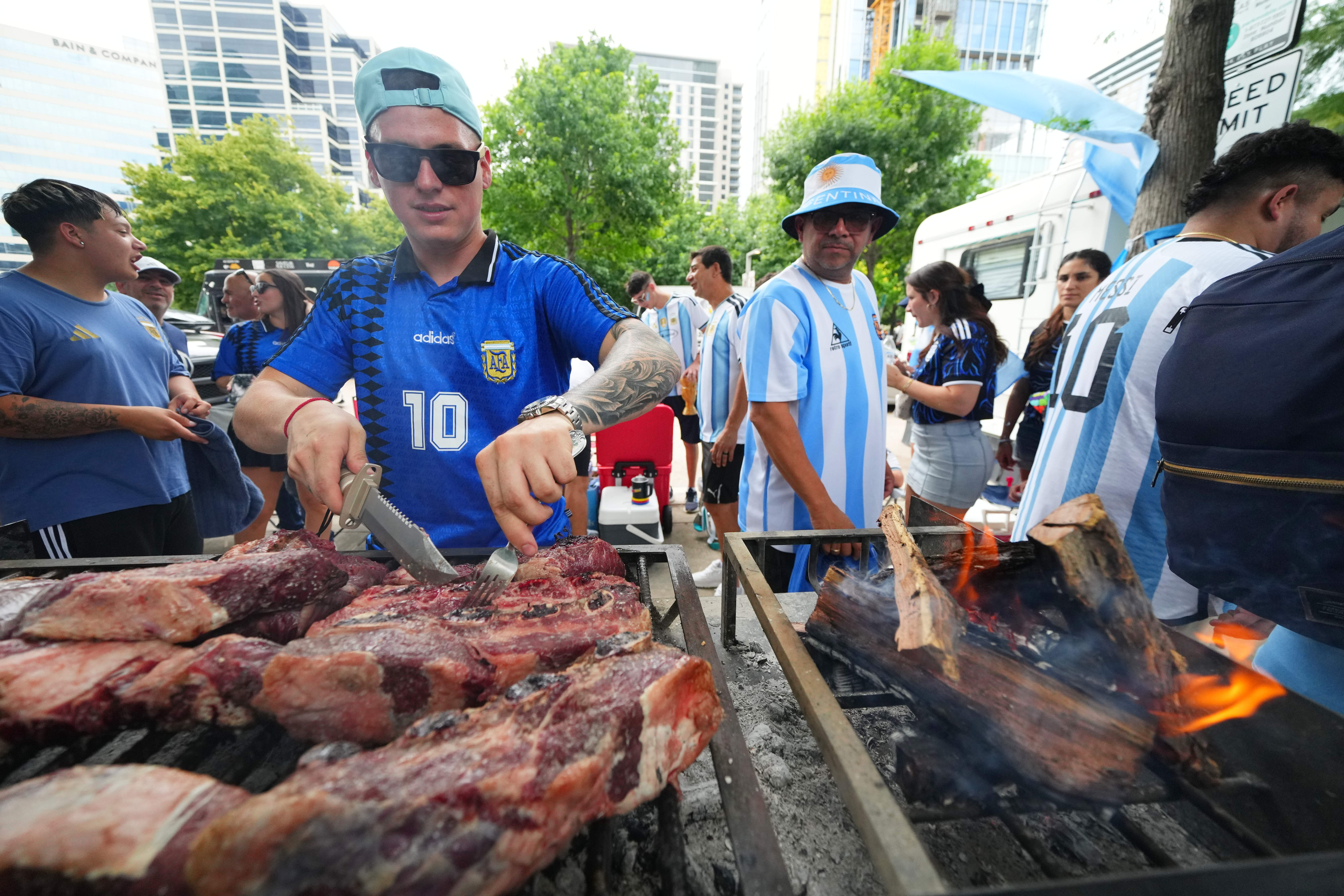
The soccer world is drooling over a narrative that reads like bad sports-bar fiction. As thousands of Argentina fans descend upon Texas for the World Cup, the mainstream sports media has predictably latched onto a lazy, superficial trope: the grand "beef battle" between Argentine asado and Texas barbecue.
They paint a picture of cultural friction, a clash of culinary titans over smoke and fire. Read more on a similar issue: this related article.
It is total nonsense.
The mainstream press wants you to believe there is a genuine philosophical war happening over a grill grate. They are wrong. This is not a clash of civilizations. It is a masterclass in manufactured cultural packaging. While journalists write breathless columns comparing post-oak wood to charcoal, they are missing the brutal economic and culinary reality staring them in the face. More analysis by CBS Sports highlights similar views on the subject.
Texas barbecue and Argentine asado are not competitors. They do not even belong in the same conversation. And the supposed "beef" between them exposes how little the average commentator understands about agriculture, economics, or food.
The Fraud of the Culinary Grudge Match
Let us stop pretending this is a fair fight or an actual rivalry. To pit Argentine asado against Texas brisket is to misunderstand the entire mechanics of meat.
Texas barbecue is an exercise in engineering. It is an industrial-era triumph over tough, unyielding connective tissue. You take a packer brisket—a piece of meat so fibrous it could double as a boot heel—and you subject it to low, indirect heat for 12 to 16 hours. You use smoke as an ingredient to break down collagen. It is chemistry masked as folklore.
Argentine asado is the exact opposite. It is minimalist theater. You do not smoke the meat; you grill it over hot coals (brasa). The wood—typically quebracho or caldén—is burned down to embers before it ever gets near the animal. The goal is to taste the steer, not the tree.
- Texas Barbecue: Low and slow, heavy smoke, heavily rubbed (salt, pepper, spices), focus on tough cuts like brisket.
- Argentine Asado: Hot and fast (relatively), zero smoke flavor, strictly salted (sal parrillera), focus on naturally tender ribs (asado de tira) and flank (vacío).
Calling this a rivalry is like staging a race between a submarine and a helicopter. They operate in completely different dimensions. The media forces them into a single bracket because it makes for an easy headline while international fans roam the streets of Houston, Dallas, and Austin.
The Sourcing Scam: What You Are Actually Eating
Here is the inconvenient truth nobody in Texas or Buenos Aires wants to admit during this tournament: the meat you are eating at these World Cup fan zones is not what you think it is.
The romanticized image of the Argentine pampa—where cattle roam free, grazing on lush green grass, developing lean, deeply flavorful muscle—is largely a relic of the past. Over the last two decades, Argentina’s agricultural sector shifted massively toward soy production. To make room for lucrative crops, cattle were pushed off the prime pastures and into feedlots.
Yes, feedlots. The very thing purists criticize about the American meat industry is now a dominant force in Argentina. When you buy a cheap steak in Buenos Aires today, there is a massive chance that animal spent its final months eating grain, not grass.
Meanwhile, Texas prides itself on its beef supremacy, yet the state imports immense quantities of lean grass-fed trim from places like Australia and New Zealand to blend into its commercial food supply. The pristine, localized supply chains celebrated by food influencers are a luxury myth.
I have watched hospitality groups blow hundreds of thousands of dollars trying to import "authentic" Argentine cuts for high-profile sporting events, only to run face-first into USDA restrictions. What happens instead? They buy domestic, corn-fed American beef, cut it differently, throw it on a cross-shaped iron rack (asador), and charge fans a 300% markup for the "authentic gaucho experience."
You are not tasting terroir. You are tasting a marketing department's budget.
The Post-Oak Myth vs. The Ember Reality
Go to any famous barbecue joint in Hill Country and the pitmaster will lecture you about the sanctity of seasoned post-oak. They treat wood selection like a holy sacrament.
It is time to puncture that balloon.
In a blind taste test, ninety-five percent of self-proclaimed barbecue experts cannot distinguish between post-oak, pecan, or hickory smoke on a heavily seasoned brisket. The smoke profile is heavily mitigated by the massive crust of coarse black pepper and kosher salt coating the meat. The wood matters far less than the fire management.
Argentina’s method is harsher but far more honest. If you put wood smoke directly onto a steak during an asado, you have failed. The smoke from unburnt wood contains creosote, which tastes bitter and acrid. The entire discipline of the parrillero is to wait until the wood has completely carbonized into glowing red coals.
The fundamental irony? Texas barbecue uses wood to add flavor. Argentine asado uses wood merely as a clean heat source. One is an additive process; the other is subtractive. To compare them as similar forms of "cooking with wood" is mechanically illiterate.
The Real Winner of the World Cup
The fans pouring into Texas stadiums do not actually care about the nuances of wood smoke or feedlot ratios. They are participating in a performance.
The World Cup has mutated into a giant, traveling corporate activation where culture is stripped down to its most easily digestible caricatures. For Argentina, that means flags, Lionel Messi shirts, and meat cooked on fire. For Texas, it means cowboy hats, oversized trucks, and meat cooked in a steel box.
The local restaurants capitalizing on this influx aren't engaging in a cultural exchange. They are exploiting a psychological phenomenon. Football fans in a foreign country seek out familiar food rituals to establish dominance and community. The Argentine fans setting up makeshift grills in the parking lots of Texas stadiums are not trying to sample the local culinary delights; they are drawing a line in the sand.
And the local businesses are laughing all the way to the bank, selling domestic Choice-grade beef under the guise of an international showdown.
Stop reading the glowing profiles of cross-cultural harmony through food. Stop buying into the narrative that the World Cup is uniting these two distinct meat cultures. Texas is doing what Texas does best: commercializing a moment. Argentina fans are doing what they do best: converting an open flame into a tribal campfire.
The beef war is fake. The food is a prop. The only thing real is the invoice.