Football has a funny way of delivering the exact scenario that tournament organizers dread most. When Seattle's local World Cup committee decided to designate their June 26 match as the city's official Pride Match, they did it with the best intentions. The game fell right in the middle of Seattle's annual Pride weekend. It made perfect sense on paper. Then the final tournament draw happened.
Out of all the nations competing in the 2026 FIFA World Cup, the two teams slotted into Group G for that specific date were Egypt and Iran.
Talk about an awkward intersection of sports and global politics. Both nations strictly criminalize or harshly punish homosexuality. In Iran, same-sex relations can carry the death penalty. In Egypt, while not explicitly written into the penal code, the LGBTQ+ community faces systematic targeting and prosecution under vague laws against "debauchery." Suddenly, a well-meaning local celebration turned into a high-stakes cultural standoff on the biggest sporting stage in the world.
The Match That Broke the Script
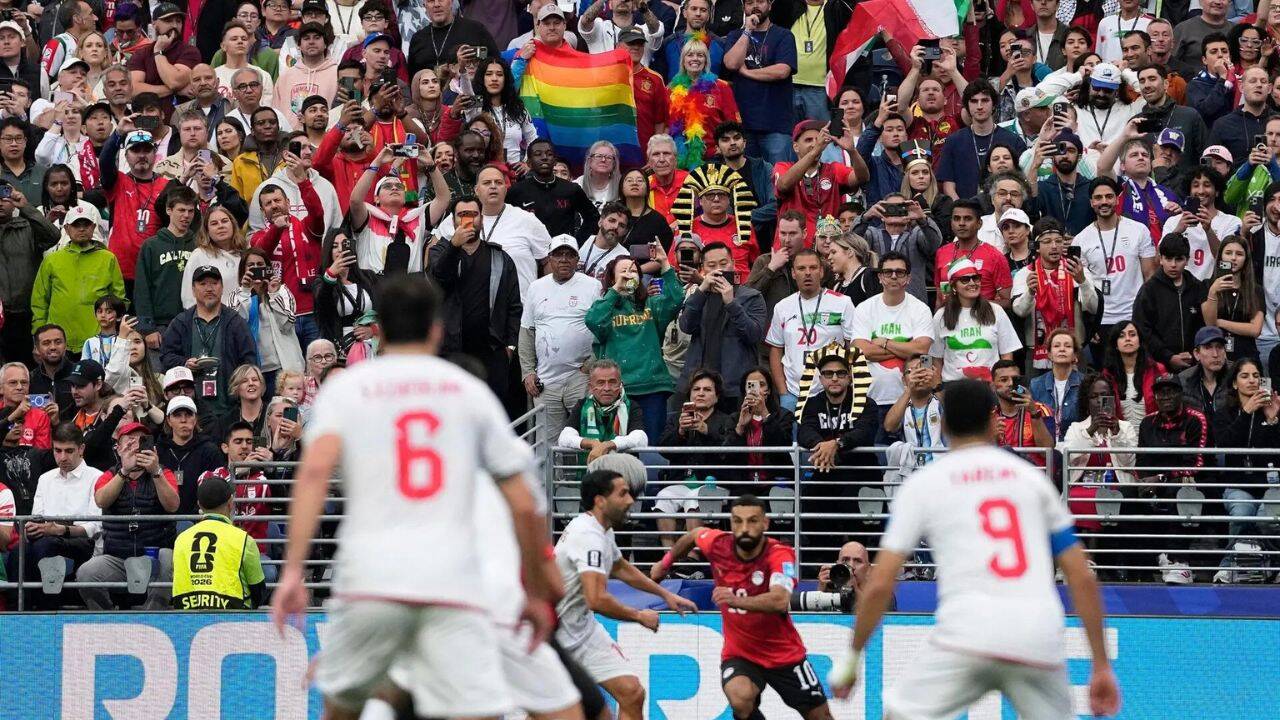
The match itself ended in a tense 1-1 draw at Seattle Stadium. Egypt struck early when Mahmoud Saber found the back of the net in the fifth minute. Iran answered back just nine minutes later with an equalizer from Ramin Rezaeian. The play on the pitch was physical, scrappy, and filled with yellow cards on both sides. But the real drama unfolded in the stands and the press rooms long before the opening whistle blew.
Both the Iranian and Egyptian football associations filed formal complaints with FIFA. They wanted the Pride-related events canceled. They argued that the promotional activities contradicted their cultural and religious values. Iran's federation went as far as sending multiple letters demanding that no symbols of the movement be allowed inside the venue.
FIFA found itself caught in a familiar trap. The organization loves to talk about inclusivity while simultaneously trying to keep authoritarian host countries or conservative member states happy. Look back at Qatar in 2022 when FIFA cracked down on "OneLove" armbands. This time, they took a different route.
FIFA officials essentially passed the buck to the local organizers. They stated that while the Pride Match branding was an independent initiative by the city of Seattle, rainbow flags would absolutely be permitted inside the stadium. Under the 2026 World Cup Stadium Code of Conduct, FIFA treats rainbow flags as general expressions of human rights rather than forbidden political statements.
When Local Culture Clashes With Global Teams
Seattle didn't back down. The city has hosted Pride celebrations for over fifty years. Local organizers made it clear that their commitment to diversity wasn't going to be paused just because two conservative governments were in town. An LGBTQ+ advocacy group even handed out thousands of free rainbow flags to fans outside the stadium.
What you saw in the stands was a striking visual contradiction. You had fans draped in the green, white, and red of Iran, or waving Egyptian flags, sitting right next to spectators holding massive rainbow banners. Some fans wore custom Pride Match scarves. Others painted their faces with rainbows while cheering on nations that would arrest them for doing the same thing back home.
It highlights a major disconnect between a country's ruling regime and its actual people. Many fans in attendance just wanted to watch world-class football. They left the political baggage at the turnstiles. For immigrant communities living in the United States, the match offered a rare chance to celebrate their heritage without abandoning their personal identities.
The Corporate Tightrope Walk
FIFA President Gianni Infantino spent the days leading up to the game trying to distance the governing body from the controversy. He repeatedly told reporters that there was no official FIFA Pride Match. He insisted that the football game and the city's independent festivities were entirely separate things.
This corporate double-speak shows how difficult it is to police expression in a globalized sport. Players from both squads faced intense scrutiny during pre-match press conferences. Iran's head coach, Amir Ghalenoei, explicitly refused to answer questions about topics banned in his domestic league. After the match, players like Egypt's Mahmoud Saber and Iran's Ramin Rezaeian brushed off questions, stating that their focus was strictly on the pitch.
You can't blame the athletes for keeping their heads down. Speaking out on these issues can have severe consequences for their families and their careers back home. The burden of this cultural conversation shouldn't fall on the players, but on the institutions that govern the sport.
How to Navigate Sports Diplomacy Going Forward
This situation in Seattle won't be the last time global sports collide with human rights realities. If you are an organizer, an activist, or just a fan trying to understand how to handle these moments, here are the real takeaways.
Don't expect international governing bodies to solve cultural conflicts. FIFA will always protect its commercial interests first. True advocacy happens at the grassroots level through local organizing committees who refuse to compromise their values.
Separate the people from the government. The fans filling the stadium aren't the ones writing discriminatory laws. Many diaspora fans appreciate the safety of expressing their full identities in a welcoming environment.
Keep pushing for visibility. The presence of rainbow flags alongside Iranian and Egyptian banners didn't spark riots. It proved that sports arenas can handle complex social realities without collapsing into chaos.
The 1-1 draw on the pitch will be recorded as just another group stage result. The real victory was the refusal to hide the rainbow flags, showing the world exactly what an inclusive sporting event looks like.