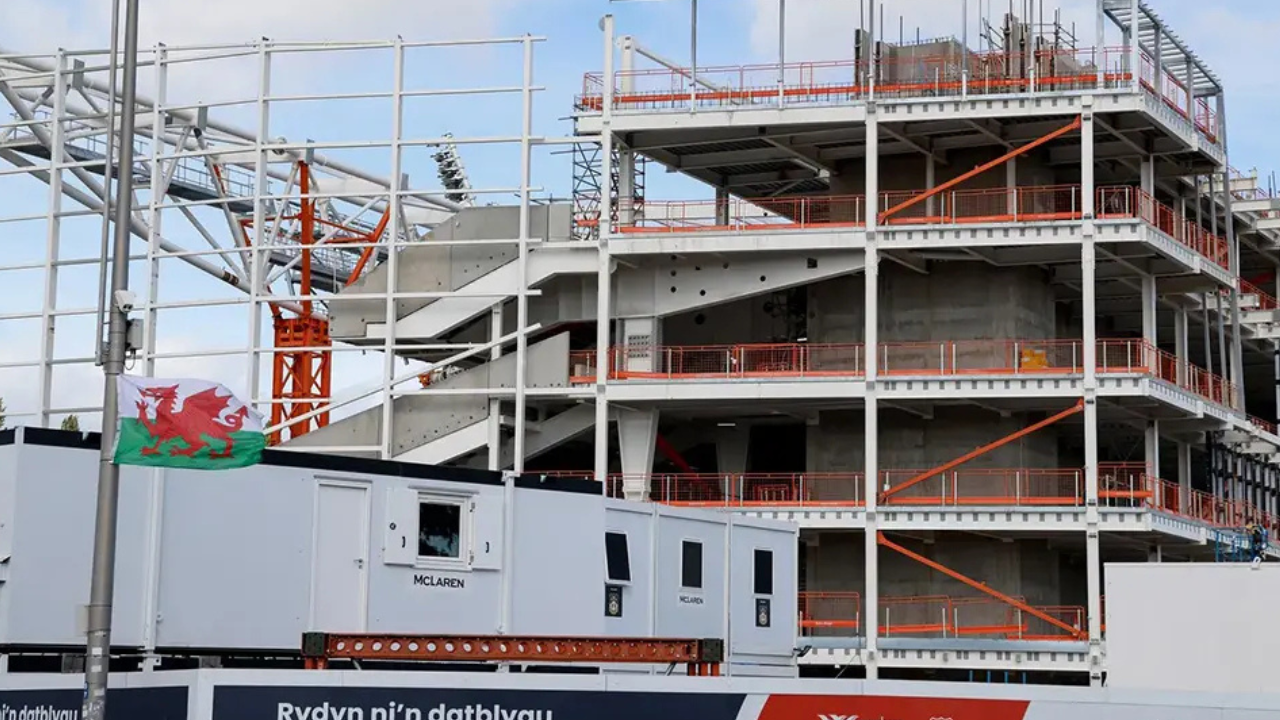
Municipal planning clearance for a 7,750-seat Kop Stand at the Racecourse Ground—pushing total stadium capacity past the 18,000 threshold—transforms Wrexham AFC from a media-driven anomaly into an infrastructure-backed commercial enterprise. Most coverage treats this milestone as a simple construction update or a sentimental victory for a historic football ground. In reality, clearing this specific regulatory hurdle resolves a severe structural bottleneck in the club's unit economics, aligning physical stadium throughput with the global commercial demand generated since the 2021 ownership takeover.
To evaluate the true operational weight of this approval, analysts must strip away the narrative romance and examine the project through three distinct lenses: the regulatory friction of urban stadium redevelopment, the revenue elasticity of fixed-seat expansion, and the supply-chain realities of execution. In other developments, we also covered: Luka Doncic Is Putting Up Video Game Numbers That Might Actually Cost Him the MVP.
The Structural Bottleneck of Legacy Stadiums
Professional football clubs operating out of nineteenth-century urban footprints face a recurring capital allocation dilemma: demand scales exponentially through digital media, while physical inventory remains fixed by municipal zoning and legacy architecture. Before this planning clearance, the Racecourse Ground—recognized as the world's oldest international football stadium still in continuous use—operated with a glaring asymmetry. Three sides of the ground carried modern or functional seating tiers, while the historic Kop end stood vacant and condemned, capping attendance far below real market demand.
Standard sports management theory dictates that matchday revenue acts as the primary financial anchor for clubs navigating Profit and Sustainability Rules (PSR) and League One or Championship salary cap frameworks. Broadcast distributions in the lower tiers of the English Football League (EFL) remain relatively flat regardless of a club's global viewership. Commercial sponsorships offer higher ceilings, yet corporate partners demand hospitalities, premium sightlines, and high-volume matchday visibility to justify tier-one pricing. Without the Kop stand, Wrexham suffered from an acute inventory ceiling. Every sold-out fixture represented uncaptured consumer surplus—thousands of willing buyers locked out of the primary market, generating zero incremental food, beverage, or merchandise turnover. Yahoo Sports has also covered this critical topic in great detail.
Expanding capacity past 18,000 fundamentally alters this equation. Rather than merely adding 7,750 generic seats, the redesign introduces a modern multi-tiered asset capable of housing hospitality suites, high-throughput concourses, and broadcast-compliant infrastructure. The club moves from a scarcity model—where ticketing is rationed exclusively to legacy season-ticket holders—to a volume-and-yield model capable of capturing transient tourism and corporate hospitality dollars.
Deconstructing the Planning Clearance Mechanics
Securing planning permission in the United Kingdom for high-capacity assembly venues rarely fails on architectural aesthetics; it fails on externalities. When Wrexham County Borough Council planners cleared the revised 7,750-seat proposal, they were signing off on a complex mitigation matrix balancing civic disruption against regional economic stimulus.
Earlier iterations of the Kop redevelopment stalled or required revision due to shifting capacity targets—moving from an initial 5,500-seat blueprint up to the 7,750-seat configuration—and the resulting strain on local infrastructure. Increasing a single stand's capacity by over forty percent above its original redesign forces a complete recalculation of four critical urban variables:
- Ingress and Egress Flow Rates: Safety certification under the UK's Guide to Safety at Sports Grounds (the Green Guide) mandates strict evacuation timelines. Moving nearly 8,000 spectators out of a single end requires wide dispersal aprons, unobstructed concourse sightlines, and segregated pedestrian pathways to prevent crushing bottlenecks where the stadium meets Mold Road and the adjacent railway station.
- Traffic and Modal Split: A jump past 18,000 total attendees introduces roughly 2,000 to 3,000 additional private vehicles into a compact town center on matchdays, assuming standard UK regional transit adoption rates. Planners require enforceable Travel Plans—subsidized shuttle buses, remote park-and-ride allocations, and resident parking zones—before granting unconditional consent.
- Acoustic and Daylight Impact: Modern steep-rake stands designed to maximize acoustic retention inside the bowl simultaneously cast larger physical shadows over neighboring residential properties. Planning officers must verify that the vertical profile of the roof truss complies with statutory right-to-light thresholds while containing crowd noise within acceptable environmental health decibels.
- Subsurface and Utility Remediation: Legacy industrial towns carry complex subterranean footprints. Clearing the site involves relocating high-voltage cabling, rerouting municipal drainage, and stabilizing ground conditions before a single steel stanchion is erected.
The approval indicates that the club's architectural and engineering consultants—working alongside Populous, the global sports architecture firm brought in to masterplan the venue—successfully modeled these externalities to the satisfaction of statutory consultees, including Natural Resources Wales and local highway authorities.
The Unit Economics of the 18,000-Seat Threshold
Crossing the 18,000-capacity mark places Wrexham into an entirely different competitive cohort within the English football pyramid. In League One, an 18,000-plus capacity positions the club in the upper quartile of stadium sizes, rivaling established Championship outfits. The financial mechanics of this expansion operate across three distinct revenue pillars.
1. Direct Gate Yield and Dynamic Pricing
At an average blended ticket price—accounting for adult general admission, concessions, and family tiers—7,750 additional seats generate substantial gross matchday receipts across a standard 23-game EFL home league schedule, excluding domestic cup ties. More importantly, the expanded inventory unlocks yield management. When a stadium sits at 10,000 capacity with a 90 percent season-ticket renewal rate, the club has almost zero spot inventory to sell at premium single-match prices to international visitors. Adding 7,750 seats creates a liquid spot market, allowing the ticketing operation to segment pricing dynamically based on opponent tier and tourist demand.
2. Per-Capita Ancillary Spend
Legacy concourses built in the mid-twentieth century suffer from severe point-of-sale friction. Narrow corridors and limited serving hatches depress per-capita spending because spectators refuse to miss fifteen minutes of match action to queue for a beverage. A ground-up 7,750-seat build allows the integration of modern EPOS (Electronic Point of Sale) terminals, high-speed pouring systems, and distributed concession islands. In modern sports venue management, reducing queue times by three minutes typically yields a measurable double-digit percentage increase in food and beverage spend per head.
3. UEFA Category 4 Compliance and Non-Matchday Utility
A primary strategic driver behind scaling the stand to 7,750 seats—and upgrading the surrounding infrastructure—is securing UEFA Category 4 stadium status. Under UEFA regulations, Category 4 venues must hold a minimum of 8,000 seats (which the total stadium easily clears) alongside strict specifications for VIP seating, media working areas, floodlighting lux levels, and broadcast compound footprints. Achieving this classification qualifies the Racecourse Ground to host senior Welsh national team fixtures, European club qualifiers, and youth international tournaments. This converts a seasonal asset used 25 days a year into a year-round civic venue capable of hosting concerts and international sporting events, amortizing the capital expenditure across non-football revenue streams.
Execution Risks and Operational Constraints
Planning clearance represents a legal milestone, not a completed asset. Between municipal approval and the first turnstile click lies a capital-intensive construction phase fraught with operational hazards that frequently derail sports infrastructure projects.
- Cost Inflation in Structural Steel and M&E: The UK construction sector continues to absorb elevated costs in structural steel fabrication and Mechanical and Electrical (M&E) engineering. Because the Kop stand features a cantilevered roof structure designed to eliminate view-obstructing pillars, steel tonnage requirements are high. Any procurement delay or design modification during the RIBA Stage 4 (Technical Design) phase directly erodes projected return on investment.
- Phased Construction vs. Matchday Disruption: Building a 7,750-seat stand inside an active stadium requires strict site segregation. Crane swings, delivery schedules, and foundation piling cannot interfere with matchday safety certificates for the remaining three stands. If construction triggers temporary capacity reductions in adjacent sections (such as the Wrexham Lager Stand or the Macron Stand) to maintain safe emergency exit routes, the club faces a short-term dip in matchday cash flow before the new revenue comes online.
- The Promotion-Timing Mismatch: Sporting performance rarely aligns neatly with construction schedules. Should the first team secure rapid promotion to the Championship while the Kop remains a construction site, the club will temporarily compete against teams with 25,000-to-35,000-seat stadiums while operating at roughly 10,500 capacity. Under EFL financial fair play frameworks, where allowable losses are tied directly to club turnover, a delayed build restricts the wage bill the club can legally field during its initial transition into the second tier.
- Public Subsidy Clawback and Grant Conditions: Previous iterations of the Racecourse redevelopment involved public sector funding commitments through the Wrexham Gateway Partnership and Welsh Government grants. Public money carries strict procurement rules, state-aid compliance checks, and community-use mandates. Navigating the boundary between private ownership capital and public infrastructure grants requires rigorous legal ring-fencing to prevent administrative bottlenecks.
Comparative Infrastructure Positioning
To understand why ownership pushed to expand the blueprint from 5,500 to 7,750 seats, examine the competitive landscape of the second and third tiers of English football. Clubs operating on sub-12,000 capacities hit a hard financial ceiling in the Championship unless propped up by massive owner equity injections—which are strictly capped under PSR regulations—or Premier League parachute payments.
By locking in an 18,000-plus capacity footprint now, Wrexham establishes the minimum viable physical scale required to sustain a self-financing Championship operation. Furthermore, the masterplan leaves structural allowances for future phases. Once the Kop establishes an 18,000 baseline, incremental upgrades to the remaining legacy stands can systematically push the Racecourse Ground toward the 25,000-seat mark over a decade without requiring wholesale urban rezoning.
The Strategic Play for Ownership and Operators
With municipal planning cleared, Wrexham's executive team must shift immediately from regulatory advocacy to ruthless procurement and yield engineering. The club should lock in fixed-price Design and Build contracts for the primary steelwork and envelope before seasonal material price adjustments hit the UK market, insulating the capital budget from macroeconomic volatility. Simultaneously, the commercial department must begin pre-selling multi-year corporate hospitality debentures and premium season-ticket tiers tied specifically to the new Kop inventory, utilizing forward-sold cash flows to offset debt service or equity outlay during the build phase—ensuring the stand generates working capital months before the first concrete slab cures.