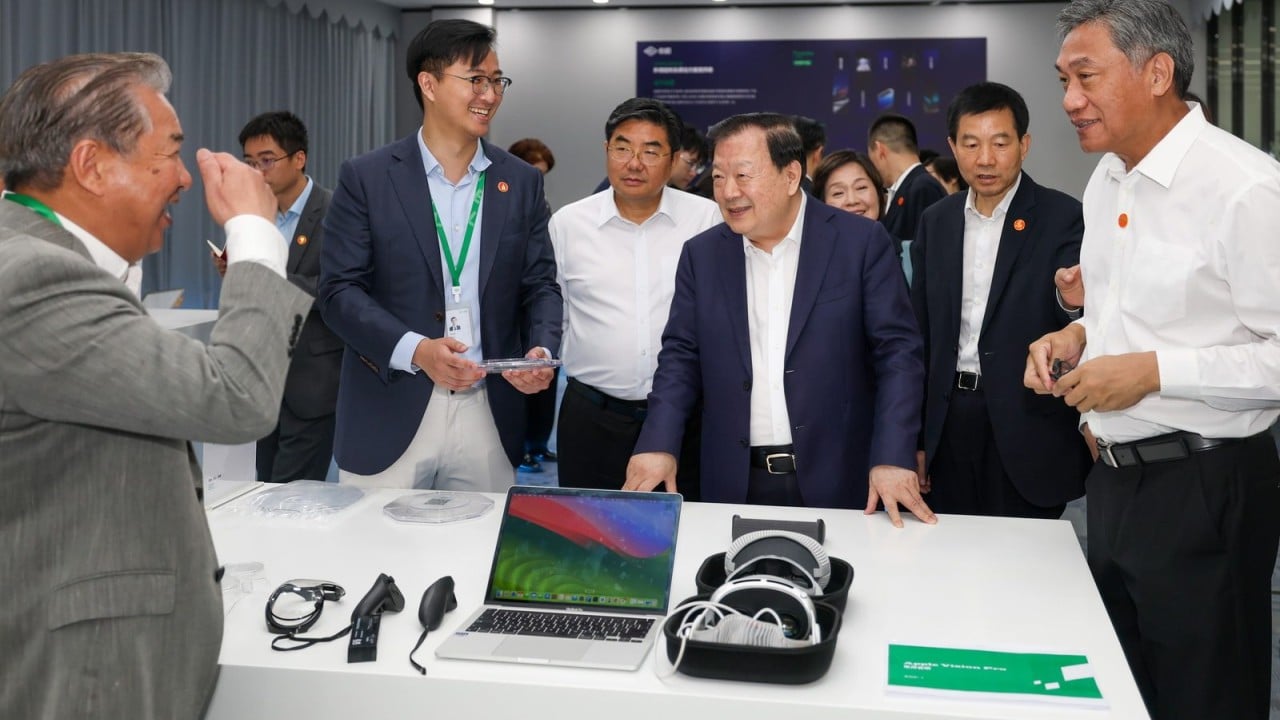
Beijing isn't just watching Hong Kong from a distance anymore. If you thought the central government would take a back seat after the dust settled on the security laws, you’re dead wrong. Xia Baolong, Beijing’s heavy hitter for Hong Kong affairs, just wrapped up his second tour of the Greater Bay Area in only three weeks. That’s not a casual itinerary. It’s a loud, clear signal that the era of "waiting and seeing" is over.
Xia’s latest four-day sprint took him through the industrial and tech heartlands of Shenzhen, Dongguan, and Huizhou. He wasn't there for the scenery. He was there to inspect the plumbing of the national 15th Five-Year Plan. For those not tracking the calendar, 2026 is the year China’s new economic blueprint kicks in, and Beijing expects Hong Kong to stop acting like a lone island and start acting like a high-speed engine for the mainland.
The end of the policy flip flop
Beijing is clearly losing patience with Hong Kong's administrative stumbles. We’ve seen it recently—the scrapped seat-belt laws, the slow-moving Northern Metropolis, and the general sense of "lethargy" that has reportedly started to grate on the leadership in the capital. Xia’s frequent visits aren't just about encouragement. They're about accountability.
When Xia meets with officials, the message is blunt: meet your KPIs. He’s pushing for a governance system that yields "practical results." Honestly, it’s a bit of a wake-up call for the SAR government. The days of floating vague proposals and hoping for the best are gone. Beijing wants to see the Northern Metropolis University Town move from a blueprint to a construction site. They want the logistics parks in Dongguan to start slashing costs for international shipping immediately.
Why the 15th Five Year Plan changes everything
You might think another five-year plan is just bureaucratic paper-shuffling, but this one is different. It’s the first one where Hong Kong is being asked to draft its own specific alignment plan. Think of it as a sub-contractor finally being told they need to sync their schedule perfectly with the main developer.
Xia’s focus on Shenzhen and Dongguan during this trip was intentional. These cities are the test beds for what Beijing calls "high-quality development." During his tour, he visited:
- The Shenzhen Stock Exchange to talk financial integration.
- Robot industry bases to see how automation will drive the next decade.
- The Hong Kong International Airport Dongguan Logistics Park.
The goal isn't just cooperation; it’s total economic fusion. Beijing sees a future where a tech firm in Hong Kong can use a lab in Huizhou and ship products out of a Shenzhen port as if they were all in the same neighborhood. If you’re a business owner in the city, you’re no longer just competing with the guy down the street in Central. You're part of an $11-city cluster$ that Beijing intends to turn into a global tech powerhouse.
Integration is the only path left
Let's be real. The "super connector" role that Hong Kong played for decades is evolving. It’s no longer enough to just be a bridge. Beijing wants Hong Kong to be a "super value-adder." This means taking the city's academic excellence—its world-class universities—and plugging them directly into the manufacturing might of the mainland.
Xia's visit to the PolyU-Daya Bay Technology and Innovation Research Institute in Huizhou highlights this perfectly. He’s looking for the "AI+" and "Finance+" synergies that Financial Secretary Paul Chan has been talking about in Beijing. The strategy is to stop the brain drain by creating a massive, integrated sandbox for talent to play in.
The Northern Metropolis is the litmus test
If you want to know if Xia’s visits are working, watch the Northern Metropolis. This is the massive project in the New Territories meant to house a new tech hub and thousands of residents. Beijing is reportedly frustrated by how slow this has been moving.
Eric Chan’s recent trip to study "university towns" in Zhejiang and the Xiong’an New Area was essentially a homework assignment from the central government. They want Hong Kong to learn how the mainland builds cities at breakneck speed. Xia’s presence in the region acts as a constant reminder that the clock is ticking.
Basically, if the Northern Metropolis doesn't start showing real, tangible progress soon, expect even more "research tours" from Beijing’s point man.
What happens next
Don't expect the frequency of these visits to drop. As we move deeper into 2026, the pressure to perform will only ramp up. For investors and businesses, the takeaway is simple: the border is becoming more of a legal formality than an economic one.
To stay ahead, you should:
- Review the 15th Five-Year Plan as it pertains to your specific industry; the "8 centres" designation for Hong Kong isn't just a slogan anymore.
- Look North for expansion. If you aren't already looking at how your Hong Kong operations can leverage the lower costs and high-tech manufacturing of Dongguan or Huizhou, you're missing the play.
- Monitor the Northern Metropolis tenders. This is where the money is going to flow, especially as Beijing pushes for faster execution.
The status quo is officially over. Beijing has moved from the role of an observer to a hands-on project manager, and Xia Baolong is the man holding the clipboard.



