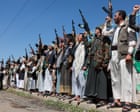
For years, Western policymakers treated the Yemen civil war as a tragic sideshow—a messy humanitarian disaster far from Washington, London, or Brussels. That mindset is dead wrong. When former Yemeni Prime Minister Maeen Abdulmalik Saeed warns that the future of Western security is on the line in Yemen, he isn't exaggerating for headlines. He's pointing at a map where mountain passes, coastal chokepoints, and cheap Iranian-backed drones collide with global trade.
If you only watch Western security through the lens of big-budget armies and traditional alliances, you're missing how wars are actually shifting right now. Yemen has become a proving ground where semi-state militias use low-cost drones and missiles to rattle major powers, squeeze shipping lanes, and test missile defenses that cost millions per interceptor. Ignoring what happens in Yemen doesn't keep Western capitals insulated. It just lets the pressure build until supply chains snap and regional crises spill over. For a closer look into this area, we recommend: this related article.
How the Yemen Civil War Reached Western Doorsteps
Yemen's conflict started as a domestic struggle after the 2011 uprising and the Houthi takeover of Sana'a in 2014, before escalating into a broader regional war involving a Saudi-led coalition. Most outside observers focused on the devastating toll on civilians, famine risks, and stalled peace talks. Fair enough—the human cost has been staggering.
Yet over time, the war stopped being just a local power grab or a proxy clash confined to Arabian soil. The Houthis evolved from a mountainous insurgency into a heavily armed force backed by Iran, fielding drones, anti-ship missiles, and ballistic systems. When shipping attacks escalated in the Red Sea and Gulf of Aden, ordinary shoppers and manufacturers thousands of miles away felt the shockwaves through rerouted cargo, longer transit times around southern Africa, and higher freight costs. To get more context on the matter, in-depth analysis is available on NPR.
According to data cited by the U.S. Energy Information Administration and maritime analysts, millions of barrels of oil and a major share of global container trade normally pass through the Bab al-Mandab Strait and the Suez Canal corridor. When vessels reroute or face attacks, it isn't an abstract geopolitical chess move. It's delayed parts, pricier goods, and constant naval strain for Western and partner forces patrolling those waters.
Why Taiz and the Coast Matter More Than People Think
Saeed has singled out the mountainous area around Taiz as a crucial hinge in the fight. On paper, a mountain city in southwestern Yemen sounds obscure. In geography terms, it sits near the high ground overlooking routes toward the southern coast, Mocha, and the approaches to the Bab al-Mandab Strait.
Control over Yemen's highlands and coastal approaches doesn't just decide who rules Yemen—it shapes leverage over one of the world's tightest maritime chokepoints.
Here's what trips up a lot of casual observers: they assume territorial shifts inside Yemen only matter to Yemeni factions or neighboring Gulf states. In reality, ground momentum in places like Taiz, Marib, or the southern coast affects who controls supply lines, missile launch zones, and coastal pressure points. Recent clashes, coalition airstrikes, and shifting alignments between regional powers show just how fragile front lines remain and how quickly local advances can ripple outward.
The Drone and Missile Math Nobody Wants to Face
The biggest shift isn't just geography. It's economics and asymmetry.
A relatively inexpensive drone or missile kit—often assembled with imported or smuggled components and technical know-how—can force a multi-million-dollar naval destroyer or air-defense battery to spend scarce, high-cost interceptors. Even when defenses shoot down incoming threats, the cost exchange favors the attacker if the campaign drags on for months or years.
Saeed has described this as a shift toward semi-state actors and militias using cheap technologies to challenge powerful states and threaten freedom of navigation. Honestly, that's the part Western defense planners dread most. Once a playbook proves that a non-state or semi-state group can disrupt international shipping and test layered air defenses on a budget, other armed groups and sponsors can copy the model elsewhere.
What Analysts Debate About Western Strategy
Not everyone agrees on the exact prescription for the West, and pretending there's an easy consensus would be dishonest.
Some analysts and officials argue that firmer deterrence—combining maritime coalitions, air interdiction, and tighter arms-smuggling enforcement—is essential to protect trade and push back against Iranian influence. Others warn that heavy military escalation in Yemen often backfires, prolonging civilian suffering, deepening local grievances, and giving militant groups stronger recruitment arguments without solving Yemen's underlying political divisions.
Both sides have a point. Pure military force hasn't neatly erased Houthi capabilities, yet passive containment hasn't stopped maritime threats or regional spillover either. That tension is why Yemen stays so hard to manage.
Common Myths About Yemen and Global Security
Let's clear up a few misconceptions that keep popping up in everyday debates:
- Myth: Yemen is too poor and isolated to affect global markets. False. Geography beats GDP when a narrow waterway carries huge volumes of oil and container cargo. Disrupting transit routes hits global logistics fast.
- Myth: Air defenses alone solve the drone problem. Not quite. Interceptors are expensive and limited in stock, while drones and missiles can be produced or sourced in waves. Sustainable defense requires counter-drone options, supply interdiction, and diplomacy—not just shooting things down after they're launched.
- Myth: Gulf states and Western powers always move in lockstep. Far from it. Coalition dynamics, regional rivalries, and diplomatic calculations have shifted repeatedly over the years, creating openings that armed groups exploit.
Practical Ways to Track What Happens Next
If you follow global affairs, supply chains, or defense policy—or run a business exposed to international shipping—you don't need to guess what's happening in Yemen. You can watch concrete signals directly:
- Follow maritime advisories and shipping reroutes. Track updates from organizations like the Council on Foreign Relations Global Conflict Tracker and UN Security Council statements via OSESGY to see whether commercial transit through the Red Sea and Bab al-Mandab is tightening or easing.
- Stress-test supply chain lead times. If your work or business relies on Asia-Europe or Middle East shipping lanes, build buffer inventory and alternative routing assumptions rather than assuming smooth transit.
- Watch front-line shifts around Taiz, Marib, and the coast. Ground movement in key Yemeni provinces often signals broader political or military escalation before headlines catch up.
- Separate humanitarian needs from strategic spin. Keep an eye on independent reporting and humanitarian briefings so you don't lose sight of civilians caught in the middle while tracking geopolitical moves.