When the cameras roll in a war zone, the subjects are almost always statistics. You see the numbers on evening broadcasts, the rubble counts, the displaced families huddled under plastic sheets. You rarely see the kids behind the statistics holding the microphone.
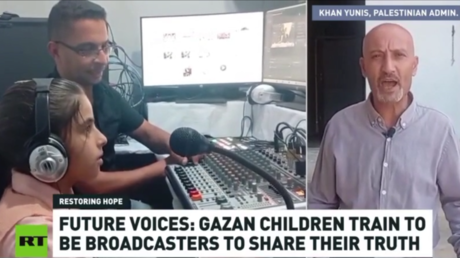
Right now, youth media initiatives across Gaza are flipping that script entirely. Instead of letting outside correspondents define their reality, Palestinian children are picking up smartphones and video cameras to document their own survival, grief, and daily resilience.
It's easy to look at the destruction in Gaza and see only a void. But walk through a makeshift tent camp or a community center running these workshops, and you'll find kids editing clips on cracked screens, debating framing, and conducting interviews with their peers. They aren't waiting for a savior from overseas to tell their story. They're doing it themselves.
Why Traditional News Coverage Misses the Human Reality
Foreign bureaus face massive obstacles reporting inside Gaza. Access is restricted, communications are fragile, and journalists risk their lives every single day. Even when reports get out, they lean heavily on macro-level destruction.
That macro view strips away individuality. A bombed apartment block becomes a data point rather than a home where kids used to do homework, play cards, and argue over soccer teams.
Local youth media programs bridge that exact gap. When a twelve-year-old turns a camera toward their younger sibling trying to make art out of scrap metal, the reporting shifts from political abstraction to raw human texture.
You stop seeing a distant conflict zone. You start seeing a neighborhood of kids who still dream about school uniforms, art supplies, and sleeping through the night without the terror of drone strikes overhead.
The Mechanics of Teaching Journalism Under Fire
Running a media workshop when basic utilities are luxury items sounds impossible. Yet, grass-roots organizations make it happen against absurd odds.
Power comes from solar panels cobbled together from salvaged parts. Internet connectivity relies on spotty eSIM cards routed through neighboring borders. Editing software runs on whatever secondhand laptops haven't been crushed or water-damaged.
Instructors are often local journalists, artists, and educators who refuse to let the next generation lose their narrative voice. The curriculum doesn't start with textbook journalism ethics or high-end broadcast standards. It starts with psychological triage and creative expression.
- Audio Capture: Kids learn how to use directional mics or smartphone voice memos to record ambient sounds like distant sirens, laughter in a courtyard, or the crackle of a cooking fire.
- Visual Framing: Workshops focus on finding humanity in small details, like a bruised hand holding a broken crayon or a cat sleeping on a cinder block.
- Ethical Storytelling: Mentors drill into participants the responsibility of documenting real events without sensationalism, protecting the dignity of their subjects who are also their neighbors and friends.
This hands-on work does more than produce digital content. It acts as an anchor for kids whose entire worlds have been upended. Having a task, a deadline, and a tangible output restores a shred of agency when everything else feels completely out of control.
Beyond Trauma Porn
There is a fine, dangerous line in crisis journalism between authentic documentation and exploitation. Too many mainstream outlets hunt exclusively for crying children to manufacture quick emotional hooks before moving on to the next crisis.
Gaza's youth media initiatives push back hard against that dynamic. The kids behind the lenses aren't interested in performing despair for foreign audiences. They want to show how they live.
They film makeshift puppet shows put on for toddlers in overcrowded classrooms. They interview local bakers who manage to fire up a clay oven despite fuel shortages. They document poetry readings held under canvas tarps.
This is editorial choice driven by the people living the experience. They want the world to know they aren't passive victims waiting for charity. They are active participants in preserving their culture, humor, and dignity.
What You Can Do to Support Grassroots Reporting
If you want to move past passive consumption of war coverage, you have to support the infrastructure making independent local journalism possible.
Stop relying solely on legacy networks that drop in and out based on ratings. Seek out independent Palestinian creators, local youth collectives, and community media pages on social platforms. Share their unedited clips, translate their captions if you speak Arabic, and fund verified grassroots groups providing equipment and safety gear.
These kids are documenting history in real time under the worst imaginable conditions. The least the rest of the world can do is listen when they speak.