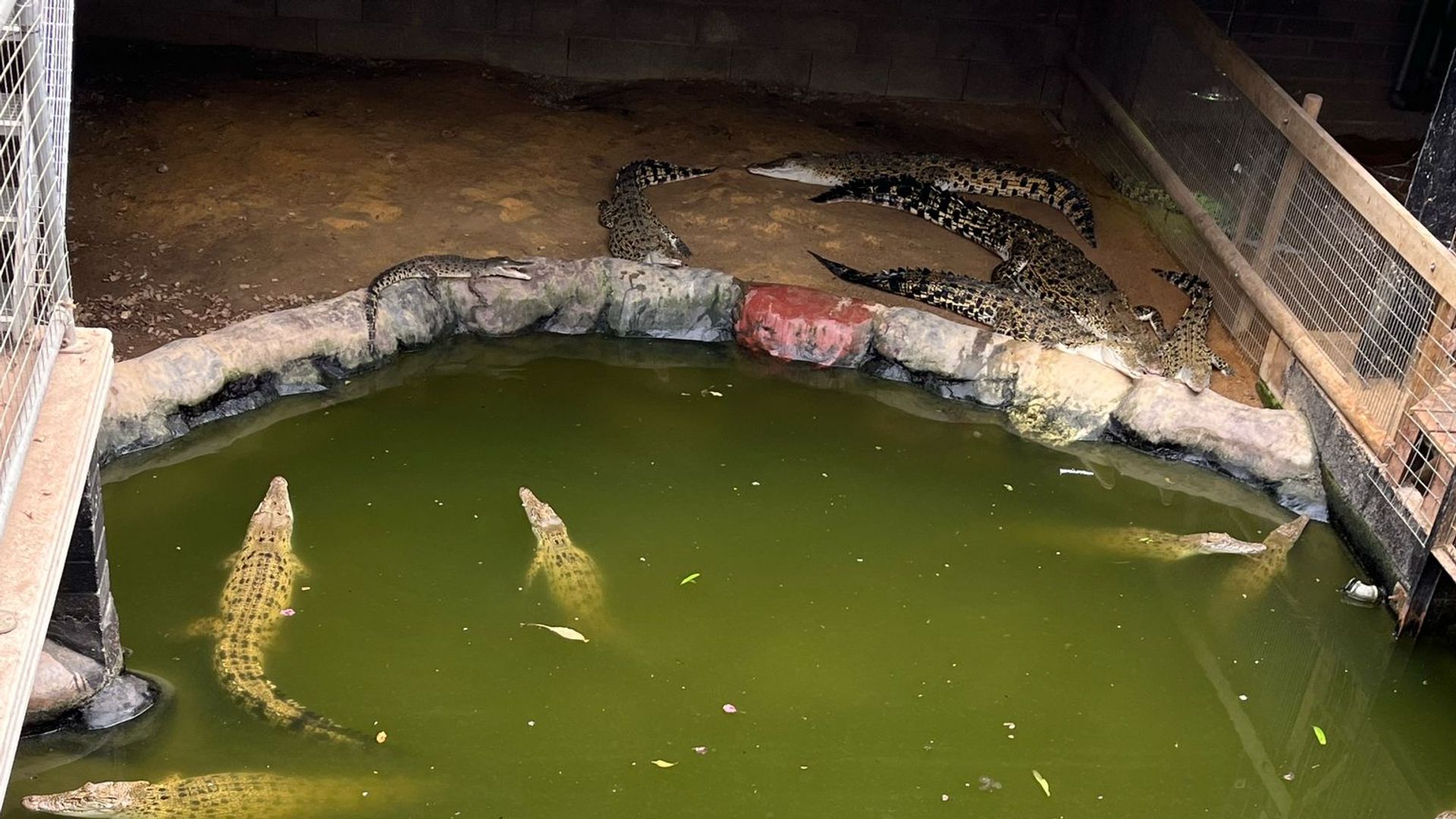
The immediate media reaction to any zoo tragedy follows a script so predictable you could map it on a cocktail napkin. A toddler breeches a barrier. An apex predator does exactly what evolution designed it to do. The headlines scream about "vicious attacks" and "rogue animals."
Mainstream news outlets rush to cover the blood, the horror, and the frantic calls for tighter security or animal culling. They paint a picture of a world where human spaces and wild spaces are locked in a constant, unpredictable war.
They are looking at the entire situation backward.
The lazy consensus dominating the news cycle is that these incidents are freak anomalies caused by exceptionally aggressive animals or momentary lapses in parental supervision. That narrative is comforting because it implies the system works perfectly until a single variable fails.
It is also entirely wrong.
When a child ends up in a crocodile enclosure, the animal isn't rogue. The parents aren't necessarily monsters. The failure belongs entirely to an outdated, romanticized architecture that prioritizes consumer illusion over physical reality. We have spent a century building wildlife exhibits designed to make people forget that glass and gravity are the only things keeping them from becoming apex predator calories.
The Illusion of Proximity
Modern zoological design suffers from a dangerous obsession with what architects call "invisible barriers."
Decades ago, zoos used heavy iron bars and concrete trenches. It looked like a prison, it felt like a prison, and it sent a clear, subconscious psychological signal to every visitor: Stay back. The thing on the other side of this line will kill you.
Then came the push for immersive design. Moats replaced bars. Hidden ha-ha walls (sunken ditches that create an optimized, uninterrupted view) replaced chain-link fences. Frameless plexiglass sheets became the standard, designed specifically to blend into the scenery so visitors could feel like they were standing in the Serengeti or the Australian outback.
I have consulted on public infrastructure layouts where the tension between aesthetic appeal and brute-force safety is palpable. Executives consistently push for fewer visible obstructions because unobstructed views drive ticket sales and viral social media posts.
But when you erase the visual cues of danger, you erase the psychological triggers that dictate human caution.
A toddler does not understand the structural load limits of a laminated glass viewing pane. They do not comprehend that a three-foot drop-off leads to a pit containing an animal with a bite force of 3,700 pounds per square inch. To a child, an immersive enclosure looks exactly like a playground.
The industry calls this "fostering a connection with nature." In reality, it is a calculated marketing strategy that breeds lethal complacency.
Dismantling the Myth of the Rogue Reptile
When news broke that a toddler was severely injured by a crocodile inside an enclosure, public commentary immediately pivoted to the animal's behavior. Was it hungry? Was it provoked?
Let us fix the vocabulary right now. An alligator or crocodile does not "attack" a human out of malice, anger, or rogue behavior. They operate on hardwired kinetic triggers.
Kinetic Trigger Sequence:
Movement Splash/Vibration -> Saccadic Target Lock -> Strike/Clamp -> Death Roll
Crocodilians are acoustic and vibrational hunters. Their jaws are lined with thousands of microscopic integumentary sense organs that detect minute pressure changes in water and air. When an object weighing 30 pounds drops into their territory, it does not matter if that object is a piece of timber, a feral pig, or a human child. The splash triggers a predatory reflex that bypassed conscious thought roughly 80 million years ago.
To judge a crocodilian for striking an object in its enclosure is like judging a landmine for exploding when stepped on.
The media frames these events as animal aggression because it makes for a better villain arc. If the crocodile is evil, the solution is simple: euthanize the animal and put up a bigger warning sign. If the crocodile is just a biological machine executing an immutable code, then the fault lies squarely with the engineers who built a room where a child could fall into the gears.
The Economics of Shared Blame
The second-tier defense in these crises is always parental accountability. "Where were the parents?" becomes the dominant refrain across every comment section and talk-radio segment.
This is a cheap diversion tactic.
Imagine a scenario where a theme park builds a roller coaster with a lap bar that can be easily unlatched by a four-year-old. If a child unlatches that bar mid-loop and falls, do we spend three weeks analyzing the mother’s phone usage at the time of the incident? No. We sue the park for criminal design negligence.
Zoos are high-throughput commercial spaces. They are built to handle thousands of distracted, exhausted families every single day. A design that requires 100% flawless human supervision to prevent a fatality is a defective design.
Systemic Failure Analysis:
[Distracted Parent] + [Curious Toddler] + [Invisible Barrier] = Catastrophic Breach
If the safety of a child relies entirely on a parent never looking away for four seconds to wipe a sibling's nose, the infrastructure has already failed. Good safety engineering assumes human error, distraction, and stupidity. It does not demand perfection; it mitigates the lack of it.
The Cost of True Security
The contrarian solution here is simple, ugly, and entirely unpopular with zoo marketing boards: we need to bring back the ugly barriers.
If you want absolute safety in public wildlife exhibits, you must sacrifice the vanity of the perfect photo opportunity. That means:
- Reintroducing visible, dual-layered perimeter fencing that prevents physical contact even during a primary barrier failure.
- Enforcing a mandatory five-foot vegetation buffer zone between the public walkway and the primary enclosure wall.
- Eliminating low-set viewing platforms that allow children to be hoisted onto ledges by well-meaning parents.
The downside to this approach is obvious. The view gets worse. The experience feels less "magical." The ticket prices, which rely heavily on the thrill of artificial proximity, might take a hit. Visitors will complain that they can no longer get a clean shot of the apex predator for their digital feeds.
That is the trade-off. You can have an open-concept safari illusion that occasionally results in a child being mauled, or you can have a highly visible, heavily fortified containment facility that keeps biological weapons completely isolated from human error. You cannot have both.
Stop asking how the child got past the fence. Start asking why the fence was designed to be forgotten.
Go back to the concrete and the heavy iron bars. Or close the gates for good. Anything else is just waiting for the next splash.


