The Pentagon just dropped a $25 billion price tag on the current Middle East escalation and the "war" with Iranian proxies. The media is eating it up. They want you to look at that number and feel a sense of sticker shock. They want you to imagine piles of cash being shoveled into a furnace in the desert.
They are dead wrong.
That $25 billion figure isn't a cost. It’s an accounting trick designed to keep the defense budget bloated while simultaneously making the administration look like they are "managing" a crisis. If you actually look at the mechanics of military spending, that number is a rounding error. More importantly, it’s a gross underestimation of what it actually costs to maintain the global trade routes that keep your local grocery store stocked and your gas tank filled.
Stop looking at the price tag. Start looking at the inventory.
The Myth of the "Additional" Cost
When the Department of Defense tells you a conflict cost $25 billion, they are counting things that were already paid for.
Most of that money goes toward operations and maintenance (O&M). We are talking about fuel for carriers that were already commissioned, salaries for sailors who were already on the payroll, and munitions that were manufactured five years ago.
Take the SM-2 and SM-6 missiles being used to intercept Houthi drones in the Red Sea. Those aren't "new" costs hitting the taxpayer today. Those were line items in budgets from 2018 and 2019. The "cost" being reported is the replacement value. But here is the insider secret: the Pentagon wants to fire those missiles.
Why? Because it forces Congress to fund the next generation of weapons.
If those missiles sit in a climate-controlled bunker for twenty years until they expire, the Navy has a hard time justifying a $50 billion upgrade to the next system. If they fire them at a $2,000 drone, they get to scream about "depleted stockpiles" and "readiness gaps."
This isn't a drain on the economy; it’s a massive, taxpayer-funded R&D cycle for the defense industrial base. We aren't "losing" $25 billion. We are rotating stock.
The $1 Trillion Alternative Nobody Wants to Discuss
The "lazy consensus" argues that we should pivot away, stop the spending, and let the regional powers "sort it out."
Let’s run that thought experiment.
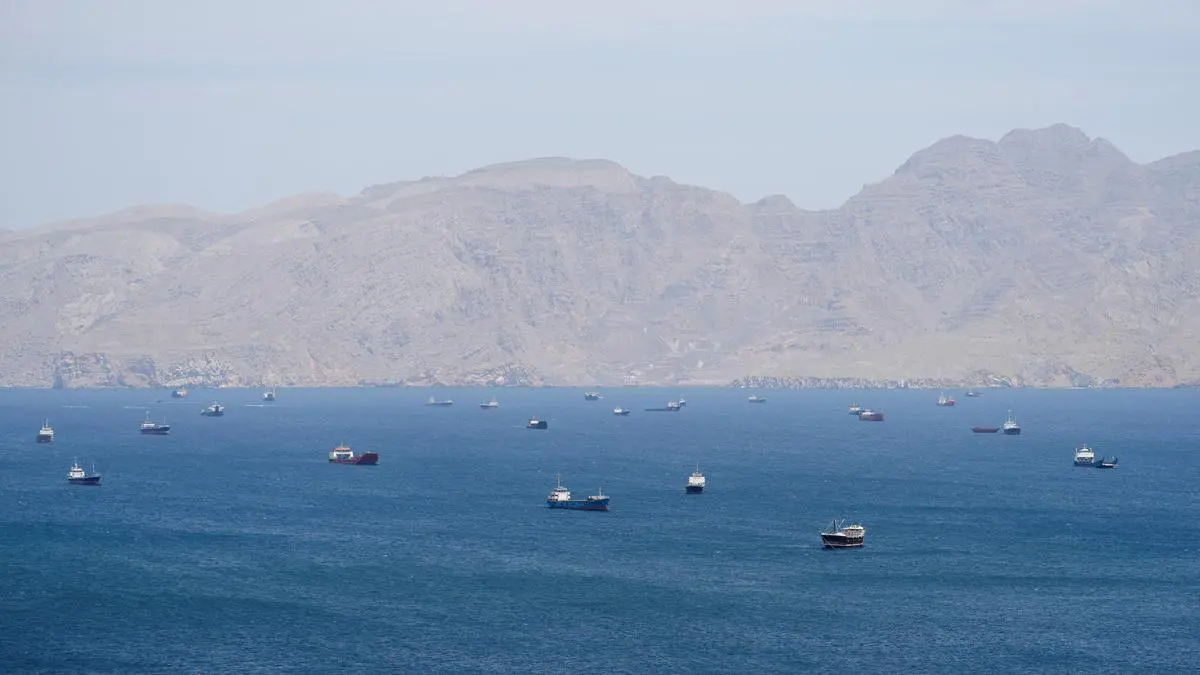
Imagine a scenario where the U.S. decides $25 billion is too steep and pulls the Eisenhower Carrier Strike Group out of the region. Within forty-eight hours, insurance premiums for commercial shipping through the Bab el-Mandeb strait don't just rise—they vanish. Meaning, shipping becomes uninsurable.
Roughly 12% of global trade and 30% of global container traffic passes through that needle. If you think $25 billion is expensive, wait until you see the bill for a 400% increase in freight costs because every ship from Singapore to Rotterdam has to transit around the Cape of Good Hope.
The Real Math of Modern Warfare
In economics, we talk about the "opportunity cost." The media focuses on what we spend. No one focuses on what we save by preventing a total systemic collapse of maritime security.
- Pentagon Reported Cost: $25 billion.
- Global Trade Value at Risk: $1 trillion+ annually.
- Result: For every dollar spent on "war," we are protecting $40 in global economic activity.
That isn't a "costly war." It’s the highest-return insurance policy in the history of the world. Anyone telling you otherwise doesn't understand how a supply chain functions.
Stop Calling it a War with Iran
The title of the competitor’s piece calls this an "Iran war." It isn't. Not even close.
Calling this a war is an insult to the scale of actual industrial warfare. This is a high-intensity police action. When the U.S. actually goes to war, the spend is measured in the trillions, not the low billions.
What we are seeing is a Calibration Exercise.
Iran is testing the limits of its "Axis of Resistance" (Hezbollah, Houthis, PMF in Iraq). The U.S. is testing its integrated air defense systems in a live-fire environment.
Why "De-escalation" is a Financial Trap
The mainstream "expert" class constantly screams for de-escalation to save money. This is a fundamental misunderstanding of leverage.
If the U.S. stops spending that $25 billion and retreats, the vacuum isn't filled by "peace." It is filled by Iranian hegemony and Chinese influence. China is currently the largest buyer of Iranian oil. They are more than happy to let the U.S. pay the bill for securing the sea lanes while they build the infrastructure to bypass them.
By crying about $25 billion, we are signaling to our adversaries that our "pain threshold" is incredibly low. That invites more aggression, which eventually leads to a conflict that will actually cost $2 trillion.
Being "frugal" in the Middle East is the fastest way to go bankrupt.
The Procurement Lie: Where the Money Really Goes
If you want to be angry about military spending, don't be angry at the soldiers or the ships. Be angry at the Cost-Plus contract model.
The $25 billion figure is inflated by a defense industry that has no incentive to be efficient.
- The Munition Gap: We are using $2 million interceptors to hit $20,000 drones. The "insider" view is that this is a failure of logic. The reality? It's a failure of procurement. The Pentagon has ignored low-cost directed energy (lasers) for decades because there is more profit in selling expendable missiles.
- The Logistics Tail: For every combat dollar spent, three dollars go to contractors like KBR or Fluor for "base support."
I have seen companies blow millions on "urgent operational needs" that consist of high-end office furniture for a temporary base in Jordan. That is the real waste. Not the $25 billion spent on the mission, but the 30% "management fee" tacked on by the Beltway bandits.
But the competitor article won't tell you that. They want a simple headline about "war costs" because it generates clicks from people who want to be outraged without doing the math.
The Brutal Truth of the $25 Billion
The status quo is comfortable with the "expensive war" narrative because it keeps the public focused on the wrong metrics.
We are told we can't afford healthcare or infrastructure because we are spending it "over there."
Let’s be clear: even if we spent zero dollars in the Middle East tomorrow, that money would not go to your local school. It would be reabsorbed into the general fund or used to service the interest on our $34 trillion debt.
The $25 billion is a distraction. It’s a tiny price to pay for the privilege of being the world's only superpower. If you aren't willing to pay it, be prepared to learn what happens when the people who don't like you start setting the price of oil and the rules of the ocean.
You aren't being taxed for a war. You are being taxed for the continuity of the 21st-century lifestyle.
If you think the price is too high, try living in a world where the Red Sea is a closed lake and the U.S. Navy stays in Norfolk. You’ll miss that $25 billion before the first week is over.
Stop whining about the bill and start demanding a more efficient way to kill drones. That’s the only "reform" that matters.