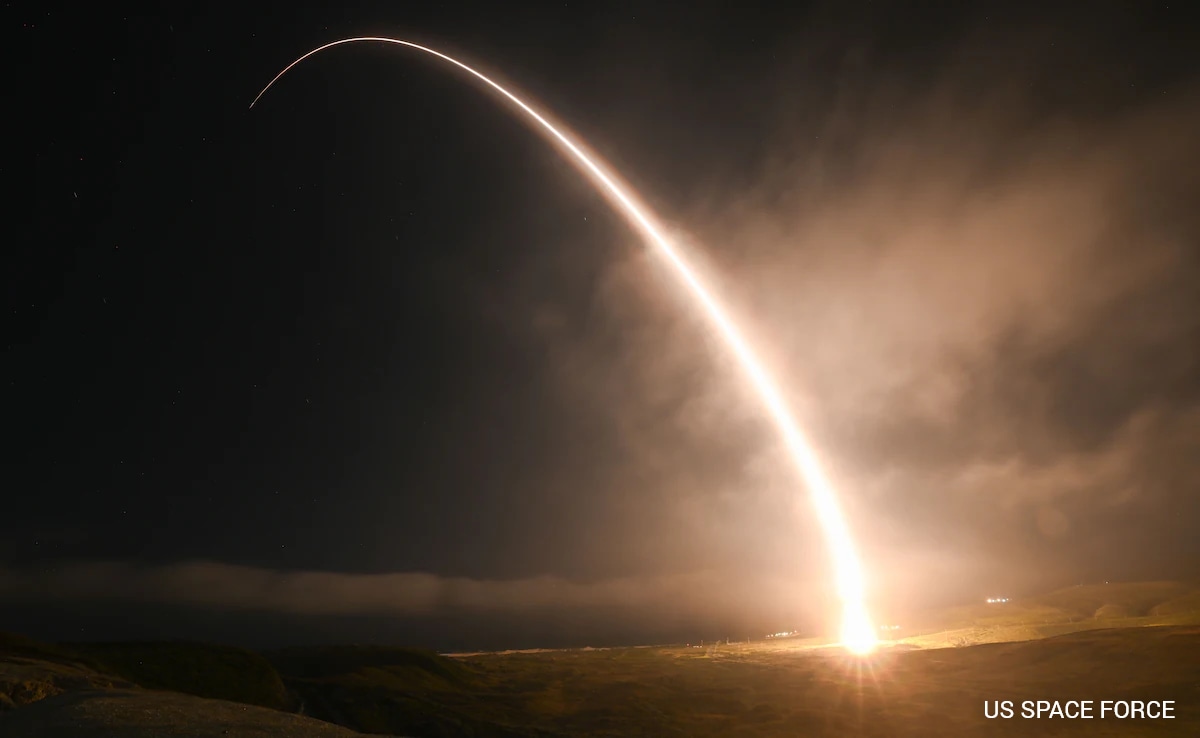
The headlines are screaming about "lethal long-range missiles" moving into position. They want you to envision a surgical, high-tech decapitation of Iranian infrastructure. They want you to believe that the deployment of AGM-158 JASSM-ERs and Tomahawk Block Vs creates an inescapable net.
They are wrong.
The prevailing consensus—the one fed to you by defense contractors and breathless cable news pundits—is that long-range precision equals immediate strategic victory. This is a fairy tale. I have watched the Pentagon burn through literal mountains of cash on the assumption that a missile’s range is a direct proxy for its effectiveness. In reality, the US isn't "positioning for a strike." It is engaging in expensive, metal-based theater.
The missiles we are moving aren't just tools of war; they are symptoms of a strategic rot that prioritizes hardware over the messy, uncomfortable realities of modern integrated air defense.
The Myth of the Silver Bullet
The current media narrative obsesses over the AGM-158B Joint Air-to-Surface Standoff Missile - Extended Range (JASSM-ER). On paper, it’s a marvel. It has a low-observable airframe. It has a range exceeding 900 kilometers. It uses an imaging infrared seeker to hit a specific brick in a specific wall.
But range is a trap.
When you increase range, you increase the "time-to-target" window. Iran isn't a desert wasteland with a few tents; it’s a mountainous fortress protected by the Bavar-373 and an increasingly sophisticated network of Russian-made S-400 components. A JASSM-ER is subsonic. It cruises at roughly Mach 0.8. While the stealth coating makes it harder to see, it doesn't make it invisible.
If you fire a subsonic missile from 900 kilometers away, you are giving the enemy’s electronic warfare (EW) suites and kinetic interceptors a massive window to react. We have seen this play out in Ukraine. High-end Western missiles, once thought to be untouchable, are being jammed or intercepted because the "long-range" advantage also provides the defender with the luxury of time.
The "lazy consensus" says: Long-range keeps our pilots safe. The brutal reality says: Long-range gives the enemy's computers more time to solve the math of your destruction.
Logistics Is the Real Lethality
You’ll hear analysts talk about the "lethality" of the Tomahawk Block V. They love the 1,600-kilometer reach. They rarely talk about the magazine depth.
Imagine a scenario where a strike begins. The US fires 200 Tomahawks. In a high-intensity environment against a peer or near-peer adversary like Iran, that’s a Tuesday morning. Iran has thousands of hardened underground facilities—the "missile cities" you’ve seen in their propaganda videos. These aren't just holes in the ground; they are reinforced, deep-buried targets.
A Tomahawk carries a 1,000-pound class warhead. To crack a hardened site, you need multiple hits on the same coordinate to "drill" through the concrete, or you need specialized bunker busters like the GBU-57 MOP, which requires a B-2 Spirit to fly directly over the target.
We are currently positioning missiles that are designed to hit "soft" or "semi-hardened" targets. We are bringing knives to a mountain fight. If the goal is truly to dismantle a nuclear or ballistic program, the missiles being "positioned" right now are insufficient. They are a political gesture disguised as a military threat.
The Electronic Warfare Blind Spot
The most significant oversight in the "most lethal missiles" discourse is the complete erasure of the EM (electromagnetic) spectrum.
Western missile technology relies heavily on GPS and INS (Inertial Navigation Systems) for mid-course guidance. Iran has spent two decades perfecting GPS spoofing and localized high-power jamming. We saw them bring down a RQ-170 Sentinel drone in 2011. Since then, their capabilities haven't exactly gone backward.
A missile is only lethal if it knows where it is. If the seeker is blinded by high-gain noise or the GPS signal is shifted by a few hundred meters, that multi-million dollar "lethal" asset becomes the world's most expensive lawn dart.
The Pentagon knows this. It’s why they are scrambling to integrate M-Code GPS and optical terrain mapping. But these upgrades are being rolled out at a snail's pace compared to the speed of commercial-off-the-shelf jamming tech. When we "position" these missiles, we are positioning assets that are fundamentally vulnerable to a $50,000 jammer.
The Cost-Curve Catastrophe
Let’s talk about the math that nobody in DC wants to acknowledge.
- JASSM-ER cost: ~$1.5 million per unit.
- Tomahawk Block V cost: ~$2 million per unit.
- Iranian Interceptor (Sayyad-4B) cost: A fraction of that.
- Iranian Drone (Shahed-136) used for decoys: ~$20,000.
The "lethal" strike we are preparing is financially unsustainable. We are planning to use $2 million missiles to take out targets that Iran can rebuild or replace for $100,000. Even worse, Iran has learned the lesson of the "swarm." If they saturate the airspace with low-cost drones and older cruise missiles, our sophisticated defense systems—the ones protecting the ships firing the Tomahawks—will deplete their magazines in hours.
The "status quo" thinkers believe we can out-produce the problem. We can’t. The US defense industrial base is currently struggling to keep up with the demand for basic 155mm artillery shells. Building a JASSM is a complex, months-long process involving fragile supply chains for microelectronics and specialized composites.
We are treating our missile inventory like an infinite resource. It is a finite, dwindling pile of silver bullets in a world that requires a sledgehammer.
The Geographic Delusion
The "Iran Strike" headlines imply that positioning these missiles in the region creates a strategic advantage. This ignores the "Home Court" physics.
Iran operates on interior lines. They can move their mobile launchers (Khorramshahr-4, Sejjil) through rugged terrain and hide them in tunnels within minutes. The US, conversely, is operating from predictable "hubs." We have a handful of major airbases and a carrier strike group.
Every time we move "lethal long-range missiles" into a base in Qatar or the UAE, we are just putting more expensive eggs in a very visible basket. These bases are within range of Iran's short-range ballistic missiles (SRBMs), which fly on depressed trajectories that are notoriously difficult to intercept.
By positioning for a strike, we are actually increasing our own vulnerability. We are tethering our "lethal" assets to fixed points that Iran has already pre-registered for their own missile salvos.
What a Real Threat Looks Like
If you want to know what actually keeps an Iranian general awake at night, it isn't a Tomahawk. It’s the stuff the US isn't putting out press releases about.
It’s the HPM (High-Power Microwave) weapons designed to fry the circuitry of those underground facilities without blowing a hole in the ground. It’s the Collaborative Combat Aircraft (CCA)—the loyal wingman drones that can fly ahead of a strike package and soak up those S-400 missiles so the expensive stuff can get through.
But we don't have those in sufficient numbers yet.
Instead, we are moving the "heritage" fleet. We are moving missiles that were designed for the 1990s and upgraded for the 2010s to fight a 2026 war. It’s a mismatch of epochs.
The Tactical Error of "Signaling"
The biggest misconception is that "positioning" these missiles works as a deterrent.
In the logic of the Middle East, signaling strength without the intent to use it is interpreted as a confession of weakness. By announcing the arrival of these missiles, the US is telling Iran exactly what the threat looks like, where it’s coming from, and what the likely flight paths will be.
True lethality is silent. True lethality is the capability the enemy doesn't know you have until their radar screens go black.
The current deployment is the military equivalent of a "Coming Soon" trailer for a movie that hasn't finished filming yet. We are showing our hand, and it’s a hand full of subsonic, GPS-dependent, high-cost assets that Iran has been training to defeat for two decades.
Stop looking at the range maps. Stop counting the number of vertical launch cells on a destroyer. None of that matters if the missile's brain is scrambled by a jammer or its target is 200 feet under a mountain.
The US is positioning for a strike that it cannot afford to win and likely cannot execute as advertised. The "lethal" missiles are already obsolete. We are just waiting for a kinetic event to prove it.
The real war won't be won by the longest reach; it will be won by the side that can afford to lose the most equipment. Right now, that isn't us.