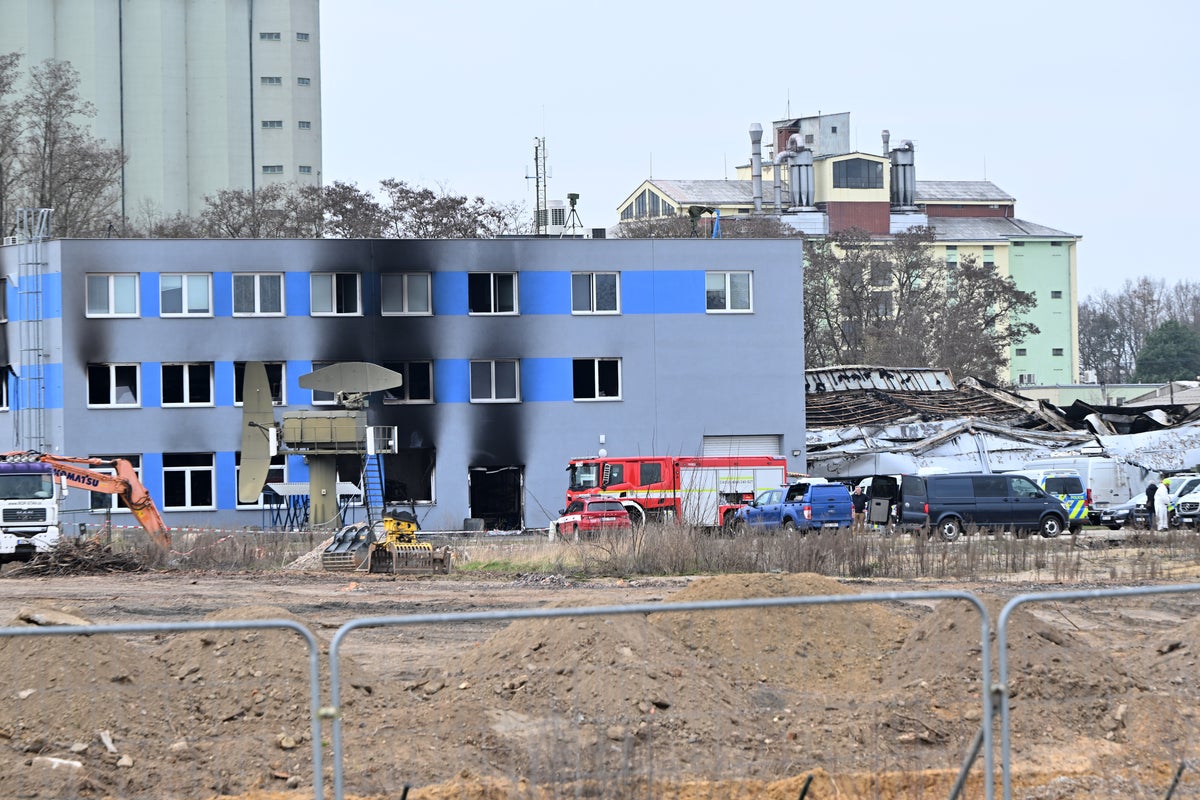
The arrest of two suspects following the arson attack on a Czech drone technology facility is being framed by the mainstream press as a simple "national security" story. They want you to focus on the crime, the police tape, and the shadow of foreign interference. They are missing the point.
This isn't just about a fire at a factory. It is about the violent collision between legacy defense manufacturing and the brutal, permissionless reality of modern attrition warfare. If you think better perimeter fences and more security guards will solve this, you haven't been paying attention to how the global hardware supply chain has actually changed over the last three years.
The Myth of the Sacred Tech Hub
For decades, defense contractors lived in a bubble. If you built sensitive hardware, you were protected by state secrets, remote industrial parks, and the assumption that your "enemies" were thousands of miles away. That era ended the moment commercial off-the-shelf (COTS) components became the primary driver of frontline innovation.
The Czech Republic has become a massive hub for drone development because it sits at the intersection of European engineering and a desperate need for low-cost, high-volume aerial platforms. But here is the truth nobody in the boardrooms wants to admit: when your technology is effective enough to change the outcome of a conflict, you are no longer a "tech company." You are a legitimate military target, regardless of where your office is located.
The arson in Prague is a symptom of a much larger shift. We are seeing the "front line" dissolve. If a piece of software or a carbon-fiber frame being built in a suburb of Prague can sink a ship or clear a trench, that suburb is now part of the combat zone.
Arson as a Cost Effective Strategy
Security analysts love to talk about "cyber warfare." It sounds sophisticated. It sounds expensive. But why spend months trying to hack a hardened network when a five-dollar bottle of accelerant and a brick can achieve the same kinetic result?
The arsonists arrested in the Czech Republic didn't need to steal trade secrets. They just needed to stop the flow of hardware. In a war of attrition, physical disruption is the ultimate "zero-day exploit."
The industry is currently obsessed with "robust" encryption and anti-jamming signals. Those are useless when your assembly line is a pile of ash. The "lazy consensus" says we need more government oversight and intelligence sharing. The reality? We need a total overhaul of how defense tech is manufactured. Centralized factories are liabilities. Large, recognizable hubs are targets.
The Decentralization Mandate
I have spent years watching companies dump millions into centralized "innovation centers." They build these shiny glass temples to show off to investors. In the current climate, that is tactical suicide.
If you are building drones—or any hardware that matters—and your entire production capacity exists under one or two roofs, you have failed at basic risk management. The "counter-intuitive" move here isn't more security guards; it’s radical decentralization.
- Fragmented Assembly: Break the production process into smaller, anonymous units.
- Redundant Tooling: If one site goes dark, three others should be able to pick up the slack within 24 hours.
- Obfuscation: Stop putting your logo on the front of the building.
The tech industry treats "stealth mode" as a marketing gimmick for startups. In the drone world, stealth needs to be physical. If the neighbors know you’re building loitering munitions, so does the opposition.
Why the Current Police Response is a Distraction
The authorities are patting themselves on the back for these arrests. Good for them. But focusing on the perpetrators ignores the systemic vulnerability. For every two people you catch, there are twenty more willing to take a paycheck to commit a low-skill, high-impact act of sabotage.
We are entering an era of "Gig Economy Sabotage." You don't need a trained sleeper cell; you just need a telegram group and some crypto. The barrier to entry for disrupting the global defense supply chain has never been lower.
The Hardware Reality Check
Let’s look at the math. A high-end drone facility might produce $50 million worth of hardware a year. The cost to burn it down is negligible. The ROI for the attacker is astronomical.
The Czech arrests are being treated as a win for "rule of law." In reality, they are a loud, smoking signal that the West's industrial base is dangerously brittle. We have optimized for efficiency and "just-in-time" delivery, which are the exact opposite of what you need for wartime resilience.
Stop Asking the Wrong Questions
People keep asking: "How do we stop these attacks?"
The question is wrong. You can't stop them. Not entirely. Not when the world is this interconnected and the tools of destruction are this accessible.
The right question is: "How do we build a manufacturing ecosystem that doesn't care if an attack happens?"
This requires moving away from the "Fortress Factory" model. We need to stop thinking about drones as "aircraft" and start thinking about them as "consumable electronics." You don't build a fortress to protect a crate of smartphones. You build a supply chain so massive and distributed that losing one crate—or one warehouse—doesn't move the needle.
The Cost of the "Safe" Approach
The biggest risk right now isn't the arsonists. It’s the inevitable bureaucratic "solution." Expect to see a wave of new regulations, mandatory security audits, and expensive certifications that do nothing but slow down the speed of innovation.
By the time a company meets the new "safety standards" imposed by a panicked government, their tech will be six months out of date. The attackers are agile. The arsonists don't have to fill out paperwork. If the response to these attacks is more red tape, the saboteurs have already won.
We have to accept that "Security" is an illusion in an age of asymmetric disruption. The only true defense is velocity and volume.
If you can't outbuild the arsonists, you aren't in the drone business. You're just a sitting duck waiting for a match to strike.
Build faster. Build smaller. Disappear into the noise.