When a fire erupts aboard a commercial cargo vessel in the Persian Gulf or the Gulf of Oman, standard media reporting reduces a complex multi-agency maritime emergency to a simple headcount of rescued crew members. An operational analysis of the United Arab Emirates rescuing 22 Arab nationals from a burning cargo ship requires looking past the press release to examine the mechanics of maritime Search and Rescue (SAR), shipboard fire thermodynamics, and the jurisdictional frameworks governing international shipping lanes. Without an understanding of how coastal states coordinate distressed asset extraction, stakeholders misjudge the operational risks, insurance liabilities, and infrastructure investments required to keep global trade corridors open.
The incident itself contains three confirmed baseline variables: a fire broke out aboard a commercial cargo vessel, the United Arab Emirates executed a maritime response, and 22 Arab nationals were successfully evacuated. Because specific vessel telemetry, cargo manifests, and exact coordinates are omitted from initial public disclosures, a rigorous assessment must separate confirmed operational outcomes from standard maritime emergency protocols. By mapping the physical realities of shipboard combustion against the structural command architecture of the UAE’s maritime authorities, we can deconstruct how a potential mass-casualty environmental disaster is contained within narrow tactical windows.
The Thermodynamics of Shipboard Fires and the Evacuation Window
A fire aboard a cargo vessel differs fundamentally from a terrestrial structure fire due to containment geometry, fuel density, and the absence of external municipal support. Steel hulls act as conductive ovens. Once a fire breaches the initial compartment—whether originating in the engine room's high-pressure fuel lines or within containerized cargo—heat transfers rapidly through bulkheads via conduction and radiation.
The progression of a shipboard fire follows a strict, unforgiving timeline dictated by oxygen availability and thermal mass:
- Ignition and Incipient Phase: Localized combustion occurs, often triggered by electrical faults, mechanical friction in propulsion systems, or exothermic chemical reactions in misdeclared cargo. Automated fixed fire-extinguishing systems (such as CO2 flooding or high-expansion foam in machinery spaces) must activate within minutes to suppress the fire before structural steel loses yield strength.
- Thermal Runaway and Flashover: If initial suppression fails, compartment temperatures exceed 600 degrees Celsius. At this threshold, adjacent fuel sources vaporize and ignite simultaneously. On a cargo ship carrying heavy fuel oil (HFO) or marine gas oil (MGO), radiant heat threatens bunker tanks, creating the risk of catastrophic structural rupture.
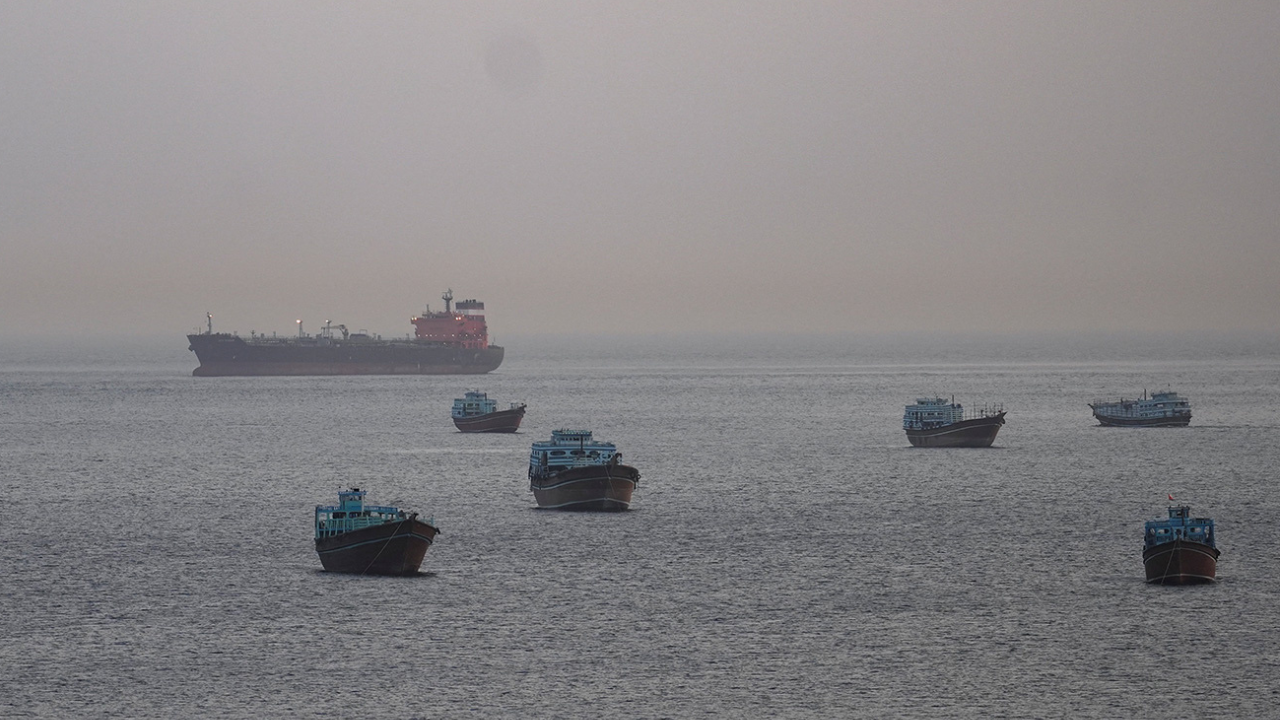
- Loss of Propulsion and Maneuverability: Engine room fires rapidly sever primary electrical generation and steering gear hydraulics. The vessel becomes a "dead ship," drifting at the mercy of prevailing currents and wind vectors—a critical hazard in congested shipping lanes like the Strait of Hormuz or the approaches to Fujairah and Jebel Ali.
For a crew of 22, the decision to abandon ship represents the absolute failure of onboard damage control. Under the International Convention for the Safety of Life at Sea (SOLAS), crew members are trained as the primary firefighters. Evacuating 22 personnel means the Master determined that structural integrity was compromised, toxic smoke inhalation threatened the bridge or accommodation block, or uncontained flames risked igniting volatile cargo.
The evacuation window narrows exponentially once the Master issues the distress signal (Mayday via VHF Channel 16 or Digital Selective Calling). Launching free-fall lifeboats or davit-launched liferafts in rough sea states introduces severe mechanical risk; a significant percentage of maritime fatalities occur during the deployment of life-saving appliances rather than from the fire itself. Thus, rapid external intervention by coastal SAR assets directly determines survival rates.
The Four Pillars of UAE Maritime SAR Architecture
Executing a zero-fatality extraction of 22 individuals requires pre-positioned infrastructure, unified command, and specialized naval assets. The UAE operates one of the most heavily trafficked maritime zones globally, bordered by the Persian Gulf to the west and the Gulf of Oman to the east. To protect these chokepoints, the UAE’s maritime response relies on four operational pillars.
1. Continuous Domain Awareness and Signal Interception
Effective SAR begins before a physical asset leaves port. The UAE National Search and Rescue Center (NSRC), operating in coordination with the Critical Infrastructure and Coastal Protection Authority (CICPA) and the UAE Coast Guard, maintains continuous surveillance over its Exclusive Economic Zone (EEZ) and Search and Rescue Region (SRR).
Distress detection relies on redundant telemetry:
- Cospas-Sarsat Satellite Network: Automatically detects 406 MHz Emergency Position Indicating Radio Beacons (EPIRBs) triggered manually by the crew or hydrostatically if the vessel sinks.
- Automatic Identification System (AIS) Anomaly Tracking: Shore-based radar and coastal AIS receivers flag sudden drops in vessel speed, erratic heading changes, or abrupt loss of transponder signals—often the first indicators of an onboard power failure caused by fire.
- VHF/MF/HF Coastal Watch: Continuous automated monitoring of international distress frequencies ensures immediate voice verification with the distressed vessel's bridge team.
2. Multi-Domain Asset Deployment
Once a distress position is triangulated, the NSRC tasks assets based on distance, sea state, and the nature of the hazard. For a burning cargo ship with 22 crew members, a single asset type is insufficient.
The standard operational deployment splits into two tactical tiers:
- Aerial Reconnaissance and Medevac: Twin-engine SAR helicopters (such as the AgustaWestland AW139, heavily utilized in the region) provide rapid overhead assessment. Helicopters arrive on scene faster than surface vessels, using thermal imaging to map fire spread, dropping rescue swimmers to assess crew injuries, and hoisting critical casualties directly to onshore trauma centers.
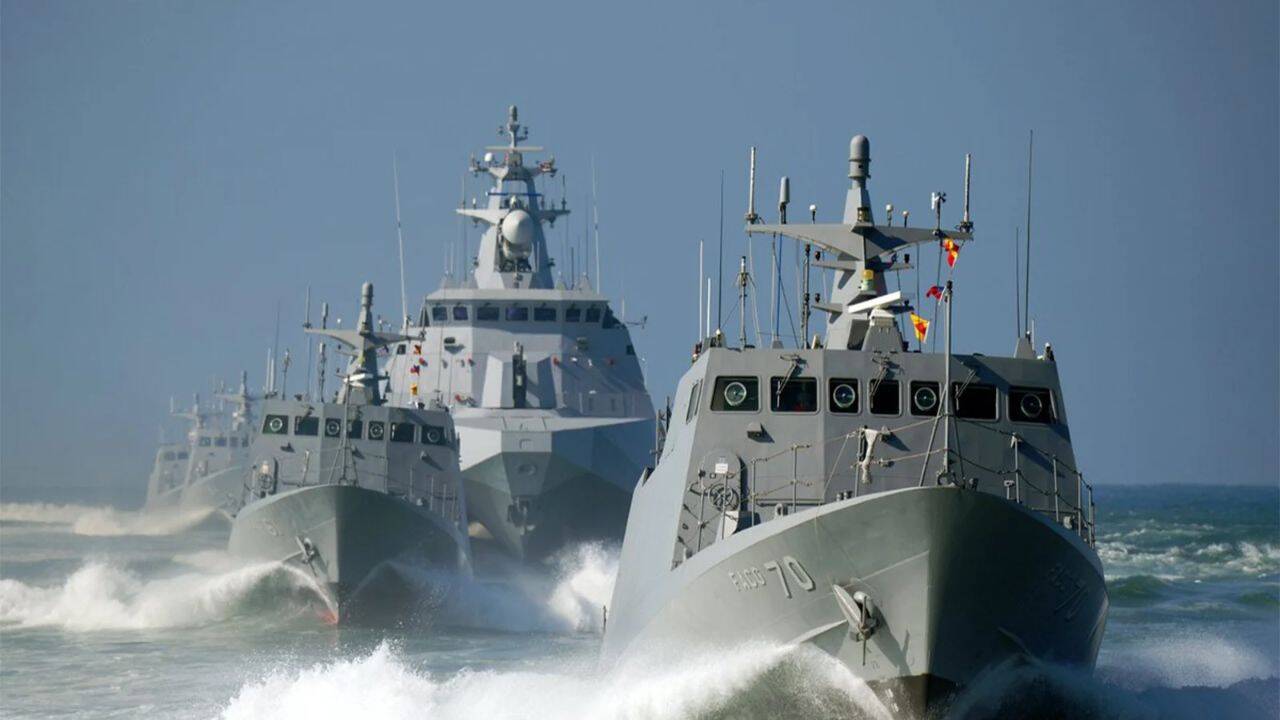
- Surface Extraction and Firefighting: High-speed Coast Guard interceptors and offshore patrol vessels handle bulk personnel transfer. Simultaneously, specialized firefighting tugs (FiFi-1 or FiFi-2 rated vessels) are dispatched from nearby commercial ports like Fujairah, Khor Fakkan, or Mina Rashid. These tugs deploy high-volume water cannons to cool the hull exterior, preventing thermal buckling while crew extraction takes place.
3. Standardized Extraction Protocols
Extracting 22 people from a burning vessel or drifting liferafts requires strict adherence to International Aeronautical and Maritime Search and Rescue (IAMSAR) Manual procedures. Rescue coordinators must account for drift vectors—calculating leeway (wind push) and surface current velocity—to predict where liferafts will travel between the time of distress call and asset arrival.
During extraction, wind direction dictates approach geometry. Surface vessels must approach from the windward side to avoid inhaling toxic smoke plumes or colliding with a drifting, unpowered hull. If the crew remains aboard the cargo ship, rescue boats execute alongside transfers using pilot ladders or scramble nets, requiring precise station-keeping by coxswains in dynamic swells.
4. Jurisdictional Clarity Under International Law
Maritime rescues frequently stall when vessels operate near disputed boundaries or international waters. Under the 1979 International Convention on Maritime Search and Rescue, coastal states assume responsibility for designated SRRs regardless of the distressed vessel's flag state or the nationality of its crew.
The fact that the 22 rescued individuals were Arab nationals—likely representing a mix of officers and ratings from regional maritime nations such as Egypt, Syria, Jordan, or Yemen—highlights the transnational nature of regional shipping. Under international maritime law, humanitarian extraction supersedes flag-state bureaucracy. The UAE’s ability to execute the mission without diplomatic friction reflects pre-established bilateral agreements and clear operational authority vested in the NSRC.
The Economics and Liability Chain of Maritime Incidents
While news reports conclude once the crew reaches shore safely, the commercial and legal consequences of a shipboard fire persist for years. Understanding the financial mechanics reveals why coastal states invest heavily in rapid response capabilities.
General Average and Cargo Liability
When a ship catches fire and requires external salvage or firefighting intervention, the shipowner typically declares General Average. Derived from ancient maritime law and codified in the York-Antwerp Rules, General Average mandates that all parties with a financial stake in the voyage—the shipowner and every individual cargo owner—proportionally share the financial losses resulting from deliberate sacrifices made to save the vessel and remaining cargo.
If external firefighting tugs pump thousands of tons of seawater into a cargo hold to extinguish a fire, ruining undamaged goods in the process, the owners of the saved cargo must pay a percentage of the damaged cargo's value, alongside salvage fees. Until cargo owners post General Average bonds through their insurers, the salvor holds a maritime lien on the goods, freezing supply chains for months.
Protection and Indemnity (P&I) Exposure
The rescue of 22 crew members directly mitigates the shipowner’s exposure under their Protection and Indemnity (P&I) insurance club. P&I clubs cover third-party liabilities, including:
- Crew injury, repatriation, and death benefits.
- Wreck removal costs if the vessel sinks in a navigable shipping channel.
- Environmental pollution fines resulting from bunker fuel leaks.
By executing a rapid rescue, UAE authorities eliminate the human fatality component of the P&I claim and enable immediate transition from SAR (saving lives) to Salvage (saving property and preventing environmental damage). Every hour saved in stabilizing a burning vessel reduces the probability of a hull breach, which in shallow, ecologically sensitive waters like the Persian Gulf would trigger multi-million-dollar desalination plant shutdowns and environmental remediation costs.
Systemic Vulnerabilities in Regional Cargo Operations
A rigorous analysis cannot ignore the systemic failures that cause shipboard fires in the first place. The incident fits a broader, measurable pattern across global commercial shipping: fire and explosion remain the leading causes of total vessel losses and high-value insurance claims.
Three primary vulnerabilities drive these incidents:
- Misdeclared and Undeclared Hazardous Cargo: Shippers frequently mislabel lithium-ion batteries, calcium hypochlorite, or charcoal to avoid higher hazardous-material freight rates. When stowed improperly in non-ventilated holds or near heated fuel tanks, these materials undergo spontaneous combustion.
- Aging Regional Tonnage: While mega-container ships calling at deepwater terminals boast advanced fire suppression systems, regional feeder vessels and general cargo ships operating between Gulf ports often represent older tonnage. Aging electrical wiring, deferred maintenance on auxiliary engines, and degraded fire-door seals increase fire vulnerability.
- Crew Fatigue and Reduced Manning: Commercial pressures have driven crew sizes down to bare regulatory minimums. A crew of 22 on a medium-sized cargo vessel leaves minimal redundancy. When a fire breaks out, the same personnel responsible for navigation and engine operation must immediately form firefighting teams, leading to rapid physical exhaustion and delayed tactical response.
Limitations of Coastal SAR Infrastructure
Despite the operational success of rescuing all 22 crew members, coastal SAR systems face hard physical and operational ceilings. Recognizing these limitations prevents overconfidence in maritime risk modeling:
- Weather and Sea State Constraints: High-speed interceptor craft lose operational efficiency rapidly when wave heights exceed 3 to 4 meters (Sea State 5 and above). While helicopters operate above surface swells, severe shamal winds and sandstorms in the Gulf reduce visibility to zero, grounding rotary-wing assets when they are needed most.
- Chemical and Toxic Plume Hazards: Standard SAR vessels are equipped for personnel extraction, not hazardous materials (HAZMAT) containment. If a burning cargo ship carries toxic industrial chemicals, rescue teams cannot safely approach without specialized chemical-biological-radiological-nuclear (CBRN) protection, forcing delays until specialized salvage teams arrive.
- The Salvage Gap: Coastal authorities prioritize human life; once the 22 crew members are safe, government assets generally disengage from active firefighting unless the vessel threatens critical port infrastructure or coastal ecosystems. A dangerous operational vacuum often occurs between the completion of the state-led SAR mission and the arrival of private commercial salvors contracted by the shipowner's insurers.
Strategic Imperatives for Maritime Operators and Insurers
To reduce the frequency of shipboard fires and compress emergency response timelines in high-density corridors like the UAE coast, maritime stakeholders must transition from reactive emergency extraction to predictive risk mitigation.
- Mandate Pre-Loading Thermal and AI Manifest Screening: Port authorities and shipping lines must deploy automated natural-language processing algorithms to scan cargo booking descriptions for anomalies—such as unusually high weights for benign-sounding goods—flagging potential undeclared hazardous materials before containers are loaded onto vessels.
- Enforce Automated Hold-Monitoring Telemetry: Insurers should adjust P&I and Hull & Machinery premiums to penalize vessels lacking continuous infrared thermal imaging and multi-gas sensors inside cargo holds. Early detection of off-gassing (carbon monoxide or hydrogen spikes) provides a 30-to-60-minute warning prior to open flame ignition, allowing crews to isolate compartments before thermal runaway occurs.
- Establish Pre-Contracted Salvage Retainers: Shipowners operating in the Persian Gulf and Gulf of Oman must move away from ad-hoc Lloyd’s Open Form (LOF) salvage negotiations during active emergencies. Pre-contracting dedicated regional FiFi tug capacity eliminates the multi-hour commercial negotiation lag between crew evacuation and hull cooling, preventing total constructive losses and catastrophic fuel spills.