The transition of a sudden death inquiry involving a prominent public figure into a formal homicide investigation demands an immediate shift from standard localized policing to structured, resource-intensive protocols. Following the discovery of 78-year-old former Member of Parliament Ann Widdecombe deceased with serious injuries at her residence in Haytor, Devon, on July 9, 2026, the Devon and Cornwall Police initiated Operation Hunlen. This deployment, managed by the Force Major Crime Investigation Team, highlights the specific operational mechanics, triage structures, and digital-physical integration required to execute a high-profile major crime inquiry under intense public and political scrutiny.
The efficacy of such an investigation depends on the systematic management of overlapping investigative workflows: physical forensics, intelligence-driven suspect targeting, multi-agency threat assessments, and community-sourced digital telemetry.
Forensic Triage and Scene Management Mechanics
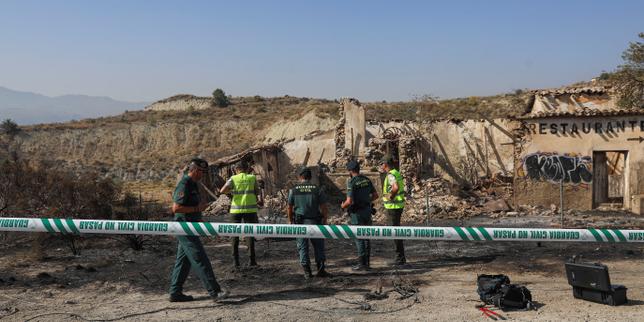
A primary bottleneck in any homicide investigation is the preservation and extraction of physical evidence before environmental degradation or human interference occurs. The initial discovery by the ambulance service at 11:40 AM on July 9 triggered an immediate isolation protocol. The geographic location—Haytor Vale within Dartmoor National Park—presents distinct logistical constraints. Rural, isolated residential structures provide fewer entry and exit corridors compared to urban environments, altering the standard spatial boundary calculation for cordons.
The forensic strategy at the scene operates under a strict three-tier containment model:
- The Inner Cordon (Hot Zone): Restricts access exclusively to forensic scientists, crime scene investigators (CSIs), and the forensic pathologist. This zone requires full personal protective equipment (PPE) to eliminate DNA cross-contamination. The primary objective here is identifying blood spatter dynamics, weapon impact trajectories, and trace contact materials (hair, fibers, touch DNA).
- The Outer Cordon (Warm Zone): Encompasses the immediate perimeter, including the residential grounds and approach roads. Logistical command posts are established here to control entry via a strict Scene Log, recording the exact ingress and egress times of all personnel.
- The Sector Cordon (Cold Zone): Implements local road closures to restrict regional transit, preventing potential suspects from returning to destroy evidence and preserving peripheral tire or footprint impressions along rural access routes.
The presence of "serious injuries" indicates physical trauma that rules out natural causes or simple domestic accidents, such as the unverified fall suggested in preliminary reports. In cases involving blunted, sharp, or ballistic force, the forensic pathologist’s initial post-mortem assessment establishes the minimum number of impacts, defensive wounds on the upper extremities, and anatomical vectors. This structural data forms the baseline against which any subsequent suspect statements are verified.
Threat Assessment Triage: Decoupling Political Motivation
High-profile victims who have held roles as state ministers—specifically within sensitive portfolios like the Prisons Ministry—or who remain active as political commentators require immediate multi-agency intelligence triage. The central risk matrix evaluates whether an attack is an isolated criminal act or a politically motivated, ideologically driven assassination.
               [Incident Occurs: Discovery of High-Profile Victim]
                                       │
                                       ▼
                     [Parallel Triage Paths Activated]
                    ┌──────────────────┴──────────────────┐
                    ▼                                     ▼
       [Local Major Crime Team]              [Counter-Terrorism Policing]
      (Forensics, Local CCTV, MIPP)         (Threat Registers, Digital Footprints)
                    │                                     │
                    └──────────────────┬──────────────────┘
                                       ▼
                     [Assistant Chief Constable Review]
                    ┌──────────────────┴──────────────────┐
                    ▼                                     ▼
        [Political/Terror Motive]               [Isolated Criminal Act]
          (Escalate to National)                 (Local Custody/Prosecution)
                                                          ▲
                                                 (Current Status: Active)
Devon and Cornwall Police executed this parallel assessment by consulting Counter-Terrorism Policing immediately at the launch of Operation Hunlen. This protocol checks the victim’s recent communication logs, public schedules, and active threat registers maintained by the Parliamentary Security Department and the Home Office.
Assistant Chief Constable Matt Longman confirmed that the consultation ruled out a terrorist motive. This structural exclusion shifts the primary investigative line of inquiry away from complex ideological networks and toward traditional homicide typologies: opportunistic burglary, targeted personal disputes, or localized stalking. While investigators remain open-minded, eliminating the terrorism vector changes the deployment of resources, ensuring that local intelligence assets and regional physical evidence gathering take precedence over national security wiretaps or counter-terror intelligence sweeps.
Suspect Capture and Custody Metrics
The acceleration of an inquiry from a general person-of-interest description to a targeted arrest requires rapid data synthesis. Within 24 hours of the discovery, police updated their initial description of an unknown white male to execute the targeted arrest of a 26-year-old white British national at an address in Newton Abbot, located less than 10 miles from the crime scene.
This localized geographical proximity provides critical indicators for the investigation's analytical model. The distance—under a 15-minute transit window—suggests a high probability of localized movement post-incident, which narrows down the relevant camera networks for transport analysis.
Upon arrest, the legal framework shifts to the Police and Criminal Evidence Act 1984 (PACE), which governs the strict custody timelines:
- Initial Detention Window (24 Hours): The statutory limit to detain a suspect without charge. The clock begins the moment the suspect arrives at the designated custody suite (likely Exeter or Torquay).
- First Extension (Up to 36 Hours): Authorized by a Police Superintendent if the offense is an indictable-only matter (such as murder) and the investigation is being conducted diligently and expeditiously.
- Warrant of Further Detention (Up to 96 Hours): Requires application to a Magistrates’ Court. To secure this, the Major Crime Investigation Team must demonstrate that further detention is vital to secure or preserve evidence, such as awaiting urgent forensic matching or digital forensic extraction.
During this custody window, parallel forensic processing occurs. The suspect undergoes immediate non-intimate sample collection (DNA swabs, fingernail scrapings, clothing seizures) to match against trace evidence recovered from the Haytor property.
Digital Telemetry and Community Sourcing
Modern major crime inquiries rely heavily on public digital infrastructure to reconstruct timelines. DCI Ilona Rosson's public appeal specifically requested data from three distinct digital tiers: standard closed-circuit television (CCTV), video doorbells, and automotive dashcams within the vicinity of Haytor Vale.
The deployment of the Major Incident Public Portal (MIPP) serves as a centralized intake mechanism. This system decouples data collection from traditional, manually intensive house-to-house inquiries, allowing automated file ingestion. The computational analysis of this video data relies on establishing strict time-synchronization matrices. Because private doorbell cameras and dashcams frequently suffer from internal clock drift or mismatched time-zone configurations, analysts must calibrate every submission against a standardized atomic clock reference point (such as cellular network time logs captured from nearby base transceiver stations).
Once calibrated, the investigation constructs a localized digital net. This net tracks all vehicular and pedestrian traffic moving through the single-track roads surrounding Haytor Vale during the critical 24-hour window leading up to 11:40 AM on July 9. Any discrepancy between a vehicle's recorded entry into the zone and its exit provides a metric for dwell time, highlighting potential anomalies that require targeted interrogation.
Investigative Vulnerabilities and Risk Mitigation
A significant risk to the integrity of Operation Hunlen is information leakage and public speculation, particularly across decentralized social media platforms. Unverified assertions regarding potential motives or methods contaminate the witness pool. If a witness reads a hypothetical scenario online before providing an official statement, their subsequent testimony loses evidential value under cross-examination, as defense counsel can argue the memory was altered by external digital narratives.
Furthermore, premature disclosure of unique crime scene details—known as "holdback evidence"—compromises the integrity of suspect interviews. Investigators deliberately withhold specific facts, such as the exact weapon type or the precise entry point into a property, to serve as a verification metric during interrogation. A genuine confession or an accurate witness account will naturally align with this holdback data, whereas a false confession or a coached statement will fail to match.
The operational strategy now shifts toward maintaining tight media control through restrictive police updates, while the digital forensics team processes the seized devices of both the victim and the suspect. This digital parsing aims to establish the exact nature of any pre-existing relationship or interaction window, building the evidentiary foundation required to convert the current custody status into a formal charge for murder.