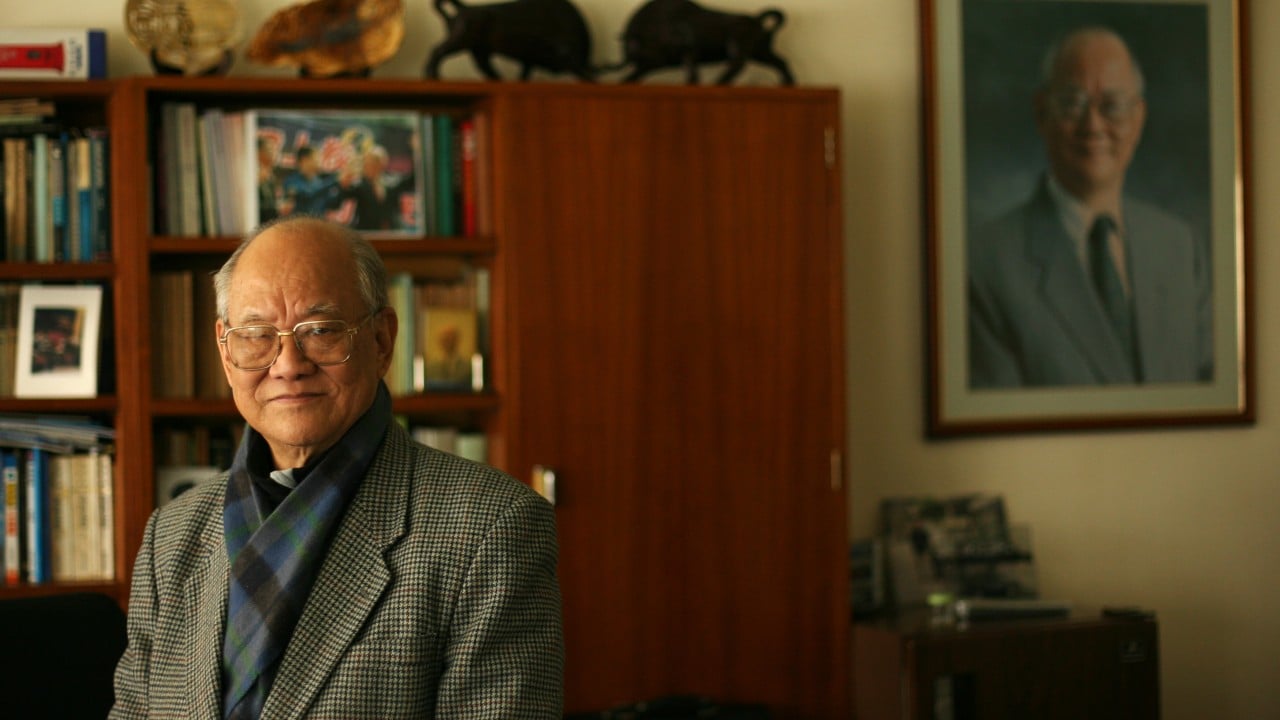
When three former Chief Executives of the Hong Kong Special Administrative Region—Tung Chee-hwa, Leung Chun-ying, and Carrie Lam—converge to co-chair the funeral committee for veteran educator and former National People's Congress (NPC) deputy Ng Hon-mun, the event transcends routine civic mourning. In political sociology, high-level funeral committees function as formal signaling mechanisms. They calibrate an individual's historical standing, validate specific ideological lineages, and project institutional continuity across distinct administrative eras. Analyzing the composition of Ng Hon-mun’s funeral committee reveals the exact mechanics of political capital, patriotic education infrastructure, and cross-factional consensus within Hong Kong's governance structure.
The Structural Function of Elite Funeral Committees
In Chinese political tradition and Hong Kong’s post-1997 civic apparatus, the formation of a funeral committee is a deliberate exercise in reputational accounting. Unlike Western state funerals, which are strictly bound by constitutional office, Hong Kong’s ceremonial hierarchies rely on voluntary elite coalition-building to signal the weight of a deceased figure's contributions.
The participation of multiple former Chief Executives establishes a unified endorsement that bridges distinct periods of administrative governance:
- The Founding Era (1997–2005): Represented by Tung Chee-hwa, symbolizing the initial integration of the "One Country, Two Systems" framework and the early alignment with traditional pro-Beijing institutions.
- The Stabilization Era (2012–2017): Represented by Leung Chun-ying, reflecting a period marked by heightened ideological vigilance and the defense of executive authority against nascent localist movements.
- The Structural Reset Era (2017–2022): Represented by Carrie Lam, embodying the implementation of the National Security Law and the subsequent overhaul of Hong Kong’s electoral and educational systems.
By assembling all three living former leaders—excluding Donald Tsang, whose post-office legal history typically precludes standard ceremonial leadership—the committee executes a specific institutional logic. It demonstrates that regardless of tactical differences among past administrations, the ideological foundation represented by Ng Hon-mun remains an uncontested baseline of legitimacy.
Deconstructing Ng Hon-mun’s Institutional Footprint
To understand why Ng commands this level of unified elite deference, one must separate his public persona from his operational role in Hong Kong’s civic architecture. Born in 1926, Ng’s career spanned over seven decades, positioning him at the intersection of education, media, and legislative representation.
The Patriotic Education Pipeline
Ng served for decades as principal and supervisor of Pui Kiu Middle School, one of Hong Kong’s premier traditional "patriotic schools" (ai guo xue xiao). During the British colonial administration, institutions like Pui Kiu operated outside the standard colonial subsidy framework, maintaining curricula aligned with mainland Chinese historical narratives.
From an operational perspective, Ng managed a dual-track survival strategy:
- Institutional Insulation: Preserving ideological autonomy while navigating colonial regulatory scrutiny during periods of acute political tension, such as the 1967 disturbances.
- Human Capital Development: Cultivating a multi-generational network of alumni who later staffed the administrative, commercial, and political tiers of post-1997 Hong Kong.
In organizational theory, this constitutes long-horizon network seeding. When former Chief Executives honor Ng, they are acknowledging the foundational infrastructure that sustained pro-Beijing civic identity long before the 1997 handover made such alignment advantageous.
Legislative and Consultative Integration
Beyond school administration, Ng served as a Hong Kong deputy to the National People's Congress from the 4th through the 10th terms (1975–2008). A thirty-three-year tenure in the NPC places an individual in a rare category of institutional memory. Ng functioned as a structural conduit between Beijing’s legislative apparatus and Hong Kong’s local socio-political environment.
Unlike contemporary political figures whose influence relies on digital media amplification or electoral mobilization, Ng’s authority derived from intermediary reliability. He translated Beijing’s policy priorities for a skeptical local populace during the Sino-British negotiations of the 1980s, while simultaneously relaying Hong Kong’s ground-level complexities back to central authorities.
The Three Pillars of Posthumous Consensus
A rigorous examination of why diverse political factions rally around a single historical figure identifies three distinct mechanisms driving this consensus.
1. Ideological Continuity Over Policy Variance
Public discourse frequently focuses on the friction between different Hong Kong administrations—contrasting Tung’s consensual style, Leung’s combative posture, and Lam’s technocratic crisis management. The joint chairmanship of Ng’s funeral committee neutralizes these distinctions. It establishes a hierarchy of values where foundational patriotism supersedes administrative style. For current policymakers, elevating Ng reinforces the narrative that current educational reforms—specifically the introduction of national security education and citizenship curricula—are not novel impositions, but the logical culmination of traditions championed by figures like Ng since the mid-twentieth century.
2. The Validation of Non-Material Loyalty
In commercial hubs like Hong Kong, political alignment is frequently analyzed through the lens of economic self-interest—tycoons and business elites aligning with sovereign power to protect market access and regulatory stability. Ng Hon-mun represents the counterpoint: ideological fidelity maintained during periods of material disadvantage. During the colonial era, affiliation with traditional patriotic schools carried career penalties, restricted access to civil service pathways, and invited surveillance. Honoring Ng allows the governing establishment to elevate a pure archetype of civic devotion, counterbalancing perceptions that the pro-establishment camp is purely transactional.
3. Intergenerational Reassurance
Hong Kong’s political landscape underwent rapid demographic and ideological turnover following the 2019 unrest and the 2021 electoral overhaul. New entrants into the Legislative Council and District Councils often lack the deep historical roots of the traditional leftist organizations (such as the Hong Kong Federation of Trade Unions or the traditional educational associations). By placing three former Chief Executives at the helm of Ng’s memorial, the establishment signals to newer political operatives that institutional loyalty is remembered, rewarded, and memorialized at the highest levels, regardless of how long after active service an individual passes away.
Limitations of Ceremonial Signaling
While elite funeral committees effectively project internal unity, strategic analysis requires recognizing the boundaries of this mechanism. Ceremonial consensus among political elites does not automatically translate into broader societal persuasion.
- The Generational Divide in Historical Memory: For citizens educated within the post-1997 mainstream subsidized school system, the specific struggles of colonial-era patriotic schools are historical abstractions rather than lived experiences. The symbolic weight of Ng’s thirty-year NPC tenure resonates deeply within establishment circles, yet carries limited immediate salience for younger demographics preoccupied with housing affordability, upward mobility, and regional economic competition.
- Asymmetry Between Institutional Honor and Public Engagement: High-profile funeral committees are inherently inward-facing instruments of elite cohesion. They reaffirm the norms of the governing coalition, but they do not resolve the structural challenges of public communication or civic integration in a rapidly evolving media ecosystem.
- The Risk of Historical Hagiography: Over-indexing on ceremonial consensus can obscure the genuine policy debates Ng himself engaged in. Throughout his later years as a newspaper columnist, Ng frequently critiqued bureaucratic inertia, governance missteps, and social inequality within the HKSAR administration. Reducing his legacy purely to an uncritical symbol of state alignment flattens the intellectual independence that made his commentary influential during his lifetime.
Analytical Frameworks for Tracking Civic Alignment
Observers evaluating Hong Kong’s political trajectory often misread ceremonial events as mere formalities. In reality, funeral committees, honors lists, and advisory appointments serve as high-signal indicators of internal power dynamics. Analysts tracking governance stability in the region should apply a structured evaluation matrix to similar civic events:
- Cross-Administration Co-Attendance: Track which former leaders participate jointly. Unity across distinct administrative eras indicates central-level coordination designed to project historical inevitability.
- Sectoral Representation on the Committee: Map the balance between traditional leftist organizations (unions, patriotic schools), commercial conglomerates, and modern technocrats. In Ng’s case, the heavy presence of educational and traditional media figures underscores the current administration’s prioritization of cultural and ideological consolidation over purely commercial interests.
- Official Eulogy Framing: Compare the specific attributes praised in official statements against current policy agendas. When state media and officials emphasize Ng’s contributions to youth education and constitutional awareness, they are actively anchoring contemporary curriculum mandates in historical precedent.
Strategic Imperatives for Institutional Observers
The convergence of Tung Chee-hwa, Leung Chun-ying, and Carrie Lam to honor Ng Hon-mun confirms that Hong Kong’s governing apparatus is actively codifying its historical canon. As the city transitions from structural stabilization to long-term institutional integration within the Greater Bay Area, the establishment is deliberately elevating historical figures who embody ideological consistency and foundational loyalty.
Analysts, corporate strategists, and civic leaders operating in Hong Kong must recognize that historical legitimacy is now treated as a core pillar of governance. Policy alignment is no longer evaluated solely on current economic output or technocratic compliance; it is increasingly measured against a standardized historical narrative where figures like Ng Hon-mun serve as the definitive benchmark for civic contribution. Monitor upcoming educational, cultural, and commemorative appointments for continued reinforcement of this traditional patriotic lineage, as these appointments will dictate the ideological parameters of Hong Kong’s civic sphere for the next decade.