The wind on a remote island doesn't just blow. It scours. It carries the scent of brine, the cry of gulls, and—on rare, terrifying occasions—something far smaller. Something microscopic. Something that can turn a deep breath into a death sentence.
In a quiet corner of the British Isles, far from the neon hum of London or the sprawling suburbs of Manchester, a single person recently felt the weight of that wind. It started, perhaps, as a vague ache. A shiver that wouldn't go away. A fever that felt like a betrayal. Public health officials call it a "suspected case of hantavirus." To the person lying in a hospital bed, it is likely a confusing, harrowing mystery.
Hantavirus isn't a household name like the flu or even the lingering shadow of COVID-19. It is a ghost in the machine of our ecosystem. It doesn't travel through the air from a cough in a crowded tube station. It waits. It lingers in the dust of old sheds, in the dry grass of coastal dunes, and in the nests of long-tailed field mice.
The Invisible Bridge
To understand why this matters, we have to look at the mouse. Not the laboratory mouse, but the wild, scuttling wood mouse (Apodemus sylvaticus).
These creatures are the primary reservoirs for the Seoul virus and other hantavirus strains in Europe. They live their lives parallel to ours, barely noticed. They carry the virus in their blood, their saliva, and their waste. The virus doesn't make them sick. Evolution has struck a bargain: the mouse provides a home, and the virus hitches a ride.
The trouble begins when that parallel world intersects with our own. Imagine a researcher, a hiker, or a resident on a remote island cleaning out a long-forgotten shed. They sweep the floor. They kick up a cloud of fine, grey dust. Within that dust are aerosolized particles of dried rodent excreta.
They breathe.
Inside the lungs, the virus finds a gateway. It targets the endothelial cells—the delicate lining of our blood vessels. If the strain is aggressive, it begins a process of systemic leakage. The very vessels meant to contain our lifeblood become porous. In the Americas, this often leads to Hantavirus Pulmonary Syndrome (HPS), where the lungs fill with fluid. In Europe and Asia, it more commonly manifests as Hemorrhagic Fever with Renal Syndrome (HFRS).
The kidneys, those silent filters of our existence, begin to fail.
A Remote Geography of Risk
Why a remote island? There is a certain irony in our search for isolation. We head to the fringes of the map to escape the "viral load" of the city, only to walk directly into the ancient, established territories of wild pathogens.
On a small island, the ecological balance is precarious. A boom in the rodent population—driven by a mild winter or a sudden abundance of food—can increase the "viral pressure" on the human inhabitants. When you are miles from a mainland hospital, a sudden spike in fever isn't just an inconvenience. It is a logistical nightmare.
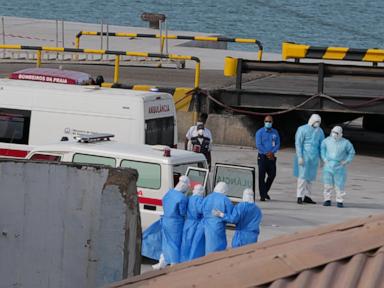
The UK Health Security Agency (UKHSA) monitors these events with a quiet, clinical intensity. They aren't looking for a pandemic; hantavirus doesn't typically jump from person to person. It is a dead-end virus in humans. We are the accidental hosts. But for the individual caught in that dead end, the stakes are absolute.
The Anatomy of a Suspected Case
When the news broke of this suspected case, the headlines were brief. They spoke of "monitoring" and "low risk to the general public." These phrases are designed to soothe, and they are factually accurate. You aren't going to catch hantavirus from your neighbor’s sneeze.
But consider the clinical reality for the patient.
The incubation period is a slow burn, lasting anywhere from one to eight weeks. You might have forgotten the shed you cleaned or the mouse you saw scurrying across the porch. Then comes the "prodromal" phase. It mimics a dozen other illnesses. Headaches. Back pain. Abdominal distress. It is the great pretender.
As the virus takes hold, the symptoms sharpen. The pain in the lower back becomes an agonizing signal that the kidneys are under siege. Blood pressure can drop. The face flushes. Tiny red spots, called petechiae, might appear on the skin—the first outward sign that the internal plumbing is leaking.
Doctors must play detective. They look for a history of rodent exposure. They run blood tests to find the specific antibodies (IgM and IgG) that prove the immune system is at war with this specific invader.
The Cost of Encroachment
We often talk about "emerging diseases" as if they are new inventions of the modern world. In reality, many are ancient residents of the wilderness that we have simply invited into our homes.
Every time we expand a suburban development into a forest, or repurpose old rural buildings for tourism, we tighten the knot between us and the wild. We are living closer to the reservoirs than ever before. This island case is a reminder that there is no such thing as "away."
Our relationship with the environment is a physical one. It is written in our breath and our blood. We tend to view nature as a backdrop—a pretty setting for a holiday or a rugged challenge for a hike. But nature is a living, breathing entity with its own microscopic inhabitants. They don't recognize our borders, our titles, or our desire for a "clean" getaway.
Protection Without Paranoia
The goal of sharing this story isn't to make you fear the outdoors. It isn't to turn every field mouse into a monster. It is to foster a different kind of awareness—a respect for the invisible boundaries.
If you find yourself on a remote island, or even in your own backyard shed, the rules of engagement are simple but vital.
- Wet cleaning is king. Never sweep or vacuum dry rodent droppings. Use a disinfectant or a bleach solution to soak the area first. This keeps the particles heavy and grounded.
- Ventilation is a shield. Open the doors and windows. Let the wind—the ordinary, cleansing wind—clear the air for thirty minutes before you enter a confined space that has been closed up for a long time.
- The barrier matters. Wear gloves. If the infestation is heavy, a mask isn't overkill; it's common sense.
These actions are small. They feel almost trivial compared to the complex science of virology. Yet, they are the primary defense against a pathogen that has no cure, only supportive care.
The Long Shadow of the Island
As the sun sets over that remote island, the person at the center of this story is fighting a private battle. The doctors are likely managing their fluids, watching their kidney function, and waiting for the body to do what it does best: recognize the intruder and build the defenses to cast it out.
The rest of us watch from a distance. We read the "suspected case" reports and move on to the next headline. But there is a lesson in the silence of that island. It is a lesson about the fragility of our health and the interconnectedness of our world.
We are not separate from the wild. We are part of it. We breathe the same air as the mice in the grass and the birds in the sky. Usually, that breath is a gift. Occasionally, it is a risk.
The wind continues to scour the island. The field mice continue their nightly rounds. And in a sterile hospital room, a human life hangs on the resilience of the endothelial lining—a thin, microscopic wall between survival and the void.
We live on the edge of a world we barely understand, protected only by the habits we choose to keep and the respect we show to the ghosts in the dust.