Fiji’s tourism industry generates billions of dollars annually, and almost every cent relies on a razor-thin strip of white sand and turquoise water. As sea levels rise and coastal erosion accelerates across the South Pacific, local communities and luxury resort developers are locked in a desperate, expensive battle to stop the ocean from swallowing the very scenery that keeps the national economy afloat.
They are not just fighting to save homes. They are fighting to protect an aesthetic asset valued in the hundreds of millions.
When foreign investors and luxury hoteliers talk about "million-dollar views" in Fiji, they are not speaking in metaphors. Real estate valuations on islands like Denarau, Viti Levu, and the Mamanuca archipelago are tied directly to unobstructed beachfront access. A single acre of prime coastal land can command millions, while a flagship resort easily clears tens of millions in annual revenue. Yet the physical foundation of this wealth is literally washing away, forcing indigenous iTaukei landowners, municipal planners, and corporate hospitality giants into an uneasy alliance over how to hold back the tide.
The Architecture of a Vanishing Asset
To understand why Fiji is fighting so hard for its coastline, you have to look at the numbers. Tourism accounts for roughly 40 percent of Fiji’s gross domestic product. Unlike diversified economies that can pivot to manufacturing or software when a sector slumps, Fiji sells geography. Visitors fly halfway around the world to sit ten feet from the high-tide mark.
That proximity is now a massive liability.
Coastal erosion in the Pacific is not a gradual, predictable inching forward of the sea. It is violent and episodic. King tides—exceptionally high tides that occur when the sun and moon align—now routinely breach seawalls that held firm twenty years ago. When a tropical cyclone hits, storm surges strip away decades of accumulated sand in a single afternoon, leaving five-star villas perched precariously over jagged limestone shelves and exposed tree roots.
For decades, the standard response to a disappearing beach was pouring concrete. Resorts built massive vertical seawalls to protect their lobbies and infinity pools. It was a classic engineering blunder. Vertical walls do not absorb wave energy; they deflect it downward. The deflected water scours the sand at the base of the wall, accelerating erosion and eventually destroying the exact beach the resort was trying to save. Guests do not pay two thousand dollars a night to stare at a crumbling slab of concrete instead of a lagoon.
Nature Based Defenses and the Cost of Restoration
The industry has finally realized that concrete is a losing bet. Across Fiji, a massive shift is underway toward "nature-based solutions"—a clinical term for rebuilding the natural buffers that coastal development tore down in the twentieth century.
Mangroves are the frontline troops in this war. These dense, salt-tolerant forests act as biological shock absorbers. Their tangled root systems dissipate wave energy before it reaches the shore, trapping sediment and actually building land back up over time. A healthy belt of mangroves can reduce wave height by up to 60 percent over a distance of just one hundred meters.
Local villagers, often funded by international climate grants or resort sustainability budgets, are spending thousands of hours wading through mud to plant mangrove propagules. Alongside this, marine biologists and coastal engineers are deploying artificial reef structures—metal frames charged with low-voltage electricity or custom-molded concrete modules—to encourage coral regrowth offshore. Healthy coral reefs break incoming ocean swells miles before they hit the beach. Without the reef, the full kinetic force of the Pacific Ocean slams directly into the sand.
Rebuilding an ecosystem is slow. A concrete wall goes up in three weeks; a mangrove forest takes a decade to mature into an effective barrier. For resort owners operating on quarterly profit cycles and loan repayment schedules, waiting ten years for nature to heal is a hard pill to swallow.
The Friction Between Customary Land and Corporate Capital
The financial mechanics of Fiji’s coastline complicate every single restoration project. Roughly 87 percent of all land in Fiji is owned communally by indigenous iTaukei clans, known as mataqali. Foreign investors and hotel chains rarely own the dirt their buildings sit on; they hold long-term leases, often spanning 50 to 99 years.
This split ownership creates a thorny question when the ocean starts eating the property. Who pays to save the land?
If a resort spends five million dollars pumping sand back onto an eroding beach—a temporary fix known as beach nourishment—that sand does not stay put. Ocean currents carry it down the coast to neighboring villages or competing resorts. Conversely, if a local village clears coastal mangroves for firewood or to build new homes, the resulting erosion can strip the beach away from a luxury resort two miles down the shoreline.
Consider a hypothetical scenario along the Coral Coast. A high-end resort sees its beachfront shrink by fifteen meters over three seasons. The corporate parent company wants to dredge sand from the outer lagoon to rebuild the beach before peak tourist season. However, the local mataqali holds traditional fishing rights—known as qoliqoli—over that exact lagoon. Dredging the seabed destroys the habitat for the fish and shellfish the villagers rely on for daily sustenance. Suddenly, saving a "million-dollar view" directly threatens the food security of the people who actually own the land.
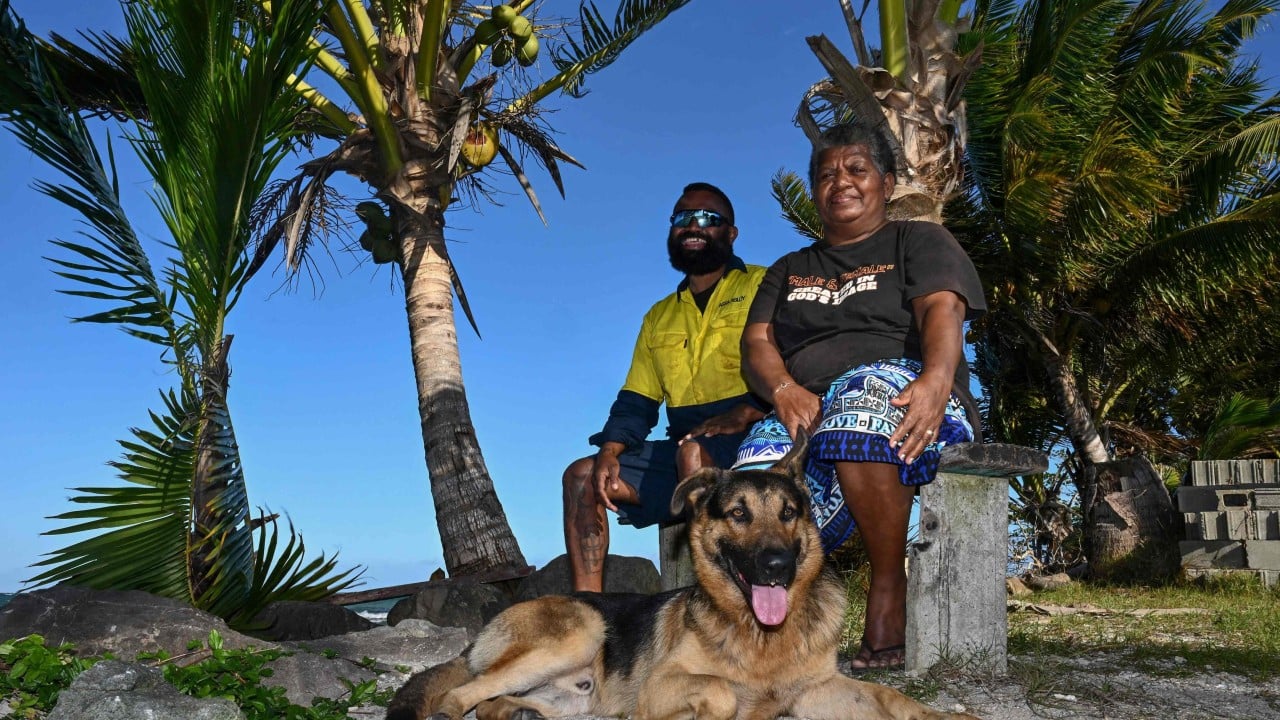
Negotiating these conflicts requires intense diplomacy. Savvy resort operators have stopped treating coastal protection as a pure engineering problem and started treating it as a community welfare issue. They fund village water systems, build community halls, and pay locals directly to act as marine wardens and mangrove planters. If the village profits from keeping the coastline intact, the resort keeps its beach.
The Relocation Reality
Despite the heroics of mangrove planters and coastal engineers, some battles cannot be won. Fiji is already living through the reality of managed retreat, a polite policy term for packing up and moving inland because the ocean has won.
The Fijian government has identified dozens of coastal communities that must be relocated in the coming decades. Villages like Vunidogoloa and Narikoso have already made the painful move to higher ground. Moving a village in Fiji is not just a logistics exercise; it is a cultural trauma. Indigenous identity is deeply tied to the specific piece of land and sea where a clan’s ancestors are buried. Abandoning the coast means abandoning history.
For the tourism sector, relocation is vastly more expensive. You cannot easily pick up a 300-room resort, complete with underground plumbing, commercial kitchens, and marina infrastructure, and move it half a mile uphill. Furthermore, moving inland destroys the core value proposition. A hotel set back in the jungle behind a wall of scrub brush cannot charge beachfront rates.
As a result, many coastal properties are trapped in a state of expensive denial. They spend millions on temporary sandbags, geotextile tubes, and annual beach grooming just to maintain the illusion of an untouched tropical paradise for arriving guests. The tourists sipping cocktails by the pool rarely realize that the pristine sand beneath their feet was trucked in three weeks prior and will likely wash back into the sea during the next big storm.
The Insurance Squeeze and the Future of Coastal Finance
The real reckoning for Fiji’s coastline will not come from environmentalists or local activists. It will come from actuaries and underwriters in London, Zurich, and Singapore.
Global insurance companies are aggressively repricing climate risk across the Pacific. For a Fijian resort, securing comprehensive property and business interruption insurance has become a brutal ordeal. Deductibles for cyclone and storm surge damage have skyrocketed, while coverage limits have shrunk. In some vulnerable coastal zones, properties are becoming effectively uninsurable at any commercially viable price.
Banks are following the insurers. Securing a commercial loan to build or renovate a beachfront property now requires exhaustive environmental impact assessments and hard engineering proof that the asset will still be above water in thirty years. If a developer cannot prove the coastline is stabilized, the capital dries up.
This financial pressure is forcing a rapid evolution in how Fiji builds. New developments are being forced further back from the high-water mark, preserving wide buffer zones of native coastal vegetation. Architects are designing structures on elevated pilings rather than concrete slabs, allowing storm surges to pass harmlessly underneath buildings rather than smashing through lobby doors.
The era of building right on the sand is dead, killed not by government regulation, but by basic math. You cannot run a profitable hospitality business if your primary asset disappears every time a Category 4 cyclone forms in the Coral Sea.
Fiji’s islanders are fighting with every tool they have—from ancient ecological knowledge to modern coastal engineering—to hold their ground. They are planting trees, rebuilding reefs, and negotiating complex land agreements to keep the water at bay. Yet the ocean operates on a scale that dwarfs human budgets and quarterly earnings reports. The coastline of Fiji is actively redrawing itself, and no amount of money can permanently freeze a shoreline in place.