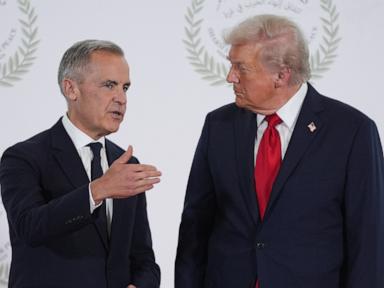
Mainstream financial press is eating up Mark Carney’s pre-midterm optimism like it is a signed treaty. It isn't. It is political theater designed to soothe anxious Bay Street bankers and buy Donald Trump a quiet news cycle before Americans head to the polls.
Every outlet covering the Prime Minister's latest dispatch from Washington is repeating the same lazy consensus: that the technocrat-turned-politician has finally cracked the code on "constructive engagement" with the White House. They point to vague assurances of "progress" on bilateral trade friction, tariff exemptions, and the looming shadow of the USMCA review. They treat a polite handshake days before a fiercely contested U.S. midterm election as a structural breakthrough.
That reading of cross-border diplomacy is dangerously naive. If you are a Canadian exporter, a supply chain director, or an institutional investor pricing in tariff relief based on Carney's press briefing, you are walking straight into a trap.
The Anatomy of a Pre-Election Head Fake
To understand why Carney’s announcement means almost nothing for actual cross-border commerce, look at the calendar. Days before U.S. midterm elections, the White House has zero incentive to trigger a fresh trade war with its largest energy supplier and second-largest trading partner. A sudden spike in border friction right now would spook Midwest manufacturing districts, rattle equity markets, and hand opposition candidates a gift-wrapped talking point on inflation.
Trump knows this. Carney knows this.
When a U.S. administration offers warm rhetoric about "progress" in the final stretch of an election campaign, it is not conceding ground. It is freezing the board. I have watched mid-sized Ontario auto-parts manufacturers blow millions of dollars in hedging costs and inventory stockpiling because they mistook pre-election diplomatic niceties for permanent policy shifts. They expanded warehouse capacity in Michigan based on a joint communiqué, only to get hammered by Section 232 national security tariffs six months later when the political calculus in Washington shifted.
Carney is a seasoned central banker. He led both the Bank of Canada and the Bank of England. He understands market psychology better than almost anyone in Ottawa. His job right now is to project calm, signal competence, and prevent the Canadian dollar from sliding further on tariff anxiety. Reporting "progress" achieves that short-term stabilization goal without requiring a single binding signature from the Oval Office.
Why Technocratic Logic Fails Against Mercantilist Leverage
The core flaw in the prevailing commentary is the assumption that both sides are playing the same game.
Carney approaches trade through the classic neoclassical framework: comparative advantage, supply chain integration, and rules-based dispute resolution. In that worldview, tariffs are a deadweight loss—a self-inflicted tax that raises input costs for American factories just as much as it hurts Canadian exporters. Present the right spreadsheet showing how integrated North American aluminum or lumber supply chains keep U.S. inflation down, and rational actors will find a middle ground.
That logic is dead on arrival in the current White House.
Trade policy under Trump is not an exercise in maximizing aggregate GDP; it is an instrument of unilateral leverage. As trade economists like Douglas Irwin have documented extensively in historical analyses of U.S. commercial policy, protectionism in Washington rarely bows to efficiency arguments when political sovereignty and domestic industrial base metrics are the primary currency.
To define the mechanics precisely: what Ottawa calls "integrated supply chains," Washington views as "asymmetric dependency." When a Canadian steel mill or dairy cooperative relies on frictionless access to a consumer market ten times its size, the larger economy holds an overwhelming structural option. Trump does not view tariff threats as a policy failure to be resolved through technocratic compromise. He views them as a recurring tollbooth.
By celebrating "progress" before any legal text is codified, Carney validates the premise that Canada must continuously negotiate for market access it already paid for under existing trade agreements.
What Everyone Gets Wrong About the USMCA Review
If you look at the questions dominating boardrooms from Calgary to Montreal right now, they almost all miss the point. People ask, "Will Carney secure a permanent exemption from blanket U.S. tariffs?" or "Does this progress guarantee a smooth USMCA joint review?"
Both questions are built on a false premise. There is no such thing as a permanent exemption in bilateral trade with a transactional administration.
Under the terms of the United States-Mexico-Canada Agreement, the six-year joint review clause was specifically engineered to prevent the deal from becoming a static, untouchable treaty like the original NAFTA. It builds perpetual renegotiation into the DNA of North American commerce. Even if Carney and Trump were to sign a side letter tomorrow morning waiving specific duties, that relief exists entirely at the pleasure of the executive branch.
Imagine a scenario where the midterm elections conclude, and the domestic political pressure on the White House shifts from keeping consumer prices stable to appeasing Rust Belt labor unions ahead of the next presidential cycle. Overnight, today's "progress" evaporates. The U.S. Trade Representative revives rules-of-origin disputes on automotive content, demands stricter enforcement on Canadian digital services taxes, or ties energy transit permits to unrelated defense spending targets.
Carney’s background at Brookfield Asset Management and the Bank of England makes him uniquely suited to speak the language of global capital, yet that exact pedigree can create a blind spot. Institutional finance runs on predictable governance and adherence to precedent. Bilateral mercantilism thrives on ambiguity and the credible threat of disruption.
The Structural Vulnerability Ottawa Refuses to Fix
Here is the uncomfortable truth that neither the Prime Minister nor the financial press wants to confront: Canada’s negotiating weakness has very little to do with who sits in the Prime Minister’s Office, and everything to do with decades of domestic economic complacency.
Over seventy-five percent of Canadian merchandise exports flow south to a single customer. For twenty years, successive governments in Ottawa talked endlessly about "trade diversification" toward Europe and the Indo-Pacific while allowing interprovincial trade barriers inside Canada to remain higher than tariffs with foreign nations.
As economists at the Macdonald-Laurier Institute and the University of Calgary’s School of Public Policy have repeatedly shown, regulatory friction between Canadian provinces—ranging from trucking standards to professional licensing and alcohol distribution—acts as an internal tariff equivalent to roughly seven percent across the domestic economy.
You cannot lecture Washington on the virtues of free trade while running a fragmented internal market at home. Furthermore, Canada’s chronic productivity slump—lagging well behind the U.S. in business investment per worker—means Canadian firms have thinner margins to absorb border friction when it inevitably hits.
When Carney reports "progress" in Washington, it serves as a convenient distraction from the hard, politically unpopular domestic reforms required to give Canada actual leverage:
- Dismantling interprovincial regulatory barriers through federal constitutional authority rather than endless premier summits.
- Accelerating major export infrastructure to tidewater so Canadian energy and critical minerals are not captive to a single U.S. buyer at a steep discount.
- Overhauling corporate tax structures to incentivize capital expenditure and automation rather than subsidizing low-productivity incumbents.
None of those moves can be accomplished on a quick flight to D.C., and none of them generate easy headlines before a Tuesday election.
The Downside of Cynicism
To be completely transparent, taking a hardline, skeptical posture toward Ottawa's diplomatic messaging carries its own operational risks. If a business leader assumes every positive signal from the Prime Minister’s Office is pure theater and pulls back entirely from cross-border expansion, they risk ceding lucrative U.S. market share to bolder competitors. Sometimes, tactical truces really do hold for years, allowing agile operators to print money while the pessimists sit on the sidelines.
Total paralysis is just as fatal as blind optimism. The goal is not to abandon the American market; it is to stop pricing diplomatic spin as legal certainty.
How Smart Operators Should Play This
If you run a business exposed to North American trade, ignore the press releases coming out of Ottawa and Washington this week. Treat Carney’s "progress" report for what it actually is: a temporary volatility dip.
- Lock in currency and input hedges now. When politicians claim things are going well, implied volatility drops and hedging gets cheaper. Use the calm before the post-midterm storm to protect your margins against a sudden five-to-ten percent swing in the loonie or an abrupt tariff announcement.
- Audit your rules-of-origin documentation down to the bolt. The easiest way for U.S. Customs and Border Protection to squeeze Canadian exporters without announcing a new headline tariff is aggressive administrative enforcement of existing USMCA regional value content rules. If your paper trail has gaps, fix them before the election cycle ends.
- Establish a physical U.S. fulfillment or light-assembly footprint. If more than forty percent of your revenue comes from American buyers, relying solely on finished goods crossing the bridge at Windsor or Fort Erie is a single point of failure. Even a modest final-stage assembly operation south of the border insulates you from the worst blunt-force trade measures.
- Stress-test your P&L against a ten percent baseline tariff. Do not wait for a joint statement to fail. Build an operational playbook today that outlines exact price pass-throughs, supplier renegotiations, and SKU rationalizations if border duties hit in Q1.
Mark Carney is doing what any competent leader does when facing an unpredictable superpower: buying time and projecting confidence. Let the pundits applaud the choreography. Smart operators use the quiet window to build armor.