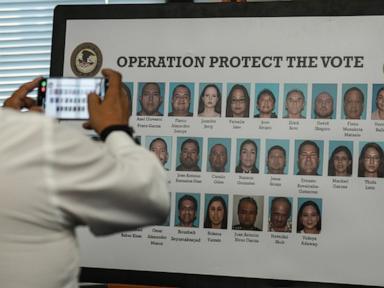
When a sovereign litigant seeks judicial sanctions against opposing analysts rather than refuting their statistical methodology, the dispute has shifted from empirical inquiry to procedural attrition. The Department of Justice’s push to sanction outside researchers who challenged its noncitizen voting claims represents a textbook deployment of asymmetric litigation friction—a strategy designed to raise the personal and financial cost of external data verification until independent audit capacity collapses.
Standard reporting on election litigation treats motions for sanctions as routine courtroom skirmishes over decorum or discovery rules. That framing misses the structural mechanics. In high-stakes administrative and constitutional disputes, the state holds a monopoly on primary administrative records—specifically, state voter registration rolls, Department of Motor Vehicles (DMV) citizenship flags, and federal Systematic Alien Verification for Entitlements (SAVE) logs. External analysts, civil rights organizations, and academic researchers operate under severe information asymmetry. When those external actors manage to reconstruct, audit, and publicly dismantle the government's quantitative assertions, the state faces a strategic choice: defend the statistical validity of its claims on the merits, or attack the procedural legitimacy of the audit itself.
The Architecture of Record Linkage and False Positives
To understand why government claims regarding noncitizen voting repeatedly fail independent replication—and why the state resorts to procedural aggression when challenged—one must examine the underlying data engineering problem. Matching voter registration databases against citizenship records is an exercise in probabilistic record linkage across noisy, asynchronous administrative systems.
The core technical failure in almost every state-level or federal purge initiative stems from three structural bottlenecks:
- Temporal Latency in Naturalization Records: State DMV databases and federal immigration registries do not update in real time. An individual who obtains legal permanent residency (a green card) is flagged as a noncitizen during driver’s license issuance. When that individual naturalizes years later and subsequently registers to vote, the state motor vehicle agency rarely receives an automated update from U.S. Citizenship and Immigration Services (USCIS). Cross-referencing the static DMV flag against the active voter roll generates a high-confidence match that is factually obsolete.
- Deterministic Matching on Non-Unique Identifiers: Government audits frequently rely on partial string matching—combining first name, last name, and date of birth—without unique cryptographic or biometric keys. Under the Birthday Paradox applied to large state populations (often exceeding 10 million records), collisions among common names and birthdates occur at predictable, non-trivial rates. Without middle names, full Social Security numbers, or alien registration numbers, deterministic matching conflates distinct individuals.
- Administrative Schema Mismatches: Voter registration files and immigration databases use incompatible field definitions, suffix handling, and hyphenation rules. Automated ingestion scripts that fail to normalize these schemas produce systematic false positives clustered among specific demographic naming conventions—particularly Hispanic and Asian voters with compound surnames.
When independent data scientists gain access to the underlying datasets through discovery or public records requests, isolating these three error sources takes days, not months. By calculating the base rate of naturalization lag and testing match sensitivity across identifier subsets, external analysts routinely demonstrate that the government’s purported list of "noncitizen voters" consists overwhelmingly of naturalized citizens and administrative collisions.
The Four Pillars of Procedural Retaliation
Once an independent audit exposes a high false-positive rate in the government's foundational data, defending the methodology in open court becomes untenable. Cross-examination of state data analysts exposes flaws in SQL queries, lack of validation protocols, and failure to consult USCIS SAVE records before making public accusations. To neutralize this vulnerability, institutional litigants deploy a four-part procedural counter-offensive:
- Protective Order Expansion: The government classifies routine administrative fields—such as voter ID numbers, registration dates, and anonymized citizenship status flags—as sensitive personally identifiable information (PII) or national security-adjacent data. By expanding the scope of protective orders post-production, any external analysis that publishes aggregate error rates or methodological critiques is framed as a breach of confidentiality.
- Standing and Scope Challenges: Rather than addressing the mathematical validity of the opposing expert's report, the litigant moves to strike the analysis on the grounds that the researchers exceeded the narrow scope of authorized discovery. If the court granted access to verify a specific subset of records, and the analysts ran a full-table diagnostic to prove systemic bias, the state characterizes the diagnostic as unauthorized data mining.
- Sanctions as a Chilling Mechanism: Under Federal Rule of Civil Procedure 11 or Rule 37, motions for sanctions carry severe reputational and financial penalties for both counsel and retained experts. Even when a judge ultimately denies the sanctions motion, the briefing cycle forces opposing counsel to divert finite litigation budgets away from substantive discovery and toward defending their own ethical compliance.
- Information Asymmetry Enforcement: By threatening sanctions against third-party analysts who scrutinize public or semi-public voter files, the state signals to the broader academic and data science community that engaging in election-related forensic auditing carries personal liability.
The Economic Cost Function of External Audits
Litigation is governed by resource allocation under constraints. A federal agency or state attorney general’s office operates with salaried litigators, sovereign immunity buffers, and virtually unlimited institutional endurance. Conversely, voting rights organizations, academic centers, and pro bono law firms operate under strict capital constraints and donor-mandated budgets.
We can express the strategic utility of a sanctions motion through a basic asymmetric cost function:
$$C_{target} = L_{defense} + R_{reputation} + O_{delay}$$
Where $C_{target}$ represents the total cost imposed on the external research team, $L_{defense}$ is the direct legal expenditure required to litigate the sanctions motion, $R_{reputation}$ is the institutional risk to the researchers' academic or professional standing, and $O_{delay}$ is the opportunity cost of delayed judicial relief—often pushing final rulings past upcoming election cycles.
For the state, the marginal cost of filing a sanctions motion ($C_{state}$) is near zero, as the legal infrastructure is already sunk. When $C_{target} \gg C_{state}$, filing aggressive procedural motions becomes a dominant strategy regardless of the underlying merits. The objective is not necessarily to win the sanctions order; the objective is to exhaust the opposing team's analytical bandwidth and delay the evidentiary hearing until the disputed election cycle has concluded and the issue becomes moot.
Separating Empirical Fact from Institutional Hypothesis
Evaluating disputes over noncitizen voting databases requires strict epistemic discipline. Observers must separate verifiable technical facts from unverified institutional claims:
Established Empirical Facts:
- Administrative voter lists routinely contain outdated citizenship indicators due to unlinked agency databases.
- Every major forensic audit of state-level noncitizen voter purges over the past decade—across jurisdictions including Texas, Florida, and Virginia—has revealed massive over-inclusion of eligible naturalized citizens.
- Probabilistic matching without unique federal identifiers produces mathematically predictable false-positive rates that scale non-linearly with population size.
Unverified Institutional Hypotheses:
- The assertion that residual mismatches in administrative databases represent intentional, coordinated illegal voting rather than clerical latency.
- The claim that publishing aggregate statistical critiques of redacted government datasets compromises individual voter privacy or election infrastructure security.
- The premise that external analysts act in bad faith when they apply standard data-hygiene diagnostics to incomplete government productions.
When the Department of Justice or a state agency pivots from presenting empirical evidence of illegal ballots to demanding sanctions against the statisticians who audited their work, it confirms that the institutional hypothesis cannot survive peer review. In data science, an inability to reproduce results invalidates the initial claim. In adversarial litigation, an inability to defend the data triggers a shift to procedural warfare.
Operational Countermeasures for Data-Driven Litigants
Organizations, academic teams, and legal practitioners operating in high-friction regulatory or election environments cannot rely on the assumption that empirical accuracy will protect them from procedural retaliation. When auditing government datasets under protective orders or public records frameworks, teams must implement rigid operational controls before running a single query.
- Segregate Raw Ingestion from Analytical Environments: Maintain air-gapped or strictly containerized environments for raw government productions. Never allow analysts working on public-facing white papers to access raw, unredacted PII tables directly. All statistical diagnostics must be executed via automated, auditable scripts that output only aggregated, non-identifiable summary statistics.
- Pre-Register Audit Methodologies in Discovery Protocols: Do not leave the definition of "authorized analysis" vague in stipulated protective orders. Explicitly enumerate the exact statistical tests, cross-tabulations, and external reference tables (such as Census demographic benchmarks or public naturalization rates) that experts will use to validate the data. If the methodology is pre-approved in the discovery order, subsequent claims of unauthorized data mining collapse.
- Establish Independent Reproducibility Logs: Every transformation applied to a government dataset—from string normalization to null-value handling—must be version-controlled in Git with cryptographic hashes of the input and output states. When opposing counsel alleges data manipulation or breach of protocol, the ability to produce a deterministic, line-by-line audit trail neutralizes the attack immediately.
- Decouple Litigation Testimony from Public Advocacy: Maintain a strict structural firewall between retained testifying experts bound by protective orders and independent researchers analyzing publicly available voter rolls. If the state locks up discovery data under seal, an parallel team using only public FOIA records can often replicate 80% of the findings without touching a single protected file, rendering the state's sanctions leverage irrelevant.
The weaponization of sanctions against database analysts is a predictable evolutionary step in administrative litigation. As data science becomes the primary battleground for civil rights, regulatory compliance, and election integrity, institutions with weak empirical foundations will increasingly rely on procedural traps to shield their claims from falsification. Practitioners who treat data hygiene, discovery scoping, and operational security with the same rigor as their statistical modeling will strip these procedural attacks of their leverage.