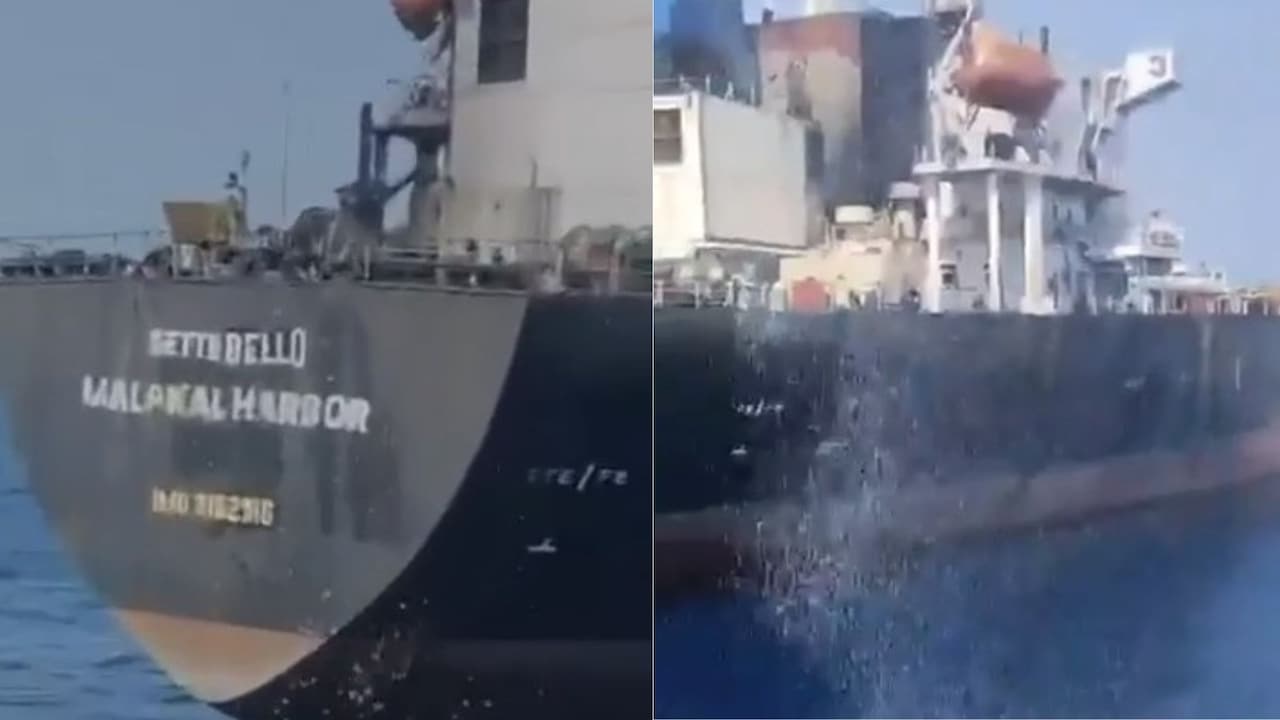
Ship managers love a good tragedy because it provides an excellent opportunity to blame a superpower.
When three Indian seafarers lose their lives in international waters, the corporate public relations machine immediately pivots to its default setting: righteous indignation directed at the United States government. The narrative is always identical. A company claims total innocence, denies any proximity to illicit Iranian oil networks, and points a trembling, accusatory finger at western sanctions or military inaction as the sole catalyst for human catastrophe.
It is a convenient, cowardly lie.
The global maritime industry wants you to believe that merchant shipping is a passive, innocent victim of geopolitical crossfire. They want you to look at a smoking hull and see nothing but state-sponsored aggression. But if you spend twenty years auditing supply chains, tracking flags of convenience, and watching how shell companies shift liabilities overnight, you see the maritime sector for what it truly is: a hyper-commercially driven ecosystem that routinely trades human lives for operational margins, then cries foul when the inevitable bill comes due.
The lazy consensus dominating current headlines buys into the manager's defense hook, line, and sinker. It accepts the premise that because a corporate entity denies an Iranian link on paper, no such link exists in reality. Let us dismantle that illusion immediately.
The Fiction of the Clean Bill of Lading
In modern maritime logistics, a clean paper trail is about as reliable as a handshake in a casino.
When a ship manager claims they have no connection to sanctioned regimes, what they actually mean is that their compliance department successfully collected three layers of obfuscated documentation. The Office of Foreign Assets Control (OFAC) knows exactly how this game works. Dark fleets do not broadcast their true intentions on automatic identification systems (AIS). They engage in spoofing. They conduct ship-to-ship (STS) transfers in the middle of the night in the Malacca Strait or the Oman Gulf. They use a revolving door of shell companies registered in jurisdictions where corporate registries are essentially black holes.
To pretend that a ship manager is completely oblivious to the ultimate origin of their cargo or the true nature of their charterers is an insult to the intelligence of anyone who understands maritime law.
- The Shell Game: Vessel ownership is sliced into single-purpose corporations to insulate parent companies from liability.
- The Flag of Convenience: Ships fly flags of nations with zero regulatory oversight, purely to evade stringent safety and security audits.
- The AIS Blind Spot: Going dark is not an accidental technical glitch; it is an active operational choice to hide location data.
When a disaster occurs, the manager exploits the complexity they helped create. They point to the flag state, they point to the charterer, and when all else fails, they blame the US navy for failing to provide a bespoke, zero-cost security detail for their commercial voyage.
Stop Asking if the Route Was Safe
The public always asks the wrong question after a maritime tragedy. People ask: "Why did the US military fail to protect this specific commercial lane?"
This premise is completely broken. It assumes that the primary purpose of state navies is to serve as a free, privatized security guard for corporations that deliberately flag their vessels in Panama or the Marshall Islands to avoid paying taxes to those very same western states. You cannot spend decades defunding state regulatory frameworks, dodging domestic taxes, and hiding behind flag-of-convenience loopholes, and then demand that the domestic taxpayers of a superpower foot the bill to secure your high-risk, high-reward trade routes.
The real question we should be asking is brutally simple: Why was that vessel in that specific corridor at that exact moment despite glaring intelligence warnings?
The answer is always money. High-risk routes command premium freight rates. When a war zone or a high-tension chokepoint opens up, risk premiums skyrocket. Ship managers and owners look at those numbers and make a cold, calculated gamble. They weigh the cost of a war-risk insurance premium against the massive upside of a lucrative charter. If they win the gamble, they pocket the profit. If they lose, and a missile or a drone tears through the crew quarters, they blame geopolitical instability and demand state intervention.
It is a classic case of privatizing profits and socializing risks. The crew members, usually hired from developing economies like India or the Philippines, pay the ultimate price for a boardroom calculation they had no part in making.
The Complicity of De-Risking Software
Let us talk about the technology that supposedly keeps these operations clean. The industry relies heavily on automated compliance platforms to vet vessels, routes, and entities. I have watched companies pour millions of dollars into these digital gatekeepers, assuming that a green checkmark on a screen absolves them of ethical and legal responsibility.
It does not.
These software platforms are lagging indicators. They rely on historical data, known corporate registries, and reported port calls. They are completely unequipped to handle real-time, adaptive deception tactics employed by sophisticated smuggling networks. A vessel can change its name, its registered owner, its technical manager, and its flag within forty-eight hours. By the time the compliance database updates, the ship has already loaded its illicit cargo and sailed.
Relying on these systems is not due diligence; it is theater. It is designed to give executives plausible deniability when a federal investigation launched by agencies like OFAC or the UK's Office of Financial Sanctions Implementation (OFSI) lands on their desk. They can hold up a software report and say, "Look, our screen was green."
Meanwhile, three families are preparing funerals because the human reality on the water completely contradicted the digital fantasy on the monitor.
The Brutal Truth About Maritime Accountability
If we want to actually stop the loss of seafarer lives, we must destroy the legal structures that protect ship managers from criminal accountability.
Imagine a scenario where an international trucking company knowingly routed its drivers through an active, active-fire artillery range to save fifty bucks on toll roads, explicitly ignored warnings from local law enforcement, and then blamed the police department when the truck was blown up. The executives would be in handcuffs before the wreckage cooled.
Yet, in international shipping, this is just another Tuesday.
The harsh reality of my contrarian stance is that fixing this requires a massive, disruptive overhaul of global maritime law that will temporarily choke supply chains and drive up the cost of consumer goods. To enforce true accountability, we must:
- Pierce the Corporate Veil: Hold the beneficial cargo owners and true vessel owners personally and criminally liable for routing decisions that ignore explicit security warnings.
- Ban Flags of Convenience: Force ships to register in the nations where their actual owners reside and pay taxes, ensuring real regulatory teeth.
- End the Security Subsidy: Charge commercial vessels a direct, heavy tariff if they require military escort or protection in high-risk zones, forcing them to internalize the true cost of their hazardous voyages.
The shipping industry will tell you this is impossible. They will claim it will destroy global trade. What they really mean is it will destroy their margins. They prefer the status quo because the status quo allows them to hide behind complex corporate structures, ignore safety protocols, collect their freight premiums, and then use the bodies of dead seafarers as political leverage to demand free military protection.
Stop listening to the press releases of ship managers denying links and shifting blame. The blood on the deck does not belong to geopolitical friction. It belongs to the balance sheet.