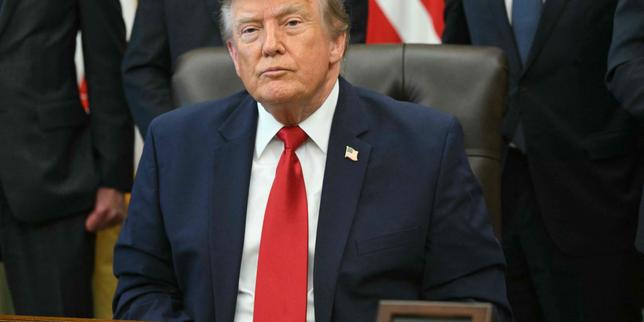
President Donald Trump welcomed Iraqi Prime Minister Ali al-Zaidi to the White House on Tuesday, proclaiming a new era of corporate dealmaking centered on extracting vast quantities of Iraqi crude. Behind the public handshakes and promises to withdraw remaining American troops by September 30 lies a calculated transaction. The White House is effectively trading formal military presence for economic concession, orchestrating a massive two-million-barrel-per-day pipeline project involving Chevron. Yet this strategy rests on an unstable foundation. Baghdad faces an immediate, near-impossible ultimatum to disarm powerful domestic militias in exchange for American corporate investment, a demand that could easily trigger a new civil conflict.
The optics in the Oval Office were deliberately chummy. Trump praised al-Zaidi as a political outsider and a leader who would hold office for a very long time, while the Iraqi premier announced an economic partnership that swaps soldiers for corporate executives. But a closer look at the mechanics of this agreement reveals a strategy driven by raw economic leverage rather than diplomatic consensus.
The Bank Banned From Dollars Now Rules Baghdad
Ali al-Zaidi did not rise to power through the conventional channels of Iraqi sectarian politics. He is a billionaire businessman with no prior government experience, a profile that made him highly attractive to a Washington administration that views foreign policy through the lens of a balance sheet. The irony of his sudden elevation to American favorite is stark.
Before becoming prime minister, al-Zaidi served as the chairman of Al-Janoob Islamic Bank. In 2024, that exact financial institution was slapped with a ban by Iraq’s own central bank, blockaded from dealing in U.S. dollars under direct pressure from Washington. The accusation back then was severe. The bank was suspected of laundering money and funneling vital funds directly to Iran.
Washington chose to overlook this history when al-Zaidi emerged as a consensus candidate to break Iraq's parliamentary deadlock. The White House actively blockaded his chief rival, former Prime Minister Nouri al-Maliki, by publicly threatening to cut off all financial and security aid to the country if a pro-Tehran figure took power. Al-Zaidi was the compromise Washington wanted. His corporate background provided the perfect cover for a sweeping privatization agenda that directly serves American energy interests.
The Two Million Barrel Pipeline
The centerpiece of this new alignment is an energy pact scheduled for signature this Friday. It is an ambitious infrastructural blueprint designed to bypass traditional choke points and tie Iraqi oil production directly to Western-aligned markets.
According to regional officials, the deal unites Iraq with Chevron, TI Capital, and Qatar’s UCC to construct a sprawling pipeline infrastructure. The proposed route begins in the southern oil hub of Basra, snakes west to Haditha, and splits toward the Turkish port of Ceyhan and the Syrian port of Baniyas.
If completed, the line will move roughly two million barrels of crude every single day. Trump was uncharacteristically blunt about the primary objective of this project, telling reporters that the United States would be taking a lot of oil out of the country. The administration views this as a long-delayed payment for decades of American expenditure in the region.
This commercial arrangement allows Washington to execute a political maneuver it has desired for years. By replacing American military personnel with private security contractors and corporate engineers, the administration can claim it is ending the endless war while simultaneously embedding American financial interests deeper into the Iraqi state than ever before. Al-Zaidi confirmed the timeline himself, stating that uniformed forces will exit by the end of September while American corporations remain firmly inside.
The Militia Disarmament Trap
There is a fatal flaw in this corporate blueprint. Washington has tied the execution of these business deals directly to a strict security ultimatum that the Iraqi government may lack the physical capacity to enforce.
An administration official confirmed that future investment hinges entirely on Baghdad's ability to completely disarm the network of Iran-backed militias operating inside its borders. These groups are not minor factions. They are heavily armed, politically entrenched organizations that effectively run entire sectors of the Iraqi economy and state security apparatus. They grew significantly more hostile after recent regional escalations, launching regular drone and missile strikes against American assets.
The September Deadline Collision
Baghdad has set an official deadline of September 30 for non-state armed groups to surrender their weapons, coinciding exactly with the scheduled departure of American forces. The most powerful militias have already stated publicly that they have no intention of complying.
Al-Zaidi has attempted to demonstrate his resolve by ordering high-profile corruption raids against officials tied to the previous government. But checking the paperwork of political rivals is vastly different from entering neighborhoods to forcibly disarm battle-hardened paramilitary units. If al-Zaidi pushes too hard to satisfy his backers in Washington, he risks fracturing his own fragile governing coalition and plunging the capital back into open street warfare.
If he fails to disarm them, the corporate deals disappear. Chevron and its partners will not deploy billions of dollars in capital into a country where pipelines can be sabotaged with impunity by rogue actors. The White House has created a paradoxical situation where the security required to protect the oil deals can only be achieved by taking a gamble that could destroy the government itself.
The New Pipeline Geopolitics
The inclusion of a pipeline leg stretching into Syria introduces another layer of volatility into the equation. Running an American-backed, multi-billion-dollar energy asset through Syrian territory requires navigating a complex web of local warlords, foreign military occupations, and active insurgent cells. It exposes the corporate infrastructure to constant geopolitical vulnerability.
Trump insists that Iran is no longer the burden it once was on Baghdad, pointing to recent regional shifts as proof that the political tides have permanently turned. This assessment appears overly optimistic. Tehran retains deep ties to Iraq's economic, religious, and social institutions that cannot be severed by an executive order signed in Washington or a lunch meeting in the West Wing.
The administration is betting that the promise of economic modernization and raw dollar liquidity will compel the Iraqi political elite to abandon their regional alignments. It is a transactional view of foreign policy that assumes everyone has a price. By treating Iraq as a commercial partner rather than a sovereign state with complex internal fractures, Washington is daring the very forces that destabilized the region for a generation to push back. The true test of this corporate strategy will not happen during a Friday signing ceremony in Washington, but rather on October 1, when the last American soldiers depart and the private sector is left to defend its new oil fields alone.