The afternoon heat in Abu Dhabi has a specific weight. It is a humid, pressing blanket that makes the air feel less like oxygen and more like a physical presence you have to push through. On a typical Tuesday at a construction site in the Al Mushrif district, that weight is usually measured in the rhythmic thud of machinery and the sharp, metallic tang of welding.
But at midday, the rhythm broke.
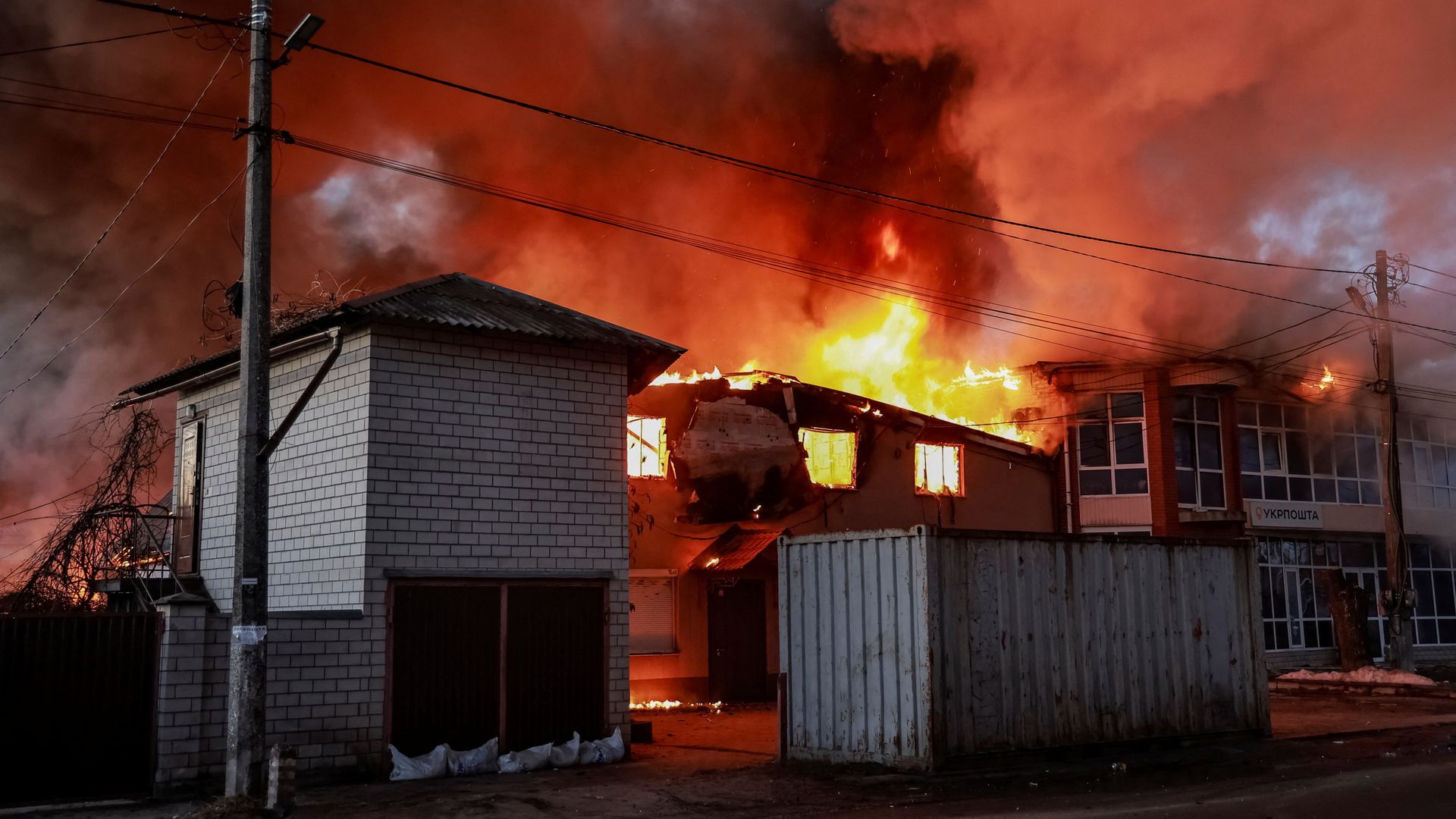
It started not with a bang, but with a shift in the light. Shadows that should have been sharp against the concrete blurred. A thin, acrid ribbon of gray began to coil upward from the skeleton of a rising building. Within minutes, that ribbon thickened into a heavy, suffocating braid of charcoal and copper. The construction site, a place defined by the disciplined assembly of the future, was suddenly being dismantled by the chaotic hunger of the past.
Fire is an ancient predator. In a city as modern and meticulously planned as Abu Dhabi, we often forget that. We rely on smart sensors, flame-retardant coatings, and the invisible architecture of safety codes. Yet, when the alarm finally cut through the heavy air, it served as a brutal reminder: despite our glass towers and cooling systems, we are always one spark away from a crisis that demands everything of us.
The Sound of Silence and Sirens
Imagine you are a worker on the fourteenth floor. For months, your world has been the grit of stone and the blueprint of a dream. You know every bolt. You know the exact way the wind whistles through the unfinished window frames. When the shout goes up, the transition from "workday" to "survival" happens in the space of a single breath.
There is a terrifying quiet that happens right before the chaos. It is the sound of dozens of men realizing simultaneously that the exit route is now a chimney.
The Al Mushrif fire was not just a statistical blip in a municipal report. It was a moment where the invisible stakes of urban development became visible. Construction sites are inherently vulnerable; they are buildings without their skin. Without the completed sprinkler systems or the sealed fire doors of a finished project, an unfinished structure is essentially a giant wooden and steel tinderbox.
But as the smoke began to blot out the sun, the city’s defense mechanism kicked in with a precision that felt almost orchestral.
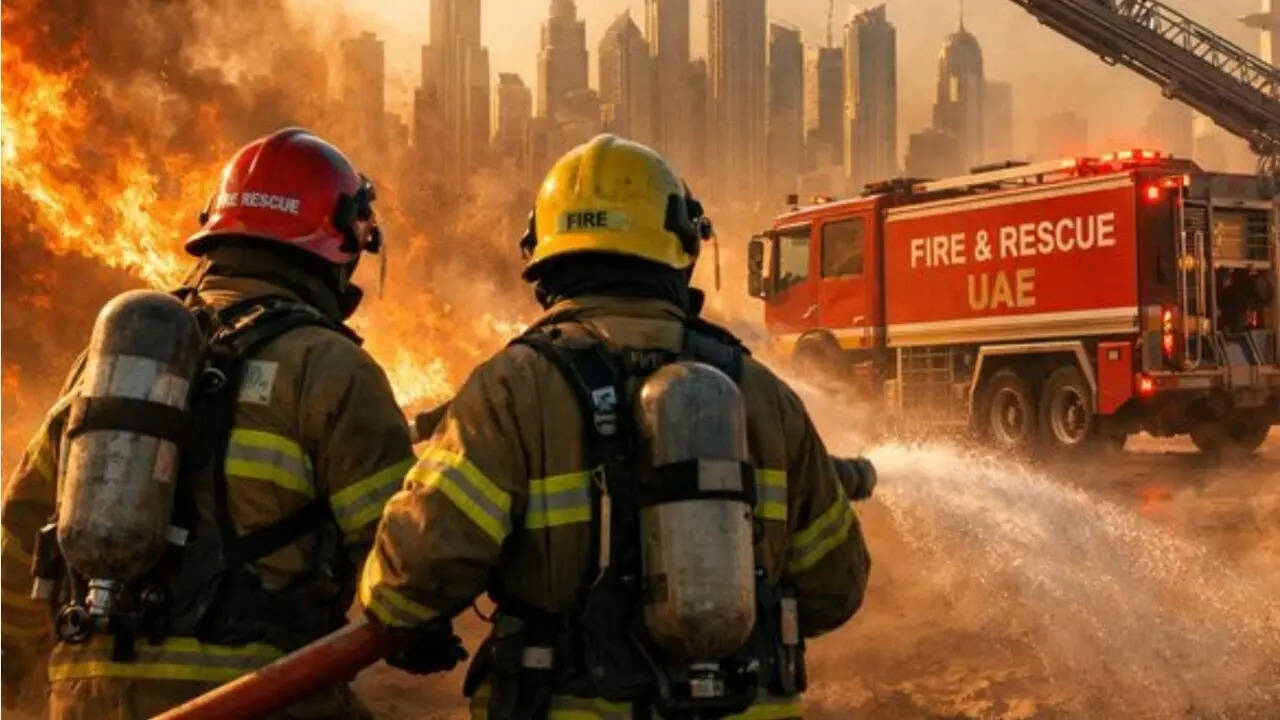
The response from the Abu Dhabi Police and Civil Defence was not a "rush" in the disorganized sense of the word. It was an insertion. Within moments of the first emergency call, the intersection of the city’s logistical heart began to pulse. The sirens didn’t just signal danger; they signaled a collective refusal to let the fire win.
The Calculus of Courage
We often look at fire trucks and see red paint and flashing lights. We rarely see the calculus occurring inside the cabs. For the crews arriving at Al Mushrif, the primary challenge wasn't just the flames. It was the geometry of an unfinished building.
When a house burns, there are walls. When a forest burns, there is a floor. When a high-rise construction site burns, there are voids.
The Civil Defence teams had to navigate a labyrinth of scaffolding and temporary supports, all while the wind—that unpredictable variable of the Emirates—threatened to turn a localized fire into a vertical inferno. The heat at the core of such a blaze can easily exceed 600 degrees Celsius. At those temperatures, steel doesn't just get hot; it begins to lose its structural integrity. It softens.
The "human element" here isn't just the people fleeing the building. It is the person walking into the heat, encased in thirty kilograms of gear, knowing that the very floor they are standing on hasn't been fully cured or inspected. They are betting their lives on the competence of the engineers who laid the foundation months ago.
Safety is a ghost. You only notice it when it leaves the room.
In the streets below, the police didn't just clear traffic; they created a vacuum. They cordoned off the area with a speed that spoke to years of drills and a deep understanding of crowd psychology. In a city where curiosity can lead to gridlock, the officers acted as the banks of a river, directing the flow of panicked onlookers and ensuring that the heavy tankers had a straight shot to the hydrants.
The Invisible Threads of a City
Why does a fire at a construction site in one neighborhood matter to someone living ten kilometers away?
Because a city is a nervous system. When Al Mushrif hurts, the transit lines feel it. The insurance markets feel it. The families of the hundreds of workers—men who have traveled across oceans to build these monuments—feel it in the pit of their stomachs.
There is a specific kind of dread that accompanies a phone call from a job site during an emergency. It is the fear that the "safety protocols" we read about in brochures might have failed in practice. However, as the afternoon wore on, the narrative shifted from one of potential tragedy to one of containment.
The smoke began to whiten.
In the language of fire, black smoke is a scream. It means the fire is devouring heavy synthetics and fuel. White smoke is a sigh. It means the water is winning. It means the cooling has begun. The Civil Defence teams had managed to flank the fire, attacking it from multiple angles to prevent it from leaping across the gaps to neighboring structures.
This wasn't luck. It was the result of a city that treats safety not as a luxury, but as a prerequisite for existence. Abu Dhabi has spent the last decade obsessing over response times and equipment upgrades. On this Tuesday, that obsession paid off.
The Ash that Remains
By the time the sun began to set, the copper sky had returned to its usual hazy blue. The building stood, charred and skeletal, but still standing. The "emergency" was downgraded to a "situation under control."
But the story doesn't end when the hoses are rolled up.
The real work begins in the soot. Investigators now move in, picking through the debris like forensic pathologists. Was it a short circuit? A discarded cigarette? A failure in the storage of flammable materials? They look for the "why" so that the "next time" never happens.
We live in an era where we expect things to work. We expect the light to turn on, the water to run, and the buildings to stay unburned. We treat the absence of disaster as the natural state of things. It isn't. The natural state of the world is chaos. The only thing keeping that chaos at bay is a thin line of men and women in uniforms who spent their Tuesday afternoon breathing in smoke so we didn't have to.
As the workers returned to their camps and the residents of Al Mushrif eventually returned to their evening routines, the smell of smoke lingered in the air. It served as a persistent, ghostly reminder of how quickly the world can change.
The building will be cleaned. The blackened concrete will be sandblasted or replaced. New glass will be craned into place, and eventually, people will live or work in that space, never knowing that for four hours on a Tuesday in March, their future home was a battlefield.
They will walk across floors that were once too hot to touch. They will look out of windows that once framed a wall of flame. And they will do so in safety, because a city decided that no fire was too small to ignore, and no life was too distant to protect.
The sky is clear now. But we should remember the copper. We should remember the way the air felt when the rhythm broke. Because the strength of a city isn't found in its tallest tower; it's found in the way it responds when that tower is under threat.
The sirens have stopped, but the vigilance cannot.
The fire is out. The lesson remains.
One spark is all it takes to remind us that we are all, regardless of our titles or our postcodes, bound together by the thin, fragile thread of our collective safety.
Watch the horizon. Respect the heat. And never forget the sound of the sigh when the white smoke finally rises.