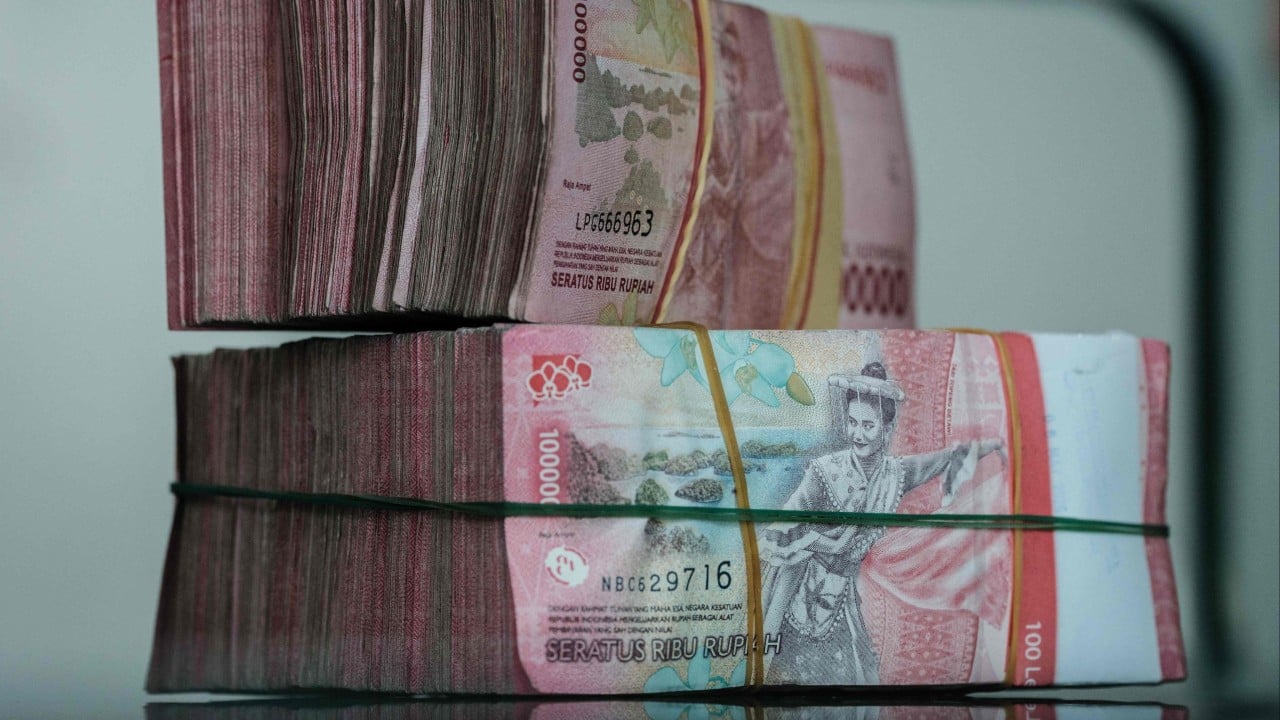
On a humid Tuesday afternoon in North Jakarta, a textile wholesaler named Budi stares at a flickering computer monitor. His family has traded batiks and woven fabrics across Southeast Asia for three generations. For decades, the rhythm of his day was dictated by an invisible third party located roughly 10,000 miles away.
To sell his goods to a boutique retail chain in Hong Kong, Budi had to play by a rigid, costly rulebook. He couldn't just trade with his buyer. Instead, his Indonesian rupiah had to be converted into US dollars. On the other side of the South China Sea, the Hong Kong buyer had to convert their Hong Kong dollars into US dollars to pay him.
Every single transaction was a double conversion. Every single transaction bled money.
The bank took a cut when the rupiah became dollars. The bank took another cut when the dollars became Hong Kong dollars. If the Federal Reserve in Washington tweaked interest rates, Budi felt the tremor in his Jakarta warehouse. A sudden spike in the dollar meant his profit margin for the entire month could vanish overnight, swallowed by exchange rate volatility.
This is not just Budi’s problem. It is the friction that has defined global commerce for nearly a century. We have grown so accustomed to the omnipresence of the greenback that we view it like the weather—an unpredictable, unyielding force of nature that merchants must simply endure.
But a quiet financial rebellion is gathering pace.
The Weight of the Invisible Dollar
To understand why Hong Kong and Jakarta are rewriting the rules of engagement, we have to look at the sheer absurdity of the traditional system.
Imagine you want to buy a loaf of bread from your next-door neighbor. Instead of handing them cash, you are required to walk three blocks away, exchange your money for arcade tokens, hand those tokens to your neighbor, and then watch your neighbor walk back to the same arcade to change those tokens back into spendable cash.
That is the reality of the global financial architecture for the vast majority of cross-border trade.
When the central banks of Indonesia and Hong Kong announced a formal framework to move toward direct transactions using the yuan and the rupiah, it didn't make front-page news in the West. Financial wires carried dry, jargon-laden bullet points about "local currency settlement frameworks" and "bilateral financial cooperation."
The real story is found in the numbers.
Indonesia is Southeast Asia’s largest economy, a powerhouse of nickel, palm oil, and manufacturing. Hong Kong is the premier gateway to mainland China, the world's ledger. When these two entities decide to cut out the intermediary currency, they are removing a massive tax on Asian commerce.
Consider the mechanics of the new agreement. By bypassing the dollar, Indonesian exporters can quote prices directly in Chinese yuan (RMB) or rupiah. Hong Kong businesses can settle invoices without looking at Wall Street's clock.
The savings are immense. For a mid-sized enterprise moving $10 million worth of goods a year, the elimination of double-conversion fees and hedging costs can save hundreds of thousands of dollars. That is money that stays in the local economy. It funds expansion. It pays for higher wages. It lowers the cost of goods for the everyday consumer.
Why Now?
This shift is not born out of ideological defiance. It is driven by raw, pragmatic survival.
The weaponization of the global financial system over the past decade has sent a chilling message to central banks worldwide. When Washington froze Russia’s foreign exchange reserves, every sovereign nation realized that relying entirely on a single Western-dominated payment infrastructure was a vulnerability.
More importantly, the economic cycles of Southeast Asia and the United States have decoupled.
When the US economy overheats, the Federal Reserve raises interest rates to cool it down. This causes capital to flee emerging markets like Indonesia, searching for higher yields in America. The rupiah depreciates, import costs soar, and local inflation spikes—even if Indonesia’s domestic economy is perfectly healthy.
By building a direct financial pipeline between the rupiah and the yuan, Jakarta and Hong Kong are creating a shock absorber. They are insulating their domestic markets from policy decisions made on the other side of the globe.
It is a slow, methodical dismantling of a monopoly.
The numbers reveal the momentum. Indonesia’s local currency settlement transactions have grown exponentially over the last few years, moving from a niche experimental program with neighboring Malaysia and Thailand into a core pillar of its macroeconomic strategy. Bringing Hong Kong into this ecosystem changes the scale entirely.
The View from the Trading Floor
Walk into a major trading floor in Central, Hong Kong, and the atmosphere is vastly different from Budi’s Jakarta warehouse, yet the underlying anxiety is identical.
Traders sit behind walls of monitors, tracking liquidity pools. For decades, the Hong Kong dollar’s peg to the US dollar meant that the city’s financial destiny was tethered to America. But Hong Kong’s economic reality is fundamentally tied to mainland China.
This creates a structural tension.
By establishing a direct rupiah-yuan settlement framework, Hong Kong solidifies its position as the ultimate offshore yuan hub. It gives regional banks the infrastructure to clear transactions smoothly without relying on the New York-managed SWIFT network for every single transaction.
It is a masterclass in financial engineering. The framework creates designated market maker banks in both countries. These institutions are permitted to trade the rupiah and yuan directly, ensuring there is always enough liquidity for merchants to make the swap without causing wild price swings.
The complexity of setting up these systems is immense. Central banks must coordinate regulatory oversight, align anti-money laundering protocols, and convince deeply conservative commercial banks to update their legacy software. It is tedious, unglamorous work.
But the result is revolutionary.
The Ripple Effect Across the Supply Chain
Let us trace what happens when this system becomes the default.
A Hong Kong electronics firm orders a shipment of processed nickel from an Indonesian mining company in Sulawesi. Under the old paradigm, the transaction required a complex web of letters of credit denominated in USD, clearing through a correspondent bank in Manhattan.
Now, the transaction clears directly through regional channels.
- Reduced Settlement Time: Transactions that used to take days to clear through multiple time zones can now settle almost instantly.
- Lower Transaction Costs: Eliminating the middleman currency removes two layers of banking fees.
- Mitigated Currency Risk: Companies no longer need to buy expensive financial derivatives to protect themselves against USD volatility.
This changes the competitive dynamics of regional trade. An American or European supplier looking to sell into Indonesia must still charge in dollars, forcing the Indonesian buyer to take on exchange rate risk. A Hong Kong or mainland Chinese supplier using the new framework can offer pricing in the buyer's local currency, or in stable yuan.
Who wins that contract? The answer is obvious.
This is how regional economic blocs are solidified. It is not done through sweeping political treaties or dramatic military alliances. It is done through clearing codes, banking protocols, and the quiet alignment of ledger books.
Facing the Friction
It would be naive to suggest this transition will happen overnight, or that it is entirely without risk.
The US dollar remains the undisputed king of global finance for a reason. It is backed by the deep, transparent capital markets of the United States and a legal system that global investors trust implicitly. The yuan, despite its rise, is still subject to capital controls by Beijing. The rupiah can be prone to bouts of emerging-market volatility.
Many merchants will resist the change at first.
Habit is a powerful force in business. If a company has used USD invoices for forty years, its accounting departments, legal teams, and risk managers are all optimized for that system. Shifting to direct yuan-rupiah settlement requires re-educating staff, rewriting contracts, and trusting a relatively new infrastructure.
There is also the question of liquidity. In times of global panic, investors still sprint toward the safe haven of the US dollar. If a major geopolitical crisis hits, regional currency arrangements can face severe stress tests as everyone scrambles for greenbacks.
Yet, the trend line is clear. De-dollarization is not a sudden event; it is a creeping reality. It happens transaction by transaction, invoice by invoice, warehouse by warehouse.
Back in Jakarta, Budi checks the rates again. The new system is active, but he hasn't switched all his clients over just yet. He is testing the waters with a long-time buyer in Kowloon.
The first invoice processed last week. There was no wire delay from New York. No surprise deduction from an intermediary bank he had never heard of. The money appeared in his account, clean and intact.
He closes his laptop and looks out over the bustling port of Tanjung Priok, where container ships are stacked high with goods destined for every corner of Asia. The ships look exactly the same as they did yesterday, but the invisible currents guiding them across the water have fundamentally changed.