The air inside a command center doesn't smell like gunpowder. It smells like ozone, stale coffee, and the quiet, vibrating hum of servers processing a billion data points per second. In January 2020, men and women sat in these rooms, eyes fixed on glowing glass, watching the trajectory of the world shift in real-time. They weren't looking at maps of sand and rock; they were looking at the digital heartbeat of a conflict that the public was told was under control.
Control is a comfortable lie. You might also find this related article useful: The Mechanics of Insular Encroachment in the Persian Gulf.
When the order was given to strike Qasem Soleimani, the justification was built on the idea of a decisive surgical removal. The theory was simple: take out the architect, and the building collapses. But geopolitics doesn't follow the laws of physics. It follows the laws of biology. When you sever a limb from a hydra, the body doesn't just die; it bleeds, and that blood poisons the ground for everyone standing nearby.
The strike was marketed as a masterstroke of strength. In reality, it was the opening of a vault that we didn't have the keys to close. As reported in detailed coverage by BBC News, the results are significant.
The Illusion of the Quick Fix
Think of a complex engine. If a specific gear is grinding, a novice might think that smashing that gear with a hammer will stop the noise. It does. The noise stops because the engine is now broken.
The strategy employed against Iran during that period was a series of high-stakes gambles disguised as a "maximum pressure" campaign. The goal was to choke the Iranian economy until the leadership crawled to the negotiating table. Instead, the pressure acted like a hydraulic press on a sealed container. The contents didn't vanish. They sprayed out through every available crack, manifesting as cyberattacks, maritime harassment, and a renewed, frantic rush toward nuclear enrichment.
While the headlines focused on the dramatic explosions and the rhetoric of "fire and fury," the actual infrastructure of American interests in the Middle East was being quietly dismantled. Allies who had previously stood in lockstep began to hedge their bets. They looked at the inconsistency of a policy that oscillated between total withdrawal and sudden, uncoordinated escalation and decided that the American umbrella was looking increasingly porous.
Consider the hypothetical perspective of a mid-level diplomat in the region. One day, you are assuring your counterparts that the United States is committed to a long-term regional stability framework. The next, you wake up to a social media post announcing a major military action that you weren't briefed on. Your credibility evaporates. Your phone stops ringing. The quiet work of decades—the soft power that actually prevents wars—is incinerated in the time it takes for a Reaper drone to reach its target.
The Cost of Digital Shadows
We often talk about war in terms of boots on the ground. We should be talking about packets in the wire.
Following the escalation, the battlefield shifted into the dark corners of the internet. This wasn't just about hacking emails. This was about probing the vulnerabilities of the power grids that keep our hospitals running and the water treatment plants that keep our cities hydrated. The Iranian response wasn't a traditional military charge; it was an asymmetrical digital offensive.
$E = mc^2$ governs the physical world, but the digital world is governed by a different kind of math. In cyberspace, the cost of defense is exponentially higher than the cost of offense. A single bored teenager with a state-sponsored budget can cause more chaos than a battalion of tanks. By forcing Iran into a corner, the administration inadvertently accelerated the development of one of the most sophisticated cyber-warfare programs on the planet.
We didn't just fail to stop their nuclear program. We gave them a reason to build a digital sword that stays sharp long after the missiles are back in their silos.
The Human Toll in the Sand
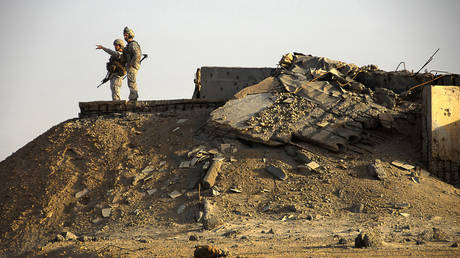
The metrics of success were always flawed. They counted the barrels of oil not sold. They counted the rials lost in inflation. They didn't count the families in Tehran who couldn't find asthma medication because of the sanctions. They didn't count the young American soldiers who spent their nights in bunkers in Iraq, waiting for the inevitable retaliatory rockets that they knew were coming, even if the public didn't.
One night in Al-Asad Airbase, dozens of Americans suffered traumatic brain injuries as Iranian ballistic missiles rained down. It was the largest such attack on U.S. forces in history. In the immediate aftermath, these injuries were dismissed as "headaches."
A headache is what you get from a long day at the office.
A traumatic brain injury is a physical rewiring of the soul. It is the loss of memory, the sudden onset of unexplainable rage, and the permanent fog that settles over a life. By downplaying the consequences of that retaliation, the leadership failed the very people they claimed to be protecting. They prioritized the narrative of "no casualties" over the reality of broken men and women.
The strategic failure wasn't just that the war didn't happen; it was that the "peace" we achieved was more dangerous than the status quo we started with. We traded a manageable tension for a volatile, unmapped hostility.
The Empty Table
True strength is the ability to walk away from a fight you don't need to have. It is the discipline to stay at the table when every instinct tells you to flip it over.
The Iran policy of that era was built on the ego of the "great deal." But deals require trust, or at the very least, a shared understanding of the consequences of failure. When the U.S. unilaterally exited the JCPOA (the Iran nuclear deal), it didn't just break a contract with Iran. It broke a contract with every other nation that had signed on. It signaled that an American signature is only as good as the current election cycle.
When you burn your reputation for the sake of a short-term political win, you find yourself sitting at an empty table. No one wants to play a game where the rules change every four years.
The result? Iran is closer to a nuclear weapon today than they were when the "maximum pressure" started. Their regional influence, though bruised, has become more entrenched as they've learned to bypass international systems. They have built an "economy of resistance" that thrives on the very isolation we tried to use as a weapon.
The failure was total. It was a failure of imagination, a failure of diplomacy, and ultimately, a failure of leadership. We were promised a safer world. Instead, we were left standing in the dark, listening to the hum of a drone we can't quite see, waiting for a conflict that has no clear ending and no easy exit.
The desert doesn't forget. The sand shifts, but the bones remain. We are still walking among them, trying to find our way back to a path we should never have left.
Silence.
That is the sound of a policy that has run out of things to say. It is the sound of the void where a strategy used to be. It is the quiet, terrifying realization that in the game of shadows, the person who strikes first is often the one who loses the most.