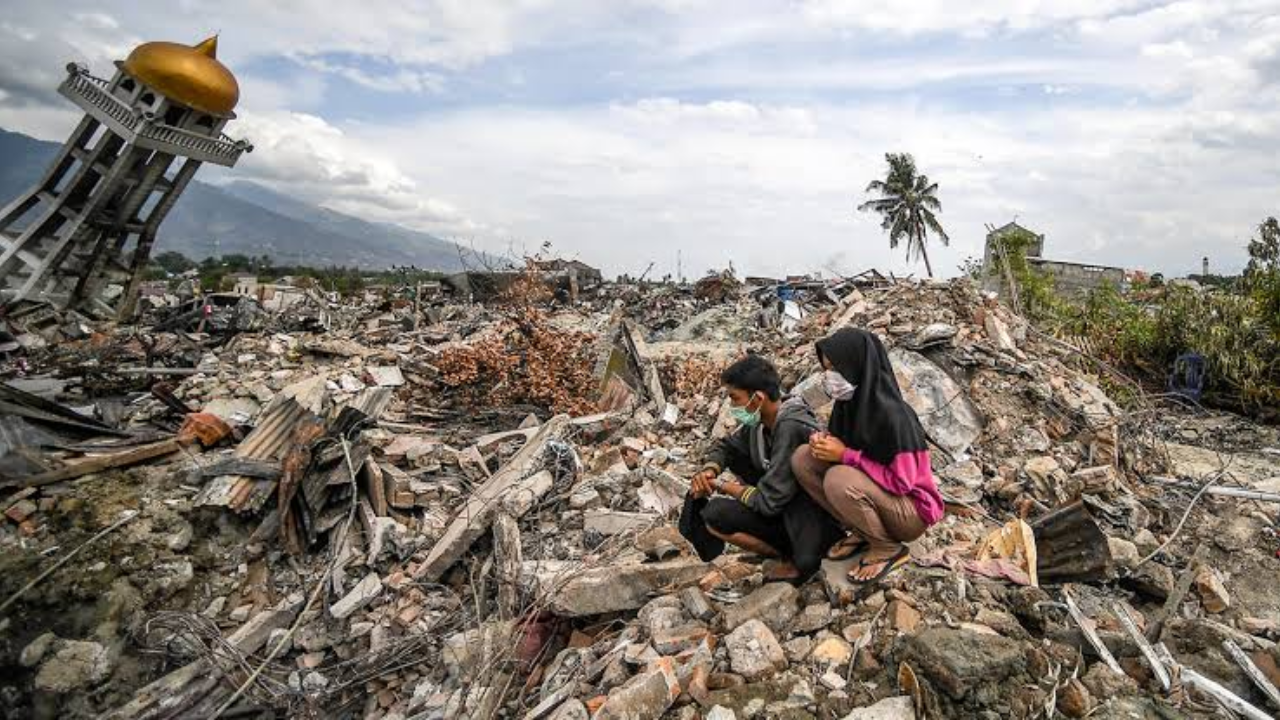
The arrival of a major El Nino event signifies more than just shifting trade winds or warmer Pacific waters. It represents a systemic shock to the architecture of international commerce. While government agencies issue polite warnings about rainfall patterns and temperature spikes, the reality hidden beneath these meteorological bulletins is far more dangerous. Global supply chains, already brittle from years of mismanagement and logistical instability, are currently unprepared for the climate volatility this phenomenon triggers. We are staring at a scenario where food security, energy production, and maritime freight face simultaneous, compounding disruptions that bureaucratic systems simply cannot manage.
The Thermal Engine of Global Instability
El Nino functions as a massive, planet-scale heat transfer mechanism. When the surface waters of the central and eastern Pacific warm significantly, they alter the path of the jet stream, forcing a reorganization of weather patterns across every continent. The impact is not uniform. Instead, it acts as a stress test for regional infrastructure.
In a hypothetical scenario, consider a major agricultural hub in Brazil that relies on consistent precipitation during the planting cycle. Under the influence of an extreme El Nino, that region may experience a prolonged drought, while thousands of miles away, key port facilities in Southeast Asia endure record-breaking rainfall and localized flooding. These are not isolated accidents. They are the predictable output of a climatic system pushed to its margins. Corporations that view these events as "acts of god" or one-off statistical anomalies are engaging in dangerous denial. The math is simple: when the weather stops behaving within historical norms, the logistics models built on those same norms become useless artifacts.
The Invisible Tax on Global Agriculture
The most immediate casualty of an intensified El Nino is the global food supply. Commodity traders and agricultural conglomerates have spent decades optimizing production through efficiency-driven models that rely on predictable harvest windows. El Nino obliterates that predictability.
Consider the soybean and corn markets. These crops depend on specific moisture thresholds that are currently being rewritten by shifting Pacific pressures. When harvests fail in the Southern Hemisphere, prices do not just fluctuate; they cascade through the secondary and tertiary markets. This creates a hidden tax on the consumer. The cost is often buried in the retail price of meat, processed grains, and even biofuels.
Governments typically respond to these crises by implementing protectionist trade barriers or subsidizing domestic production, which only creates further friction in the global marketplace. This cycle of reaction and policy correction is too slow. By the time a ministry acknowledges a supply shortfall caused by weather volatility, the logistical window to source alternatives has already slammed shut. True expertise in this sector requires recognizing the signal in the noise months before the actual shortages manifest in supermarket aisles.
Energy Markets and the Hydroelectric Trap
Energy security is frequently absent from the conversation surrounding climate phenomena, yet it sits at the very heart of the risk. Many emerging economies depend heavily on hydroelectric power to fuel their industrial output. El Nino-driven droughts in regions like South America and parts of Southern Africa often drain reservoirs to critically low levels, forcing a pivot to expensive, carbon-heavy fossil fuel alternatives.
This shift does more than just spike energy prices; it disrupts the cost-benefit analysis for manufacturing centers. If a factory in a developing nation suddenly faces a thirty percent increase in power costs due to a reliance on imported diesel following a hydroelectric failure, that factory becomes non-competitive overnight. This forces shifts in global trade routes that are rarely accounted for in long-term corporate forecasting. Companies that ignore these linkages are essentially gambling with their operational viability.
The Failure of Modern Logistics
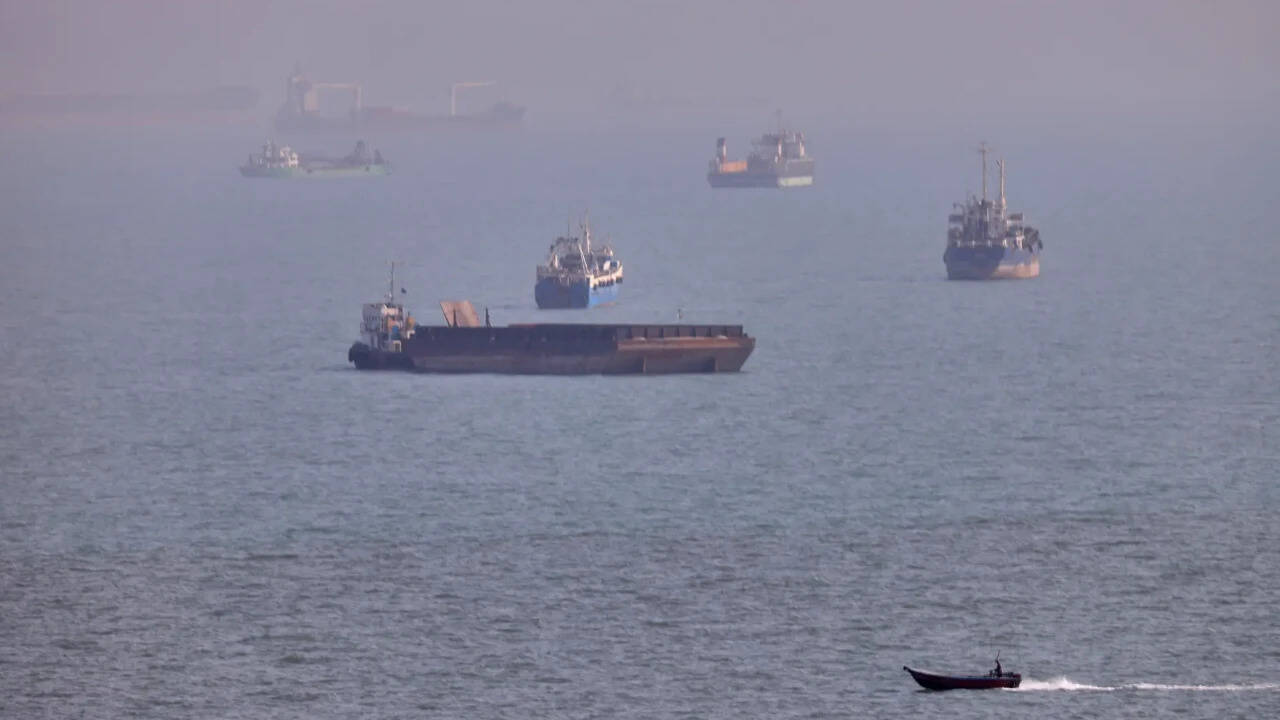
International shipping is the circulatory system of the global economy, yet it is notoriously sensitive to climate-driven disruptions. The Panama Canal serves as an instructive case. This critical artery relies on massive freshwater inputs to operate its lock systems. When El Nino creates drought conditions, water levels drop, leading to draft restrictions that prevent fully loaded vessels from passing through.
The consequences are immediate and far-reaching. Thousands of containers are forced to sit idle, freight rates skyrocket, and just-in-time inventory models fall apart. We saw this reality manifest in recent years, yet industry leaders continue to operate under the assumption that these are temporary logistical hurdles rather than permanent structural challenges. They are waiting for the water to return, failing to realize that the fundamental environment they rely upon has changed.
The strategy of optimizing for the lowest cost has left no buffer for the inevitable. When the Pacific warms, the cost of transit rises. When the atmosphere shifts, the schedule of global shipping collapses. A system designed for a stable climate cannot survive in an era of climatic upheaval.
Why The Conventional Response Is Failing
Governmental and corporate responses to El Nino consistently miss the mark because they focus on mitigation rather than systemic overhaul. They publish updated weather outlooks and offer advice to farmers on how to manage soil moisture. These are useful tactics, but they ignore the underlying fragility of the global infrastructure.
We have built a world that demands a rigid, predictable climate to sustain its financial expectations. We trade in commodities that require specific weather conditions to grow, and we move them through ports that require specific water levels to function. When nature deviates, we scramble to patch the leaks in the hull rather than acknowledging the ship is fundamentally ill-equipped for the waters it is sailing.
The disconnect between atmospheric science and financial planning is profound. Data scientists are mapping the Pacific with incredible precision, but that information is often siloed, failing to inform the procurement officers or the insurance underwriters who make the high-stakes decisions. Until these disparate sectors are forced to integrate their decision-making processes, the global economy will continue to suffer from periodic, violent shocks that could have been identified, if not avoided, by looking at the broader climate reality.
Resilience is not merely a buzzword to be included in an annual report. It is the hard work of building redundancy into every link of the chain. It means accepting that cheap, lean, and ultra-efficient systems are inherently vulnerable. It means acknowledging that the volatility we are seeing is not a disruption of the system, but the new operating environment. Those who continue to believe that the weather will eventually return to the historical averages of the twentieth century are not just behind the curve; they are obsolete. The volatility is here to stay, and the markets will eventually be forced to price it in, whether through the slow death of inefficient enterprises or the radical, painful redesign of global logistics. The transition will not be managed; it will be forced.