True crime media loves a monster in a tailored suit.
Every mainstream retrospective on Ted Bundy—including the lazy, surface-level timeline pieces dominating search results—peddles the exact same myth. They paint him as a charming, genius-level mastermind who outsmarted the FBI for years through sheer intellect and hypnotic charisma.
It is a comfortable lie. If Bundy was a supervillain with an IQ off the charts, then society is absolved of failing to stop him. Normal people could not possibly have seen it coming.
The reality is far uglier and much less cinematic. Ted Bundy was not a criminal genius. He was an impulsive, disorganized, profoundly mediocre predator who benefited from catastrophic police incompetence, fragmented 1970s communications, and a culture desperate to excuse white, middle-class men.
When you strip away the Hollywood gloss and look at the actual forensic and behavioral records, the legend of Ted Bundy collapses under the weight of its own absurdity.
The Myth of the Criminal Mastermind
The standard narrative claims Bundy was a brilliant law student who nearly became a rising star in Republican politics before his dark impulses took over. Media outlets repeat this ad nauseam because the contrast between "future senator" and "sadistic killer" sells subscriptions.
Look at his actual academic and professional record. Bundy was a chronic underachiever who barely scraped through his undergraduate degree at the University of Washington after transferring multiple times. He was rejected by every major law school he applied to, eventually gaining admission to the University of Puget Sound School of Law—a brand-new, unaccredited institution at the time—only after receiving glowing recommendation letters from political acquaintances who barely knew him. He dropped out because he could not handle the workload.
His political career was equally exaggerated. Bundy was not a power broker. He was a low-level campaign aide and gofer for Washington Governor Daniel Evans. His primary job was driving cars, running errands, and occasionally acting as a glorified security guard at campaign events.
True crime writers elevated a failed law student and political errand boy into a modern-day Moriarty simply because he wore turtlenecks and spoke in complete sentences. Having worked alongside forensic psychologists and reviewed decades of cold-case files, I have seen how easily investigators and journalists fall for verbal fluency. When a suspect uses polysyllabic words, people confuse vocabulary with intelligence. Bundy was articulate, not brilliant.
He Did Not Outsmart the Police—They Just Refused to Talk to Each Other
If Bundy was not a genius, how did he murder at least thirty women across seven states between 1974 and 1978?
The answer has nothing to do with Bundy's tactical brilliance and everything to do with systemic failure. In the mid-1970s, law enforcement agencies operated like rival feudal kingdoms. There were no centralized digital databases, no shared biometric networks, and almost zero inter-agency cooperation across state lines.
Consider the timeline in Washington and Utah:
- July 1974: Bundy abducts Janice Ott and Denise Naslund in broad daylight from Lake Sammamish State Park. Multiple witnesses hear him use his real first name—"Ted"—and see him driving a tan Volkswagen Beetle.
- Tip Line Overload: Within days, Bundy’s own girlfriend, Elizabeth Kloepfer, and his former professor, Ann Rule, independently call the police to report him. They provide his full name, his exact car model, and his behavioral red flags.
- The Bureaucratic Black Hole: Seattle police had over 3,000 tips scribbled on index cards. Because Bundy did not have a prior felony record and looked like a clean-cut college student, detectives threw his card into a secondary pile and never followed up.
He was not evading a sophisticated manhunt. He was walking through wide-open doors because detectives refused to share index cards across county lines. Even when Bundy escaped from custody twice in Colorado in 1977, it was not a Shawshank-level operation. The first time, he simply jumped out of an unlocked second-story courthouse window while the guards were taking a smoke break. The second time, he squeezed through a light fixture in the ceiling of a jail cell after losing weight, exploiting a structural flaw that jail administrators had been warned about for months.
To be fair to the detectives on the ground at the time, they were fighting an unprecedented behavioral profile with stone-age tools. Forensic psychology was still in its infancy; Robert Ressler and John Douglas were just beginning to build the FBI’s Behavioral Science Unit at Quantico. Local sheriffs did not have a playbook for a transient killer who crossed state lines without a financial motive. That context explains the failure, though it does not excuse it.
Dismantling the "Irresistible Charisma" Lie
Perhaps the most toxic misconception in true crime media is the idea that Bundy lured women to their deaths by seducing them with overwhelming charm. Ann Rule’s book The Stranger Beside Me unintentionally cemented this trope, describing him as handsome, empathetic, and magnetic.
Examine his actual abduction methods. Bundy almost never seduced his victims. He weaponized basic human empathy.
His signature ruse was wearing a fake plaster cast on his arm or walking on crutches, dropping a stack of books near his Volkswagen, and asking a young woman for help carrying them to his car. When she leaned into the passenger seat, he bludgeoned her with a crowbar.
That is not charisma. That is a cheap ambush targeting the socialization of young women who were raised to be polite and helpful to strangers in distress.
When his ruse failed—as it did with Carol DaRonch in Murray, Utah, in November 1974—Bundy panicked immediately. He impersonated a police officer, lured DaRonch into his car under the guise of taking a statement about a break-in, and tried to slap handcuffs on her. He fumbled the cuffs, accidentally fastening both loops onto the same wrist. DaRonch fought him off, kicked open the door, and escaped. A criminal mastermind does not fail to operate a pair of standard handcuffs.
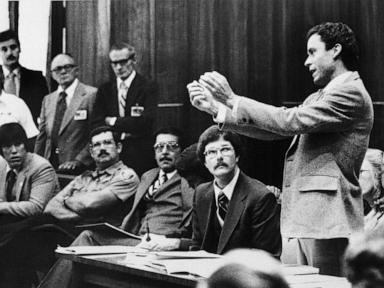
Even his courtroom demeanor, often praised as hypnotic, was a disaster. Acting as his own attorney during the 1979 Chi Omega murder trial in Miami, Bundy cross-examined a police officer who had discovered the crime scene, forcing the witness to describe the graphic, blood-soaked details of the victims' injuries in excruciating detail. Bundy thought he looked commanding; the jury looked at him with sheer revulsion. Judge Edward Cowart famously told Bundy at sentencing that he was a "bright young man" who "would have made a good lawyer," a line media outlets still quote as proof of Bundy's brilliance. In reality, Cowart was expressing paternalistic regret over a white defendant who threw away his privilege—a judicial habit that persists today.
What People Actually Get Wrong About Bundy's Rampage
When readers search for information on Bundy, they usually ask two questions: What was Ted Bundy's IQ? and How many people did Ted Bundy kill?
Both questions miss the entire point of his pathology.
First, his IQ was tested by prison psychologists at roughly 124 to 136 depending on the scale used. That places him in the upper tier of average to moderately gifted—roughly equivalent to a decent middle manager or a mid-level accountant. It is nowhere near genius territory. Fixating on his IQ creates the false impression that serial murder is an intellectual exercise rather than a compulsive, primitive addiction.
Second, obsessing over the exact body count—whether it was 30, 36, or over 100—plays directly into Bundy’s final manipulation. In the days leading up to his execution in January 1989, Bundy began confessing to previously unlinked murders in a desperate bid to delay his date with the electric chair. He dangled vague hints about dozens of additional victims in front of investigators like a hostage negotiator, trading fragments of truth for extra days of life. Forensic investigators like Dr. Katherine Ramsland and former FBI profiler John Douglas have noted that Bundy lied constantly about his numbers to maintain control over the narrative until the very end.
The Evolution From Organized to Disorganized
If you want to understand Bundy’s rampage accurately, stop looking at his body count and look at his behavioral deterioration. FBI profilers categorize offenders on a spectrum from organized (planning, control, weapon concealment) to disorganized (impulsive, sloppy, leaving physical evidence).
Bundy’s trajectory shows a textbook psychological collapse:
- The Early Phase (1974): Bundy exercised moderate control. He selected victims who fit a specific physical type, transported them to remote dump sites in the Pacific Northwest, and left virtually no physical trace evidence behind.
- The Middle Phase (1975): Moving to Utah and Colorado, his cooling-off periods shortened. His abductions became riskier, taking victims from high-traffic areas like ski resorts and shopping malls.
- The Terminal Phase (1978): After escaping custody and fleeing to Tallahassee, Florida, Bundy completely lost control. On January 15, 1978, he broke into the Chi Omega sorority house and bludgeoned four women in less than fifteen minutes, leaving bite marks on Lisa Levy’s body—the exact forensic evidence that convicted him. Weeks later, he abducted and murdered 12-year-old Kimberly Leach in Lake City, abandoning his stolen van smeared with blood and fibers.
He did not get smarter over time. He decompensated like a late-stage addict chasing a diminishing high.
Stop Romanticizing the Monster
True crime content creators have an economic incentive to make killers seem extraordinary. An ordinary, pathetic loser who relies on fake casts and police apathy does not make for a compelling Netflix thriller. So writers inflate the killer's intelligence, exaggerate his charm, and turn a trail of shattered lives into a chess match between a genius killer and heroic detectives.
This framing is actively dangerous. It teaches the public to look for cinematic villains while ignoring the mundane reality of predatory behavior. Predators rarely look like movie stars or speak like Ivy League professors. They are almost always ordinary, insecure individuals who exploit polite social norms and institutional blind spots.
If you want to analyze cases like Bundy’s without falling for the media hype, apply three strict filters to any true crime narrative:
- Audit the Source of the "Genius" Claim: Whenever a documentary claims a killer had a genius IQ or masterminded a crime, check whether that claim comes from verified psychological testing or from a defense attorney, a sensationalist journalist, or the killer himself. Nine times out of ten, it is pure fabrication.
- Separate Verbal Fluency from Competence: Articulate people can still be catastrophically impulsive and incompetent. Judge an offender by their actual operational mistakes—like Bundy leaving bite marks on a victim or driving a stolen car with mismatched plates—not by how well they perform in a television interview.
- Look for the Systemic Failure: Behind almost every prolific serial offender is a massive breakdown in basic policing, data sharing, or institutional accountability. If a killer operates for years without getting caught, ask what the authorities missed before assuming the killer possessed superhuman stealth.
Ted Bundy was not a dark prodigy. He was a coward with a crowbar who got lucky in an era before computerized records. Stop giving him credit for brilliance he never possessed.